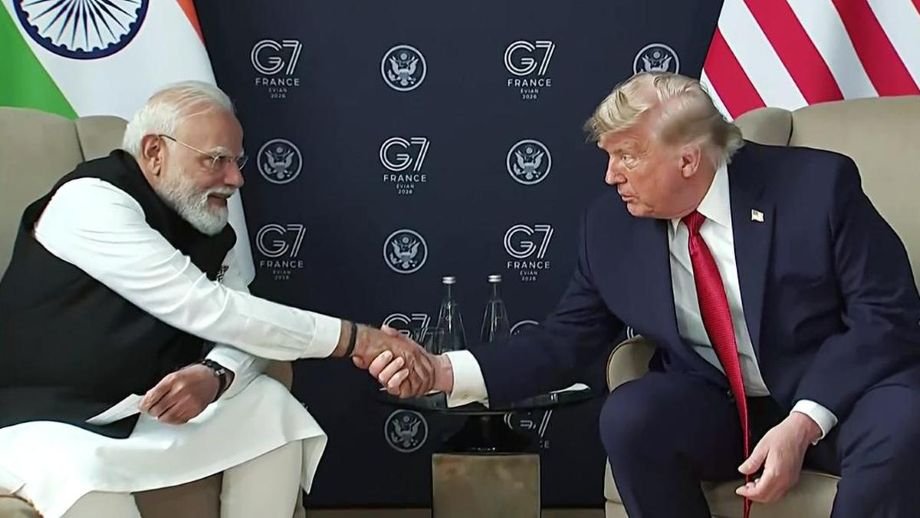
India’s preference for a controlled media interaction during Prime Minister Narendra Modi’s meeting with US President Donald Trump at the G7 Summit in France was reportedly overridden when Trump unexpectedly invited journalists to ask questions, according to US Ambassador to India Sergio Gor.
The revelation has brought fresh attention to the unusual media interaction during the June 17 meeting in Evian-les-Bains. Gor, speaking at the Economic Times World Leaders Forum, said India’s Ministry of External Affairs (MEA) had requested that journalists be allowed to attend the meeting but that there should be no questions or full-fledged press conference.
According to Gor, he discussed the arrangement with Trump before the meeting and conveyed that the Indian side preferred no questions. Trump initially agreed to the request. However, once the meeting began and the two leaders completed their opening remarks, Trump reportedly turned towards the assembled media and asked if there were any questions.
Gor said the move effectively transformed the meeting into an approximately 45-minute press interaction, with reporters raising a range of issues while Modi remained seated alongside Trump. The US envoy said there were around 50 cameras in the room during the interaction.
The meeting had already been taking place against a sensitive geopolitical backdrop. Modi and Trump met on the sidelines of the G7 Summit at a time when tensions surrounding the conflict in West Asia had raised concerns over the safety of Indian seafarers. Three Indian mariners had been killed in a US strike on a commercial vessel in the region shortly before the bilateral meeting.
During the interaction, Modi highlighted the importance of protecting Indian seafarers and maintaining freedom of navigation. He stressed that keeping the Strait of Hormuz open was vital for the global economy and said the safety of Indian seafarers operating on international maritime routes was of the utmost importance to India.
The unexpected press interaction also put several sensitive subjects into the public domain, including the situation in West Asia, the Strait of Hormuz, the safety of Indian sailors and India-US trade relations. Contemporary reporting from the June meeting confirms that journalists questioned Trump on the deaths of Indian sailors and other issues involving the region.
The Indian government subsequently described discussions surrounding media arrangements for high-level meetings as normal protocol. Government sources said coordination over public appearances is a routine part of preparations for VVIP engagements and that India’s preference for a particular media format was not unusual.
Gor’s account, however, offers a new perspective on how the June meeting unfolded behind the scenes. It suggests that India had sought to maintain a structured format for the media interaction, while Trump’s decision to take questions changed the character of the engagement.
The episode also highlights the diplomatic challenges involved in managing high-level meetings with leaders known for an unconventional and spontaneous approach to media interactions. Despite the unexpected press exchange, the Modi-Trump meeting covered important issues concerning India-US relations, trade, defence cooperation, regional stability and maritime security.
For India, the incident underscores the importance of careful protocol coordination during sensitive diplomatic engagements. For the United States, Gor’s comments provide an unusual glimpse into the preparations behind a high-profile meeting between two leaders whose relationship remains strategically significant for both countries.
-
-
-
-