India is preparing for a major expansion of its human spaceflight programme, with the Indian Space Research Organisation (ISRO) working towards establishing the Bharatiya Antariksha Station (BAS) by 2035. The ambitious project is expected to give India an independent platform for conducting scientific research and human activities in low Earth orbit.
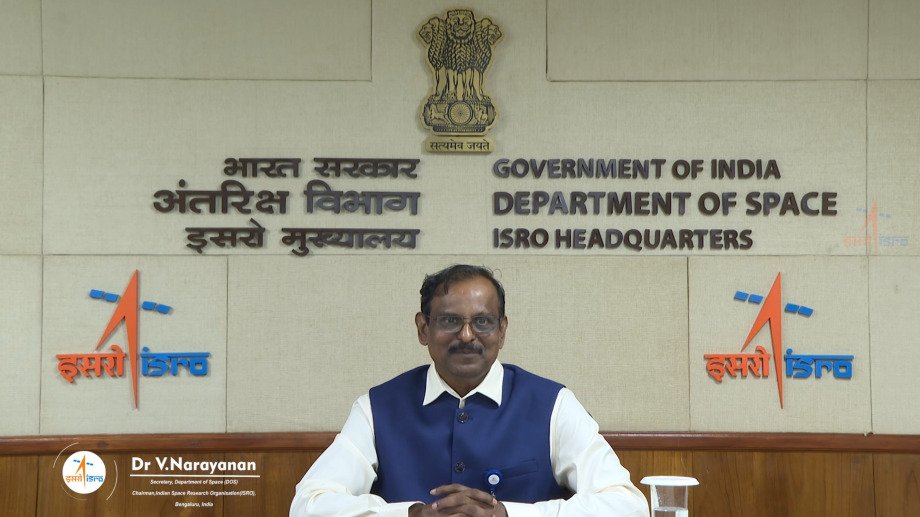
ISRO Chairman Dr. V. Narayanan has outlined the importance of the country’s long-term orbital ambitions as India works to strengthen its capabilities in human spaceflight. The proposed space station is part of a wider roadmap that aims to take India beyond conventional satellite missions and towards sustained human operations in space.
The Bharatiya Antariksha Station is planned as a multi-module orbital facility. The first module, known as BAS-01, is targeted for launch in 2028. Additional modules are expected to be added progressively, eventually creating a larger Indian orbital platform capable of supporting astronauts and scientific experiments.
Developing such a station will require India to master several complex technologies. These include human-rated spacecraft, life-support systems, docking mechanisms, orbital habitation and other systems needed to safely maintain astronauts in space for extended periods. The experience gained through the programme could also prove valuable for India’s future deep-space missions.
The Gaganyaan programme will provide an important foundation for this effort. India’s human-spaceflight programme is designed to demonstrate the country’s ability to safely send astronauts into orbit and bring them back to Earth. The lessons learned from these missions will help build the operational and technological expertise required for more demanding orbital missions.
The space station initiative also comes as India is expanding its broader space infrastructure. Growing requirements for communication, navigation, Earth observation and scientific applications are driving demand for more satellites and increasingly capable launch systems. Strengthening these capabilities will support both civilian applications and India’s wider strategic interests in space.
Another major factor is the growing role of India’s private space sector. Domestic companies are increasingly working on launch vehicles, satellites, propulsion systems and other space technologies. Greater participation from private industry could complement ISRO’s efforts and help build the industrial base needed to support a more active Indian presence in orbit.
The Bharatiya Antariksha Station could eventually become an important research platform. Experiments conducted in microgravity could help Indian scientists study materials, biological processes, medicine and other areas where space-based conditions provide unique research opportunities.
India is also looking beyond Earth orbit. The country’s long-term space roadmap includes advanced lunar and planetary missions, with human exploration of the Moon forming part of its future ambitions. Establishing an orbital station would provide valuable experience in long-duration human missions and technologies that could eventually support these more challenging objectives.
The 2035 target therefore represents a significant milestone in India’s space journey. If the programme remains on schedule, the Bharatiya Antariksha Station could transform India’s role in human spaceflight by providing the country with its own long-term orbital infrastructure.
As ISRO continues to develop the technologies, launch systems and human-spaceflight capabilities required for the project, India’s space programme is gradually moving towards a new phase—one focused not only on reaching space, but on maintaining a sustained Indian presence in orbit.
-

-

-

-