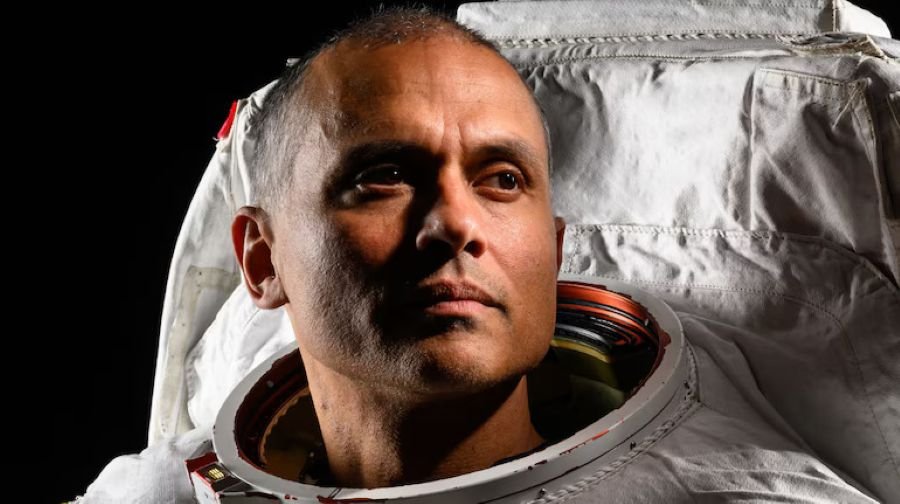
Dr. Anil Menon, a NASA astronaut of Indian descent, has launched to the International Space Station for an eight-month mission, marking a significant milestone for Indian representation in human spaceflight programmes operated by the United States space agency.
Menon’s assignment to the ISS underscores the growing participation of Indian-origin scientists and engineers in advanced space exploration initiatives led by NASA. His presence aboard the orbiting laboratory will contribute to ongoing microgravity research and station operations across multiple scientific domains.
India’s space programme, anchored by the Indian Space Research Organisation (ISRO), has itself made substantial strides in human spaceflight preparation. ISRO’s Gaganyaan programme, India’s crewed spacecraft initiative, is under active development with the objective of launching Indian astronauts to low Earth orbit within the next few years.
The Gaganyaan programme represents India’s commitment to indigenous human spaceflight capability. ISRO has conducted several uncrewed test missions of the crew module and associated systems, establishing the technical foundation for eventual crewed missions. The programme incorporates indigenous design, manufacturing, and launch infrastructure centred on ISRO’s Launch Vehicle Mark III (LVM3) rocket.
India’s participation in international space initiatives, demonstrated through astronaut exchanges and collaborative research agreements, has complemented these domestic efforts. Indian space scientists have previously trained with international space agencies and contributed to research conducted aboard the ISS through collaborative arrangements.
Menon’s ISS mission reflects the broader pattern of Indian technical talent contributing to global space exploration. His work aboard the station will include scientific experiments, maintenance operations, and system management tasks that support the strategic objectives of NASA’s human spaceflight programme.
The ISS itself remains the focal point of international collaboration in low Earth orbit, hosting astronauts and cosmonauts from multiple nations in a continuous presence that has been maintained since 1998. Research conducted aboard the facility spans materials science, biology, Earth observation, and fundamental physics.
As India progresses toward independent human spaceflight capability through Gaganyaan, the experience and knowledge accumulated by Indian-origin professionals serving with international space agencies provides valuable technical insight and maintains strong institutional links within the global spacefaring community.
-
-

-

-