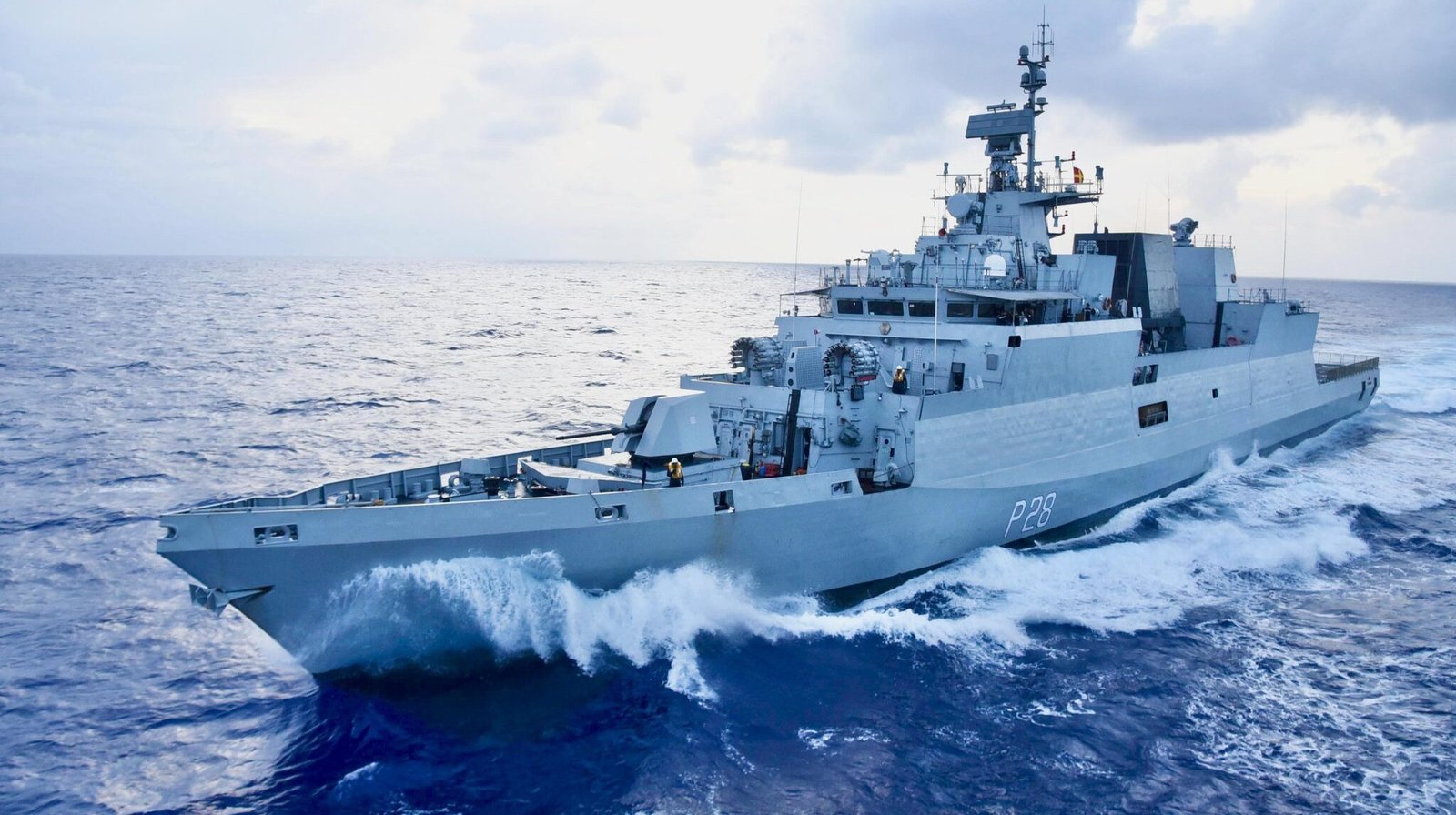
India has taken another significant step towards strengthening its maritime defence capabilities with the signing of contracts worth ₹53,866.50 crore for the construction of eight Next Generation Corvettes (NGCs) for the Indian Navy. The agreement, signed by the Ministry of Defence on November 2, 2026, marks an important development in the country’s efforts to expand indigenous warship design and manufacturing.
The contracts have been awarded to two major defence public sector shipyards, Garden Reach Shipbuilders & Engineers Limited (GRSE) and Goa Shipyard Limited (GSL). Under the agreement, GRSE will construct five corvettes, while GSL will be responsible for building the remaining three vessels. The contracts were signed in New Delhi in the presence of Defence Secretary Rajesh Kumar Singh.
What makes this project particularly important is its focus on indigenous warship design. For the first time under this programme, the vessels will be designed by the Indian Navy itself and constructed by Defence Public Sector Undertakings selected through a competitive process. This approach is expected to strengthen India’s domestic expertise in naval engineering, ship design and advanced defence manufacturing.
The eight Next Generation Corvettes will feature advanced missiles, modern weapons and sophisticated sensor systems. These capabilities will enable the vessels to operate across air, surface and sub-surface domains, providing the Navy with greater flexibility during different maritime operations.
The new warships are expected to strengthen India’s anti-surface warfare and anti-submarine warfare capabilities while improving coastal security and maritime surveillance. They will also support littoral combat operations, which involve military activities in coastal waters and areas close to shore. In addition, the vessels will play an important role in maintaining India’s maritime presence and protecting vital sea routes used for international trade.
The project comes at a time when maritime security and the protection of important shipping routes remain significant priorities for India. With extensive maritime interests across the Indian Ocean Region, the Indian Navy requires versatile platforms capable of responding to different operational challenges. The induction of these corvettes is expected to improve the Navy’s ability to monitor surrounding waters and respond to potential threats.
Beyond its military importance, the project is also expected to deliver substantial benefits to India’s domestic defence industry. The construction programme will encourage greater participation from Indian industrial partners, private shipyards and Micro, Small and Medium Enterprises (MSMEs). It will also promote the use of locally manufactured materials, indigenous technologies and Indian technical expertise.
According to the Ministry of Defence, the project is expected to generate approximately 72 lakh person-days of employment directly in the shipyards and around 460 lakh person-days in ancillary industries and MSMEs over the next ten years. This makes the programme significant not only for naval modernisation but also for employment generation and the expansion of India’s shipbuilding ecosystem.
The agreement reflects the government’s broader Aatmanirbhar Bharat initiative, which aims to reduce dependence on foreign defence equipment and strengthen India’s ability to design, develop and manufacture advanced military platforms domestically. The involvement of GRSE and GSL also highlights the growing role of Indian defence shipyards in supporting the country’s long-term naval requirements.
With an investment of more than ₹53,866 crore, the eight-corvette programme represents a major addition to India’s indigenous naval shipbuilding efforts. Once constructed and inducted into service, these warships are expected to strengthen the Indian Navy’s operational readiness, maritime surveillance and combat capabilities while supporting India’s wider objective of achieving self-reliance in defence manufacturing.
-

-

-

-