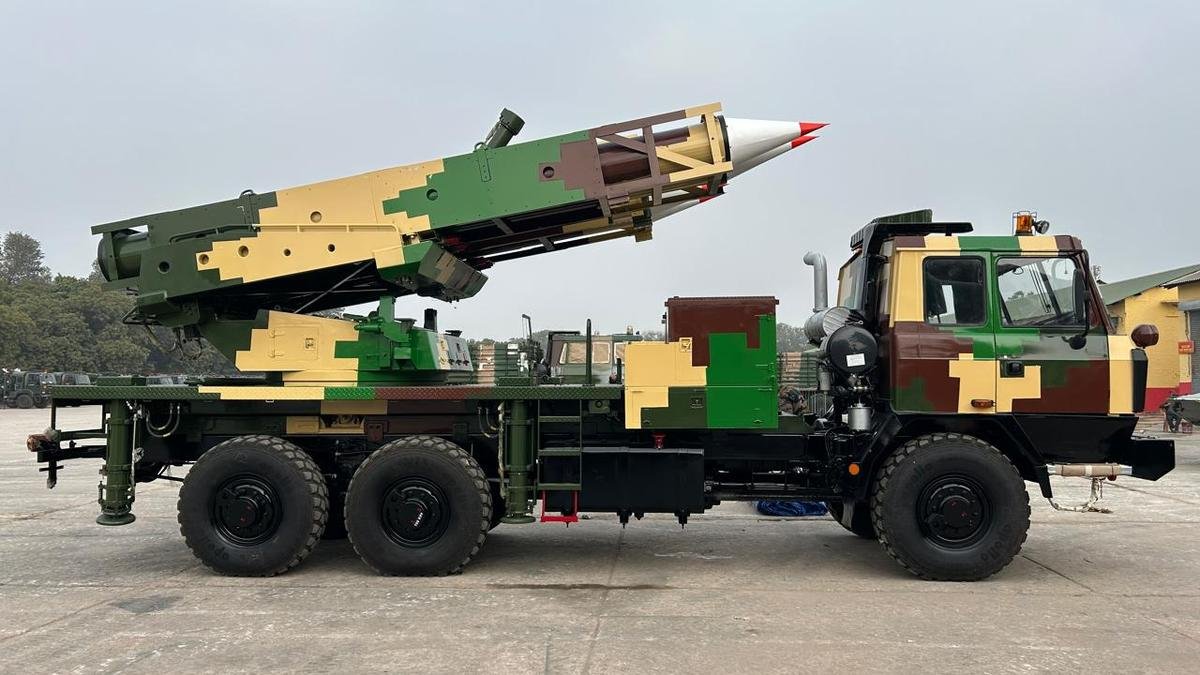
The Indian Army is set to induct the Suryastra air defence system featuring fully indigenous launcher platforms, marking a significant step forward in the country’s self-reliant defence manufacturing agenda, according to Defence Research and Development Organisation (DRDO) officials.
Suryastra represents DRDO’s effort to develop a modern, short-range air defence capability built entirely on indigenous technology and industrial capacity. The system is designed to protect critical military installations, forward areas, and troop concentrations from aerial threats including aircraft, helicopters, and unmanned aerial vehicles.
The development of fully indigenous launchers is a core achievement in the Suryastra programme. Rather than adapt foreign launcher designs or integrate imported platforms, DRDO has engineered launcher systems from conception through production, ensuring complete control over manufacturing processes, supply chains, and future upgrade pathways. This approach aligns with the government’s Atmanirbhar Bharat (self-reliant India) initiative and reduces dependency on foreign vendors for critical defence equipment.
Suryastra fits into India’s layered air defence architecture. At the lower tier, systems like the Suryastra complement mid-range platforms such as the Akash surface-to-air missile and long-range systems like the S-400. The layered approach enables point and area defence across operational depths, reducing the vulnerability window for any single platform.
The system integrates radar, fire control systems, and launcher platforms into a cohesive command structure. Operators can engage multiple targets simultaneously, and the modular design allows for rapid repositioning to counter emerging threats. The use of indigenous components throughout the production chain also reduces the unit cost compared to imported equivalents, making bulk acquisition economically feasible.
DRDO has prioritised mobility and operational flexibility in Suryastra’s design. The launcher systems can be deployed on wheeled or tracked platforms, enabling rapid repositioning across varied terrain. This mobility is essential for forward formations and rapid reaction units that require air defence coverage in fluid operational scenarios.
The induction timeline reflects growing confidence in the system’s readiness and performance during user trials. The Army’s acceptance follows rigorous testing protocols covering functional performance, reliability under field conditions, and integration with existing air defence networks. DRDO’s success with Suryastra demonstrates that indigenous development timelines for complex defence systems are becoming more predictable and aligned with operational requirements.
This induction reinforces India’s capacity to design, develop, and manufacture advanced air defence systems without external partnerships. Future modernisation and variants can now be pursued entirely within the domestic industrial ecosystem, reducing technology transfer risks and enhancing long-term operational autonomy.
-
-

-

-