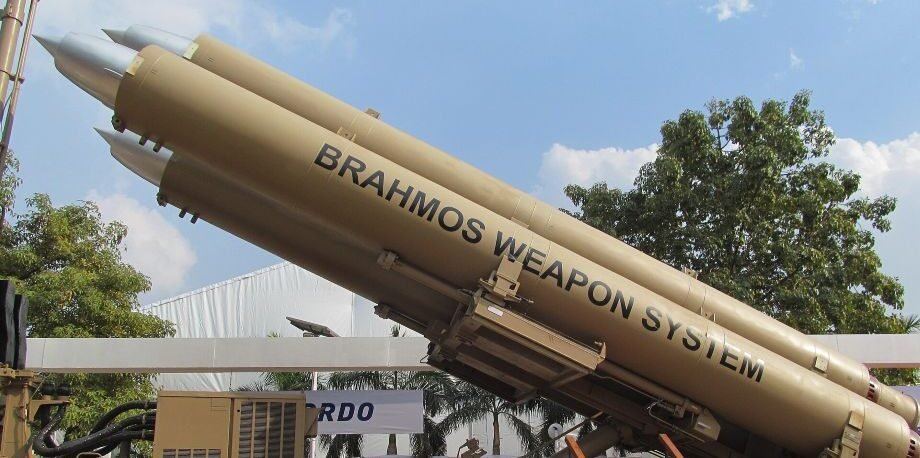
India is continuing to advance its next-generation missile technologies, with the BrahMos-2 hypersonic missile representing a major future development under the BrahMos programme. The system has been conceptualised by BrahMos Aerospace as a highly advanced hypersonic weapon designed to meet the evolving requirements of modern warfare.
BrahMos-2 is expected to use scramjet propulsion, a technology required for sustained flight at hypersonic speeds. Reports have associated the proposed missile with a target speed of up to Mach 8 and a potential range of around 1,500 kilometres. However, these figures should be treated as reported development targets rather than confirmed operational specifications.
A key development supporting India’s broader hypersonic ambitions came from the Defence Research and Development Organisation (DRDO) in May 2026. DRDO’s Defence Research and Development Laboratory successfully conducted a long-duration test of an actively cooled full-scale scramjet combustor. The test achieved a runtime of more than 1,200 seconds at the Scramjet Connect Pipe Test facility in Hyderabad. DRDO said the achievement marked an important milestone in the development of hypersonic missile technologies.
The development of scramjet propulsion is particularly important because hypersonic weapons operate at speeds above Mach 5 and face extreme challenges related to aerodynamics, thermal management, propulsion and guidance. Progress in these areas could support multiple future high-speed weapon programmes.
If successfully developed, BrahMos-2 could provide the Indian armed forces with a high-speed, long-range precision-strike capability. Its combination of hypersonic speed and advanced propulsion could significantly reduce the reaction time available to an adversary compared with conventional missile systems.
The BrahMos programme already forms an important part of India’s precision-strike capabilities. The proposed BrahMos-2 would take the programme into the hypersonic domain and could become an important component of India’s future missile architecture.
For now, BrahMos-2 remains a developmental future weapon rather than an operational missile. Continued progress in indigenous scramjet technology, testing and other critical hypersonic technologies will determine how quickly the programme moves toward flight testing and eventual deployment.
-

-

-

-