
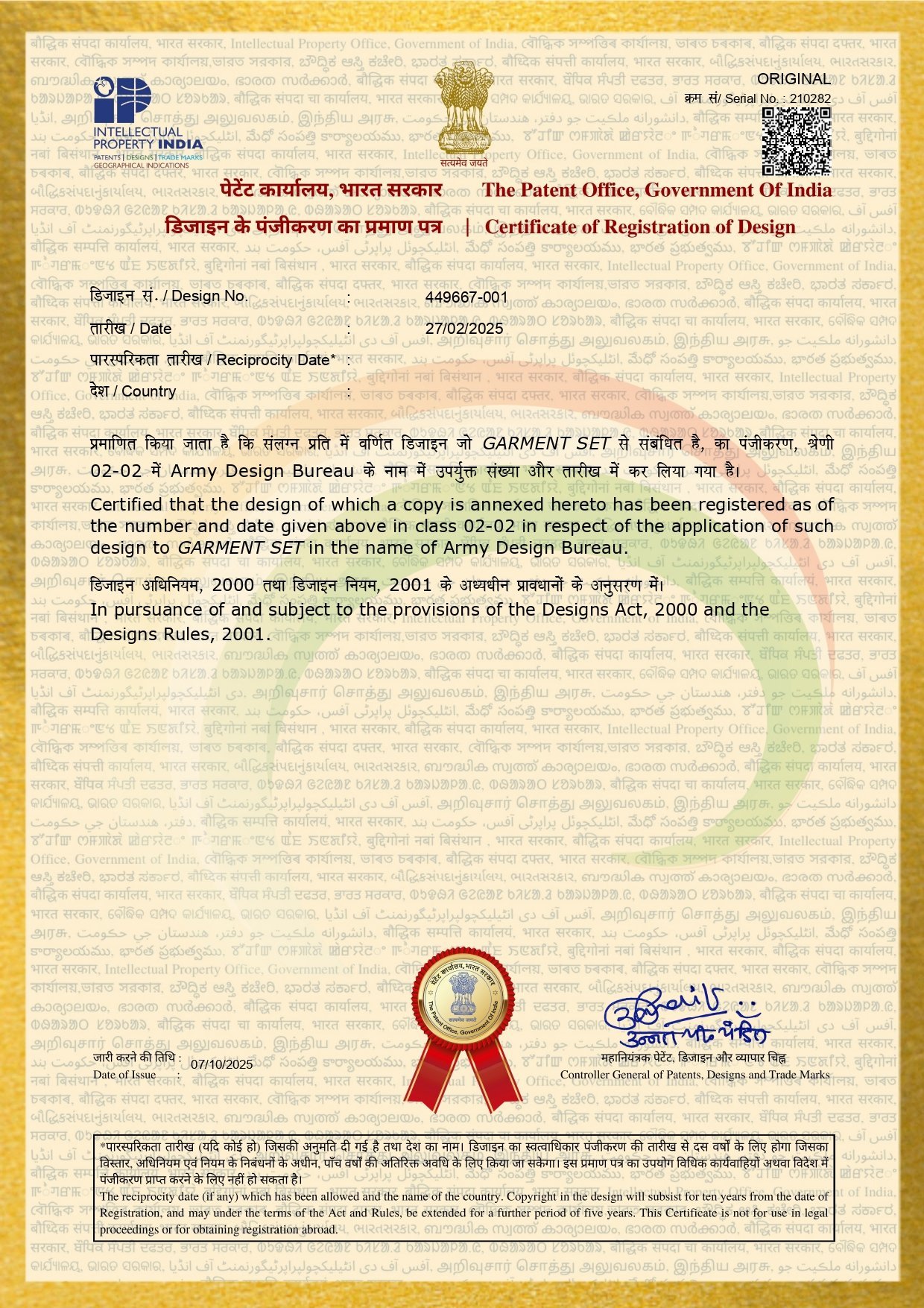
The Indian Army has secured intellectual property rights for a newly designed combat coat, marking a step forward in the force’s push toward indigenised soldier equipment and reduced dependence on imported apparel systems.
According to reports, the Army filed for and obtained IPR protection for the design, which aims to enhance battlefield functionality and comfort for personnel across diverse operational environments ranging from high-altitude zones to tropical regions.
The move aligns with India’s Make in India and Atmanirbhar Bharat initiatives, which prioritise domestic development and manufacturing of military hardware and soldier systems. Combat clothing represents a critical component of a soldier’s combat load, influencing mobility, thermal regulation, and operational effectiveness in the field.
Indian defence procurement has historically relied on imported solutions for specialised soldier apparel, including combat coats, body armour systems, and load-carrying equipment. Over the past decade, however, DRDO and private defence manufacturers have ramped up efforts to develop indigenous alternatives that meet Indian military specifications while reducing foreign exchange outlay.
The combat coat is worn as part of the soldier’s operational dress and serves multiple functions: it provides camouflage integration points, allows mounting of tactical accessories, offers weather protection, and supports the distribution of combat load across the torso. The new design likely incorporates lessons from operational feedback gathered during deployments in counter-insurgency operations, high-altitude mountain warfare, and internal security operations.
IPR protection for military equipment designs is particularly significant because it secures India’s intellectual capital, prevents unauthorised replication, and creates a foundation for scaling production across multiple manufacturers under licence agreements. This approach has worked effectively for other soldier systems and weapon platforms developed by DRDO and private sector partners.
The Army has been actively modernising soldier equipment through programmes such as the Futuristic Infantry Soldier as a System (F-INSAS) initiative, though this has progressed in phases. Combat apparel represents one of the more rapidly iterative components of soldier modernisation, capable of incorporating design improvements and material innovations without lengthy validation cycles required for lethal systems.
The successful IPR filing also strengthens India’s position in bilateral defence partnerships, demonstrating in-house capability to design and patent military equipment independent of technology transfer agreements, a factor of strategic significance given New Delhi’s partnerships with countries such as France, Russia, Israel, and the United States.
-

-

-

-

