The Indian Air Force has placed an order for 300 R-37M very long-range air-to-air missiles, according to reports, substantially expanding the strike envelope of its frontline Su-30MKI fighter fleet.
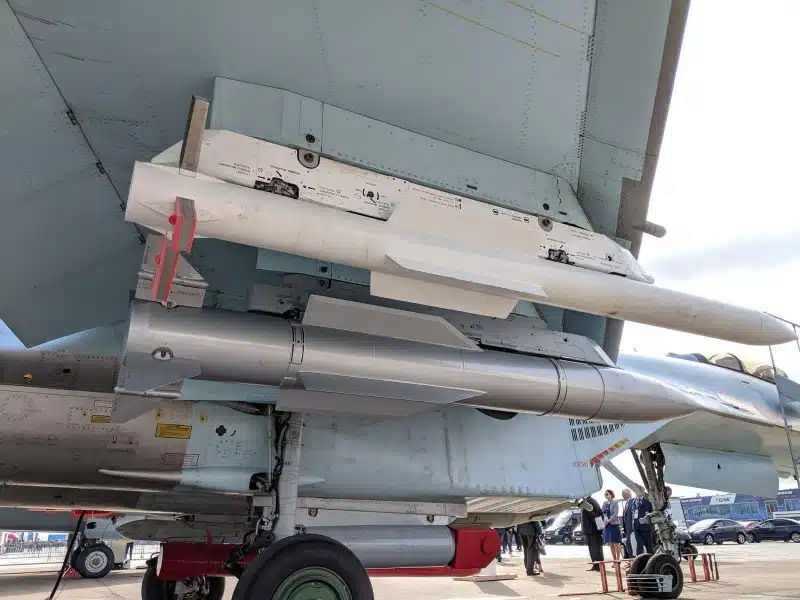
The R-37M is a ramjet-powered missile developed by Russia’s Vympel design bureau. It carries an active radar seeker and is engineered to engage airborne targets at ranges exceeding 300 kilometers, making it one of the longest-ranged air-to-air weapons in operational service worldwide.
The Su-30MKI, a heavy combat aircraft jointly developed by India and Russia, is the backbone of the Indian Air Force. The variant supplied to India features enhanced avionics, composite airframe sections, and integration with Indian-developed systems. The airframe can carry up to 4,700 kilograms of ordnance across 12 hardpoints, with its weapons bay designed to accommodate a range of AAM classes.
The R-37M integration on the Su-30MKI extends the fighter’s beyond-visual-range combat capability substantially. The missile’s long engagement range permits engagement of adversary aircraft during initial detection phases, reducing reaction time for opposing air defence systems. Its ramjet propulsion provides sustained velocity performance across extended ranges, an advantage over traditional rocket-propelled variants.
India has progressively diversified its air-to-air missile inventory over the past two decades. The Su-30MKI currently carries the Vympel R-77 (Astra equivalent) as primary BVR armament and the R-73 for close-in combat. The Brahmos Air variant adds an anti-ship dimension to the platform. The R-37M order represents a capability layering approach that strengthens the IAF’s position across multiple contested scenarios, particularly in the context of extended operations over the Indian Ocean and extended eastern approaches.
The acquisition aligns with IAF modernisation priorities outlined in successive defence white papers. The service operates approximately 270 Su-30MKI airframes across 14 operational squadrons. Equipping a significant portion of this fleet with R-37M extends standoff range for a core air dominance asset and adds complementary depth to India’s existing indigenous Astra missile programme, which continues development of extended-range variants.
The R-37M has seen operational deployment in recent conflicts and has demonstrated reliability across diverse launch profiles and environmental conditions, including high-altitude and low-temperature regimes relevant to operations across India’s northern and eastern theatre boundaries.