India is exploring a fresh and sustainable framework for its continued engagement with Iran’s Chabahar Port, with the government working with relevant stakeholders as sanctions-related restrictions and the wider conflict in West Asia create new complications for the project.
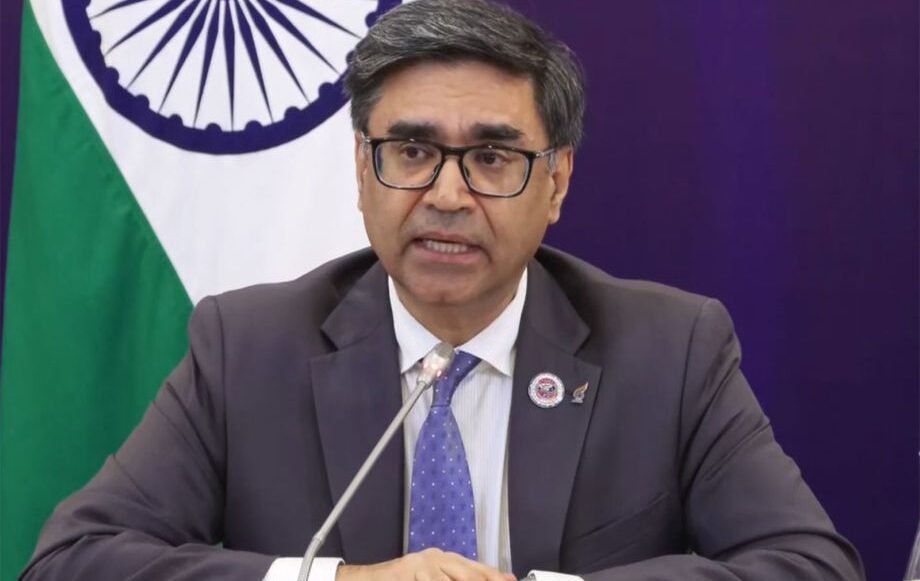
Foreign Secretary Vikram Misri said India remains engaged in discussions aimed at ensuring that cooperation at Chabahar can continue under the changing regulatory environment. He made the remarks in Bishkek after Prime Minister Narendra Modi met Iranian President Masoud Pezeshkian on the sidelines of the Shanghai Cooperation Organisation summit.
New Delhi’s interest in Chabahar goes beyond the port’s commercial role. The facility gives India an alternative maritime route toward Afghanistan and the Central Asian region, allowing it to develop connectivity without depending on transit through Pakistan. The port is also linked to India’s wider plans under the International North-South Transport Corridor, making it an important part of the country’s regional connectivity strategy.
The immediate challenge is the changing sanctions environment surrounding Iran. A US sanctions waiver that had protected India’s Chabahar activities expired in April 2026, increasing uncertainty for Indian entities associated with the project. The continuing conflict in West Asia has further complicated trade, shipping and financial arrangements involving Iran.
Despite these difficulties, India appears determined to preserve its long-term interests at Chabahar. The port has been part of India’s regional strategy for more than two decades, and New Delhi has invested significant political and financial effort in developing its role there. India Ports Global Limited signed a 10-year agreement in 2024 to operate the Shahid-Behesti terminal, underlining the long-term nature of India’s commitment.
The latest discussions also come at a time when maritime security has become a major concern across West Asia. During the Modi-Pezeshkian meeting, India highlighted the need to protect commercial shipping and seafarers and reiterated the importance of freedom of navigation. Indian officials have raised concerns over attacks on merchant vessels in the region, including incidents involving Indian nationals.
Trade between India and Iran is also continuing, although private companies are increasingly having to manage the practical difficulties created by sanctions, financial restrictions and regional instability. This has made the question of how India maintains its Chabahar presence more complex than simply continuing the existing arrangement.
For India, the challenge is to protect the strategic value of Chabahar while limiting exposure to sanctions-related risks. Rather than abandoning the project, New Delhi is seeking an arrangement that can keep the connectivity initiative viable and preserve the possibility of deeper Indian involvement when the geopolitical environment becomes more favourable.
The developments underline the growing importance of Chabahar in India’s foreign-policy and maritime strategy. With access to Central Asia, links to Afghanistan and a position outside Pakistan-controlled transit routes, the Iranian port remains a key component of New Delhi’s efforts to expand alternative trade and connectivity corridors despite rising geopolitical uncertainty.
-

-

-

-