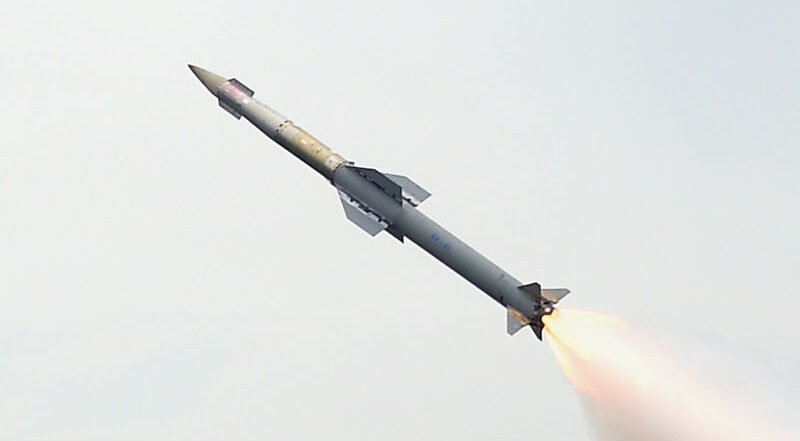
India is poised to finalise a ₹30,000 crore procurement contract for the Anant Shastra Quick Reaction Surface-to-Air Missile (QRSAM) system, marking a major step in the Indian Army’s mobile air defence modernisation programme.
The QRSAM system, developed by the Defence Research and Development Organisation (DRDO), is a self-propelled, all-terrain air defence platform designed to counter low-level aerial threats including fighter jets, helicopter gunships, unmanned aerial vehicles, and cruise missiles. The system operates on a 8×8 wheeled chassis, enabling rapid deployment and mobility across diverse terrain.
The Anant Shastra variant represents an indigenous evolution of India’s air defence capabilities, built on lessons learned from earlier DRDO programmes and field operational experience. The system integrates phased-array radar, command centre vehicles, and transporter-erector-launcher units capable of engaging multiple targets simultaneously across a broad operational envelope.
India’s air defence modernisation has accelerated over the past decade as the country faces evolving aerial threats across its northern and western borders. The QRSAM addresses a critical gap in mobile, medium-range air defence coverage between point-defence systems and longer-range strategic platforms. Its integration into Indian Army formations will enhance operational flexibility and rapid response capability in contested airspace scenarios.
The procurement aligns with India’s broader Make in India defence strategy, prioritising indigenous development and production of critical weapon systems. DRDO’s air defence portfolio, spanning from Akash and Aastra variants to systems currently under development, reflects sustained investment in closing technological gaps that historically required foreign acquisitions.
The QRSAM’s all-weather operational capability and networked fire control architecture enable seamless integration with Army air defence networks, supporting both divisional and corps-level air operations. The system’s modular design permits integration of advanced sensors and improved missile variants as technology matures, ensuring operational relevance across multiple force structure timelines.
The ₹30,000 crore contract encompasses production batches, ground support infrastructure, training facilities, and through-life support arrangements spanning several years of implementation. This procurement scale reflects the Indian Army’s requirement to outfit multiple divisions and corps-level formations with modern mobile air defence coverage.
Finalisation of this deal underscores India’s commitment to reducing dependence on foreign air defence systems while building indigenous technological expertise in radar and missile integration. The Anant Shastra programme contributes to India’s strategic autonomy in air defence operations across its extended operational areas.
-

-

-

-