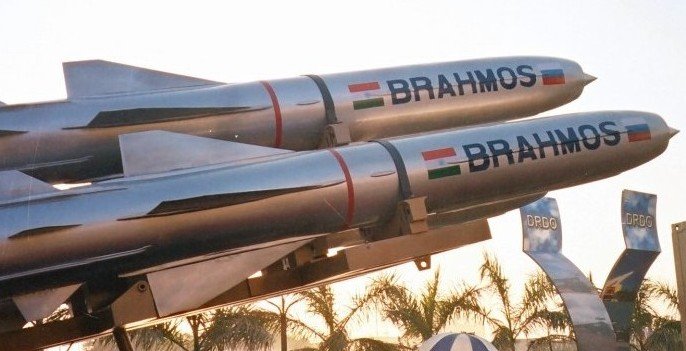
India is delaying the development of the BrahMos-NG variant to accelerate work on a domestically designed supersonic cruise missile intended to counter emerging threats from China. The strategic shift reflects New Delhi’s push to reduce dependence on Russia for advanced missile technology and strengthen indigenous capability in the hypersonic and supersonic domain.
The BrahMos-NG was conceived as a next-generation iteration of the BrahMos cruise missile family, featuring reduced radar cross-section, extended range, and enhanced guidance systems. The original BrahMos, jointly developed by India’s Defence Research and Development Organisation (DRDO) and Russia’s NPO Mashinostroyeniya, entered service with the Indian Navy in 2005 and has since been integrated across all three services in land-attack, anti-ship, and air-launched variants.
The decision to deprioritise BrahMos-NG in favour of an all-Indian platform underscores DRDO’s confidence in its own supersonic cruise missile programme, which has been under development at the Pune-based Aeronautical Development Establishment. This indigenous system is designed to match or exceed the performance envelope of the BrahMos while offering greater operational flexibility and reduced foreign technology reliance.
India’s shift aligns with the broader Make in India defence strategy championed over the past decade, which seeks to transition from procurement-dependent models to indigenous design and production. The BrahMos partnership, while operationally proven, remains subject to Russian oversight on upgrades and modifications. An indigenous supersonic missile would grant India complete autonomy in system enhancement, production scaling, and integration across platforms.
The delay is not expected to impact operational capability. All variants of the BrahMos currently in service, including the air-launched Brahmos-A and ship-borne Brahmos-SV versions, remain fully operational across the Indian Air Force, Navy, and Army. The focus on the indigenous alternative represents a long-term modernisation priority rather than an immediate operational gap.
China’s expanding arsenal of anti-ship cruise missiles, hypersonic glide vehicles, and advanced air defence systems has intensified India’s imperative to field faster, more manoeuvrable, and less predictable strike platforms. A fully indigenous supersonic cruise missile, coupled with India’s advancing indigenous Advanced Air Defence System and emerging hypersonic test programmes, would substantially augment India’s deterrent posture in the Indo-Pacific.
DRDO has successfully tested cruise missile variants over the past decade, including the Nirbhay subsonic cruise missile and solid-fuelled variants. The acceleration of the supersonic indigenous platform reflects confidence that earlier test data and validation can be leveraged to compress the development timeline of the next-generation system.
-

-

-

-