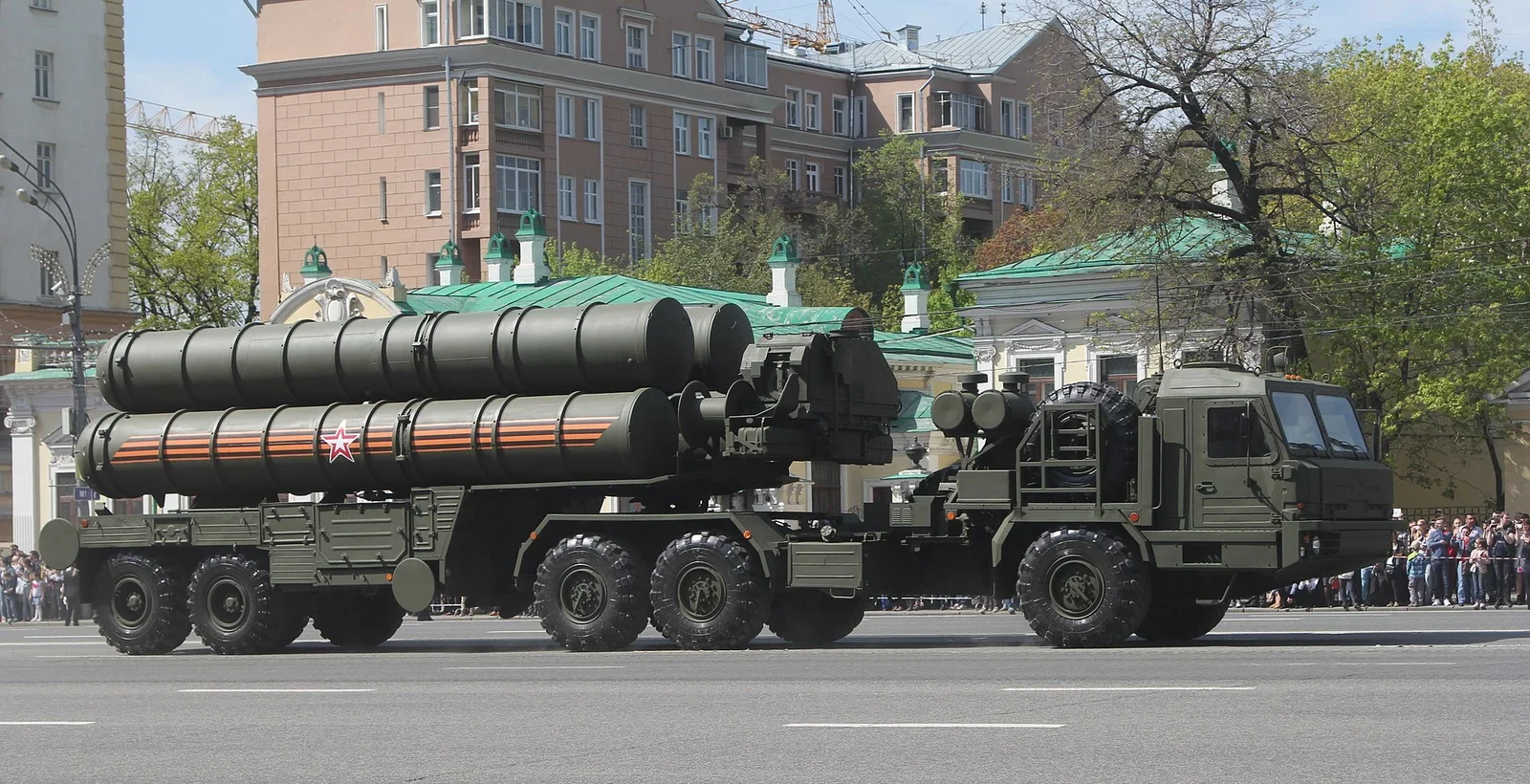
India is expanding its integrated air defence architecture by inducting ten squadrons of the S-400 Triumf system, cementing the Russian-origin long-range platform as the backbone of the country’s layered air defence posture across multiple operational theatres.
The S-400, formally designated Triumf in Russian service, is a mobile surface-to-air guided missile system capable of engaging aircraft, cruise missiles, and ballistic targets at ranges up to 400 kilometres. India’s acquisition of the system, initiated following the 2015 defence procurement agreement with Russia, represents one of the country’s most strategically significant air defence investments of the past decade.
The first S-400 squadron was operationalised by the Indian Air Force in 2021, providing coverage over critical northern air corridors. With the planned expansion to ten squadrons, India will achieve comprehensive radar and missile coverage across its primary threat axes, particularly the northern and western borders where Pakistan and China maintain significant air capabilities.
Each S-400 squadron comprises a command post, radar units, and eight transporter-erector-launcher vehicles, enabling rapid deployment and sustained air defence operations. The system integrates with India’s broader air defence ecosystem, which includes Akash missiles for medium-range defence and newer indigenous systems like the Pralay tactical ballistic missile for complementary coverage.
The expansion aligns with India’s broader defence modernisation strategy, which prioritises filling critical capability gaps while reducing dependence on legacy air defence platforms. The country operates older Soviet-era systems including the S-75 Dvina and Pechora variants, many of which are approaching end-of-service life. The S-400 modernisation effort consolidates air defence operations under a single, technologically advanced platform.
Russia remains India’s primary defence partner for this capability. The contractual framework provides for enhanced maintenance and logistical support through Indian Navy workshops and DRDO facilities, reducing long-term operational costs. Technology transfer provisions also enable incremental indigenisation of sub-systems and spares production within India’s defence industrial base.
The ten-squadron induction programme underscores India’s commitment to air superiority across multiple operational zones simultaneously. The S-400’s dual-layer engagement capability, deploying both 40-kilometre and 250-kilometre range missiles from a single launcher unit, provides commanders operational flexibility in contested airspace scenarios involving multiple simultaneous threats.
Integration with India’s air defence command and control infrastructure, including the Integrated Air Command and Control System deployed at sector headquarters, enables networked air defence operations across vast geographic areas with minimal response time.
-

-

-

-