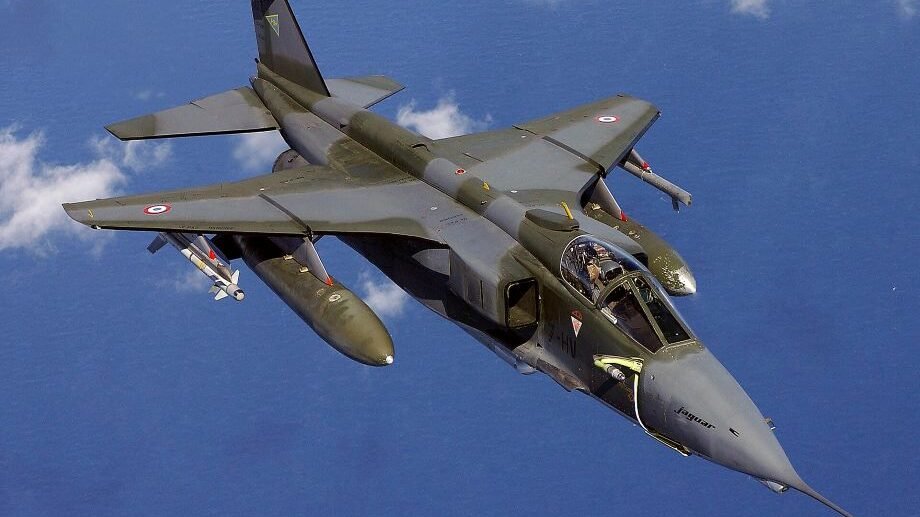
The Indian Air Force will receive additional retired Jaguar strike aircraft from the United Kingdom to sustain its existing fleet operations, marking a continuation of the defence partnership between New Delhi and London on platform sustainment.
The Jaguar has formed the backbone of the IAF’s deep-strike capability for over four decades. The twin-engine, all-weather attack aircraft was manufactured under licence by Hindustan Aeronautics Limited at its Bangalore facility, with a total of 131 aircraft built for the Indian armed forces.
The aircraft is optimised for low-level bombing runs and armed reconnaissance missions across varied terrain. Its variable-geometry wings enable operations from unprepared airstrips, a critical advantage in India’s operational theatre. The Jaguar’s endurance and payload capacity have made it integral to the IAF’s offensive air support doctrine.
Britain also operated a substantially similar variant of the Jaguar, designated the Jaguar GR.3A in Royal Air Force service, before retiring the fleet as newer platforms entered service. The supply of retired British Jaguars to India represents practical defence cooperation, reducing procurement costs while extending the operational life of India’s strike fleet.
This arrangement aligns with India’s broader strategy of maximising asset utility and managing defence budgets efficiently. The IAF has historically extended the operational lifespan of its Jaguar fleet through periodic upgrades, including avionics modernisation, weapon systems integration, and airframe refurbishment programmes conducted by HAL.
India has continuously sought to maintain air superiority and strike capability depth while newer platforms like the Tejas light combat aircraft mature and achieve higher production rates. The Jaguar, despite its age, retains operational relevance for specific missions and geographic theatres where its short-field capability and sustained low-altitude flight profile remain operationally advantageous.
The phased retirement of India’s Jaguar fleet is expected to take place gradually as the IAF transitions to platforms with advanced sensor suites, network-centric warfare capability, and lower operating costs. However, until that transition is complete, maintaining maximum availability of strike aircraft will remain a priority for air operations across the Indian subcontinent and the Indian Ocean Region.
-
-

-

-