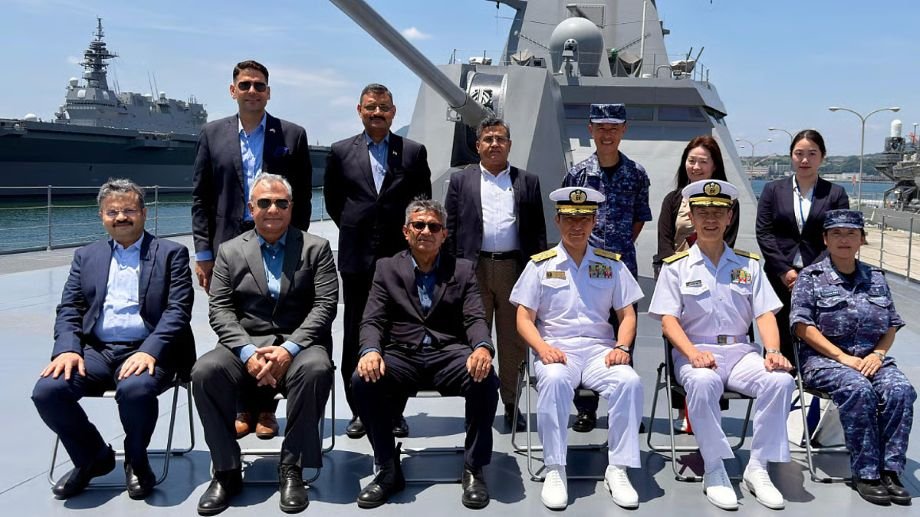
India’s Defence Secretary has visited Japan to review bilateral defence ties, with discussions on the Mogami-class frigate proposal gaining fresh momentum, officials said. The visit underscores deepening naval cooperation between the two nations as India accelerates its maritime modernisation.
The Mogami-class represents Japan’s latest frigate design, featuring advanced air defence systems, stealth characteristics, and multi-role combat capability. Japan has fielded two vessels in this class, with construction of additional units planned. The platform integrates modern fire control radar, vertical launch systems, and helicopters for anti-submarine and anti-surface operations.
For India’s Navy, the Mogami proposal fits into the broader Indian Navy’s frigate roadmap. The service currently operates Shivalik-class stealth frigates designed and built domestically by Mazagon Dock Shipbuilders Limited, supplemented by older Talwar-class vessels acquired from Russia. India has also inducted indigenously-designed Nilgiri-class frigates, the first of which was launched in 2019 as part of the Navy’s Project 17A modernisation initiative.
A potential Mogami partnership would align with India’s strategy of deepening defence industrial ties with Japan while addressing specific capability gaps in the frigate category. Japan’s involvement in Indian shipbuilding is not unprecedented. The two nations have collaborated on coast guard vessels, and Japan has been identified as a potential partner for submarine development and advanced naval technologies under India’s broader Indo-Pacific security framework.
The Defence Secretary’s visit reflects the intensifying India-Japan defence engagement, particularly in the maritime domain. Both nations view the Indo-Pacific as central to regional stability and have strengthened coordination through bilateral exercises, technology sharing, and defence manufacturing partnerships. Japan’s industrial expertise in surface combatant design and construction offers India access to proven frigate architectures and systems integration methodologies.
The Mogami proposal also carries strategic implications for India’s naval balance in the Indian Ocean Region. Frigate numbers remain a constraint in the Navy’s operational planning, particularly for sustained deployments across the Arabian Sea and Bay of Bengal. Induction of modern frigates through indigenous production, technology transfer agreements, or licensed construction would help bridge this gap.
Such partnerships typically involve long-term commitments to technology transfer, local content integration, and workforce training. Japan’s approach emphasizes quality over speed, which could benefit India’s shipbuilding sector through knowledge transfer in advanced welding, combat systems integration, and maintainability engineering.
-

-

-

-