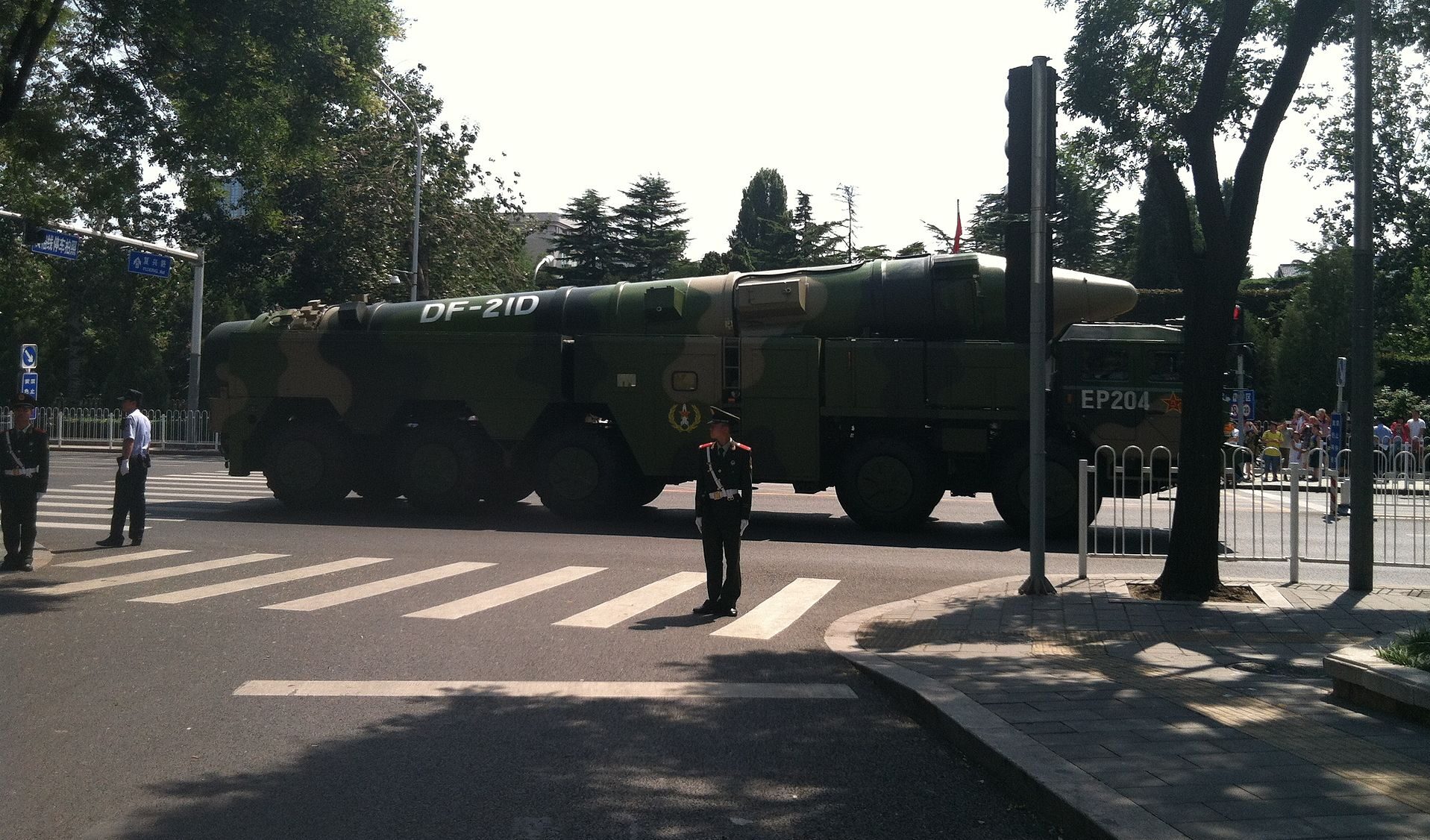
China’s rapidly growing inventory of long-range missiles has extended Beijing’s potential strike capability to include Australia, according to a report examining the strategic implications of the People’s Republic’s weapons modernisation.
The assessment underscores the accelerating pace of Chinese military modernisation across multiple platforms, including ballistic missiles, cruise missiles, and hypersonic systems. This expansion has shifted the calculus of regional security across the Indo-Pacific, narrowing response timelines for allied nations and expanding the geographic footprint of potential conflict zones.
Australia, a key partner in the AUKUS security arrangement with the United States and United Kingdom, has increasingly become a focus of Chinese military planning. The extension of strike range reflects both China’s investment in extended-range systems and the strategic geography of the Indo-Pacific, where continental Australia lies within reach of modernised platforms deployed from the Chinese mainland or forward positions.
India has monitored Chinese military advancement with considerable strategic attention. New Delhi’s own defence modernisation programme, accelerated over the past decade, reflects similar concerns about extended-range threats and the need for credible deterrence across multiple domains. India’s development of indigenous ballistic missile systems, including the Agni series, and advancement in hypersonic research underscores the imperative to maintain strategic autonomy in an era of rapid weapons proliferation.
The report’s findings align with broader assessments from defence analysts tracking Chinese weapons programmes. China’s investment in solid-fuelled missiles, sea-based launch platforms, and advanced guidance systems has produced systems with ranges exceeding 5,000 kilometres, placing allies and partners across the entire Indo-Pacific region within potential engagement envelopes.
For India, the implications extend beyond Australia. Chinese missiles capable of striking Australia possess ranges sufficient to cover India’s eastern seaboard, the Indian Ocean, and critical maritime chokepoints through which Indian trade transits. This reality has informed India’s own acquisition strategy, including enhanced air defence systems, naval modernisation, and the development of indigenous cruise and ballistic missile capabilities under DRDO programmes.
Australia’s position as a technologically advanced economy with significant defence industrial capacity has made it a priority target in Chinese strategic planning. The nation’s alignment with the Quad mechanism, alongside India, Japan, and the United States, has further elevated its profile in Beijing’s strategic calculations.
The extension of Chinese strike range to Australia represents not an isolated development but rather the logical endpoint of a sustained, decades-long modernisation programme. For India and other regional partners, the challenge remains translating awareness of these capabilities into coherent strategic responses that preserve deterrence while avoiding escalation.
-

-

-

-