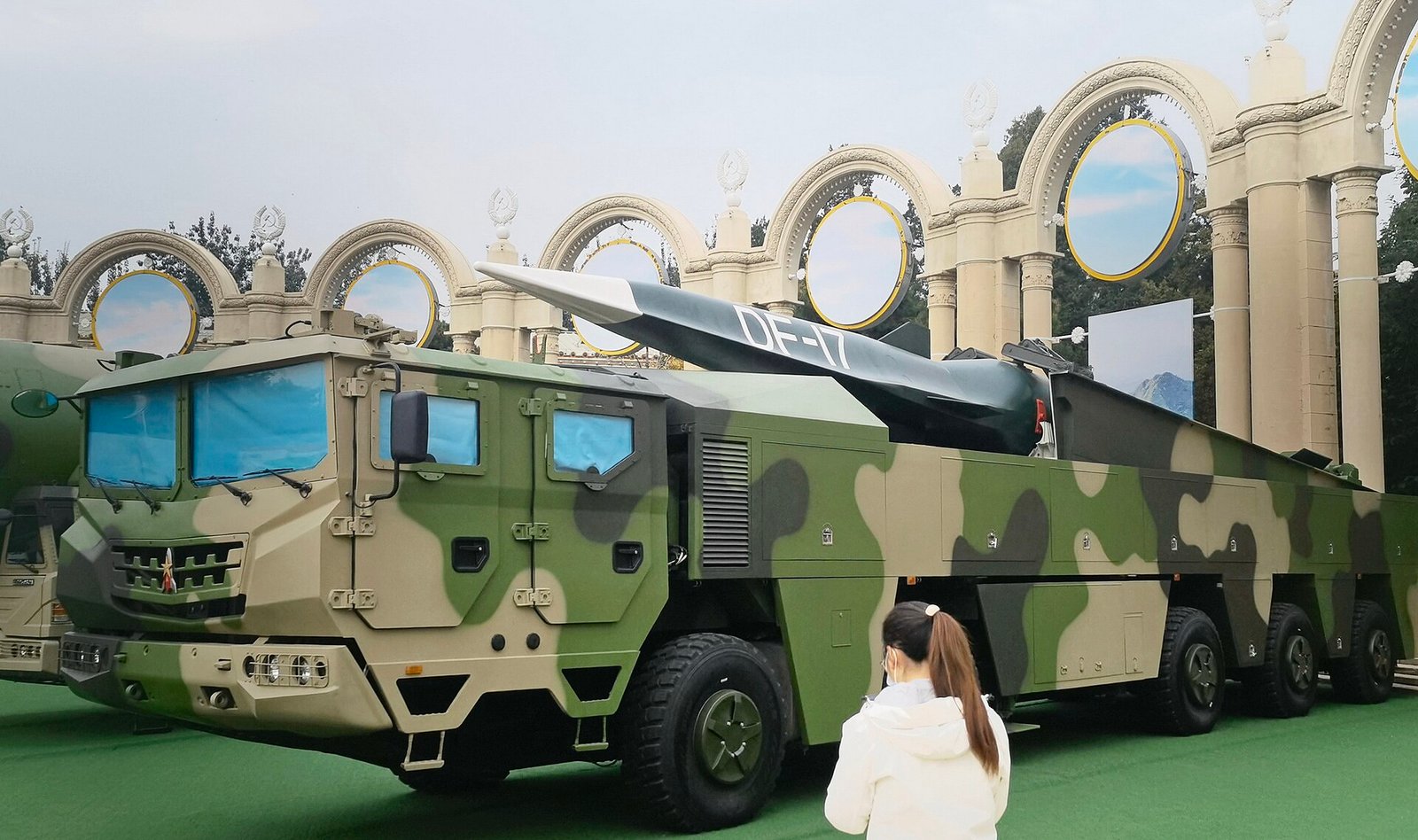
China has released its first-ever video footage of a Dongfeng-17 hypersonic missile launch, according to media reports. The footage shows the air-launched variant of the system during a test flight, marking a rare public display of one of Beijing’s most advanced strategic weapons.
The Dongfeng-17, known by the NATO reporting name DF-17, is a medium-range ballistic missile equipped with a hypersonic glide vehicle warhead. The system entered operational service with the People’s Liberation Army Rocket Force in 2019 and represents a significant advancement in China’s missile technology portfolio.
The DF-17 is designed to carry a hypersonic glide vehicle, which separates from a ballistic trajectory in its terminal phase and maneuvers at sustained hypersonic speeds. This characteristic makes it considerably more difficult to intercept using conventional air defence systems. The missile has an estimated range of 1,500 to 2,000 kilometres, placing it in the theatre ballistic missile category.
India closely monitors developments in Chinese missile technology as part of its broader assessment of regional military capabilities. The Indian defence establishment has been tracking hypersonic weapons development globally, recognising their potential impact on existing air defence architectures across South Asia.
India’s own hypersonic research programmes remain under development at DRDO. The Defence Research and Development Organisation has been working on hypersonic technology demonstrators and scramjet-powered cruise missiles as part of its long-term strategic modernisation plan.
The release of Chinese footage signals Beijing’s confidence in the DF-17 system and underscores its emphasis on maintaining technological parity with Western powers in hypersonic weapons development. Such public displays are typically made to reinforce deterrence messaging and demonstrate military modernisation to both domestic and international audiences.
The hypersonic missile landscape has evolved significantly over the past decade. The United States, Russia, and several European nations have also invested heavily in hypersonic technology. India’s defence strategy incorporates indigenous development of these advanced systems as part of the Make in India initiative and broader self-reliance objectives.
Strategic analysts note that the proliferation of hypersonic weapons systems globally necessitates parallel investments in detection, tracking, and interception capabilities. This dynamic continues to shape India’s air defence modernisation priorities and sensor development roadmaps across the Army, Navy, and Air Force.
-

-

-

-