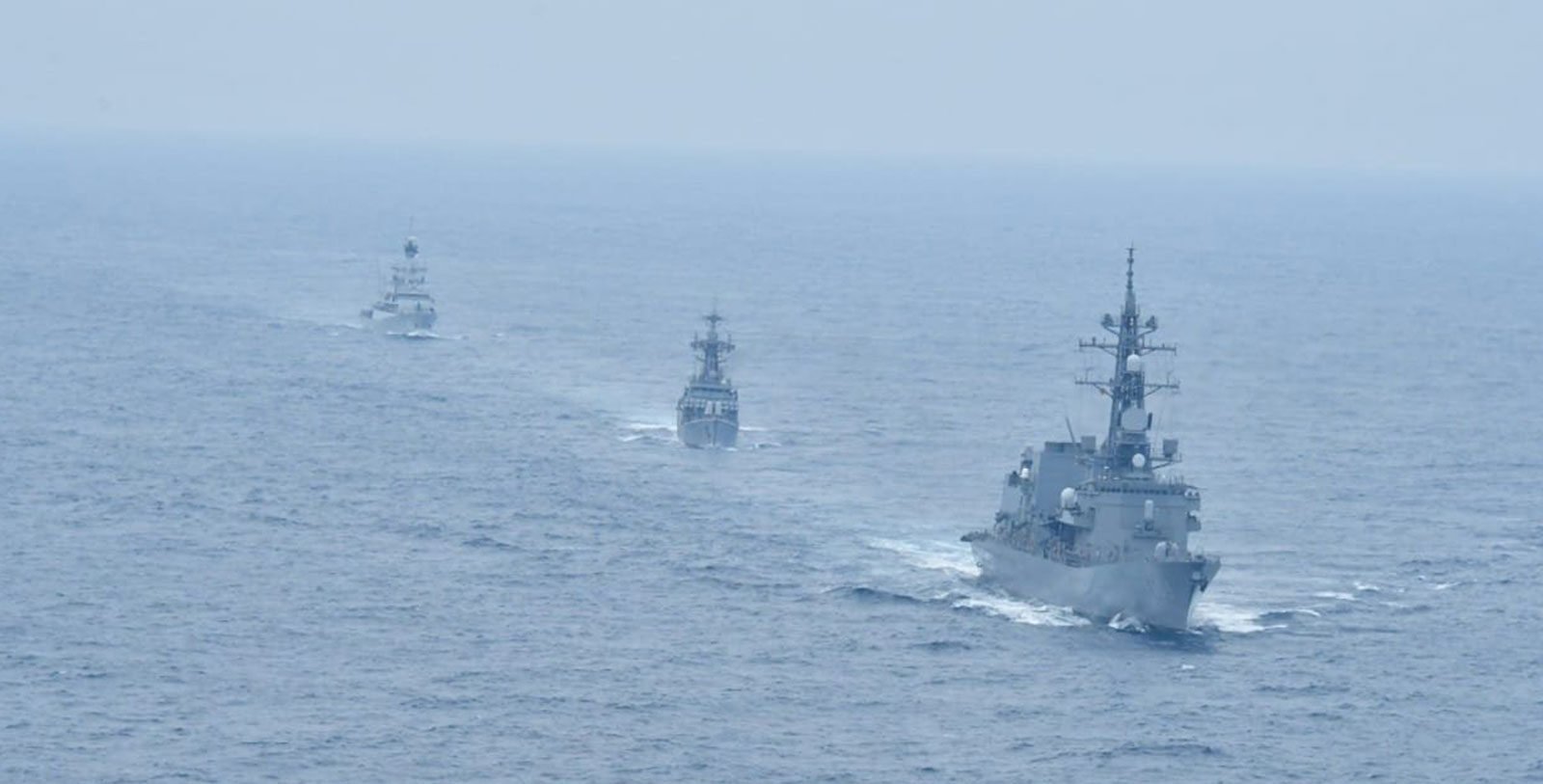
China has criticised Japan’s expanding military presence in the South China Sea, claiming Tokyo’s role is more destructive than that of the United States.
The remarks underscore deepening tensions over Japan’s shift toward a more assertive defence posture in the Indo-Pacific region, a strategic pivot that has accelerated over the past two years amid concerns over regional stability and freedom of navigation.
Japan has significantly increased its military operations and partnerships in Southeast Asia, including joint exercises with regional navies and enhanced intelligence-sharing arrangements. Tokyo’s maritime self-defence force has expanded patrols in waters that China claims as its own, including the disputed South China Sea, where overlapping territorial claims involve multiple nations including Vietnam, the Philippines, and Malaysia.
India has carefully monitored these developments as part of its broader Indo-Pacific strategy. New Delhi shares strategic concerns with Japan and other Quad partners over freedom of navigation and adherence to international maritime law in the region. The Indian Navy has conducted several joint exercises with Japanese and U.S. naval forces in the Indo-Pacific, including operations in the Eastern Indian Ocean and Bay of Bengal.
The Malabar exercise series, India’s primary trilateral naval exercise with Japan and the United States, has progressively expanded its operational scope and geographical reach. These exercises focus on anti-submarine warfare, surface combat operations, and air defence coordination in contested waters, strengthening interoperability among allied navies.
China’s pushback against Japanese military activities reflects its broader concern over what Beijing views as encirclement by U.S.-aligned powers. Beijing has consistently objected to what it characterises as external interference in regional affairs, though international observers note that China’s own military modernisation and assertive claims have driven neighbouring nations toward greater defence cooperation.
Japan’s defence spending has grown substantially, with Tokyo allocating increased budgets toward maritime capabilities, including advanced destroyers, submarines, and surveillance systems. This expansion is complemented by closer defence ties with Australia, South Korea, and India, creating a network of security partnerships across the Indo-Pacific.
For India, Japan’s military role in Southeast Asia is broadly aligned with New Delhi’s own strategic interests in maintaining a rules-based international order and ensuring open sea lanes critical to Indian commerce and energy security. However, India has sought to balance its partnerships with careful diplomacy, avoiding direct military confrontation while strengthening defensive capabilities alongside allies.
-

-

-

-