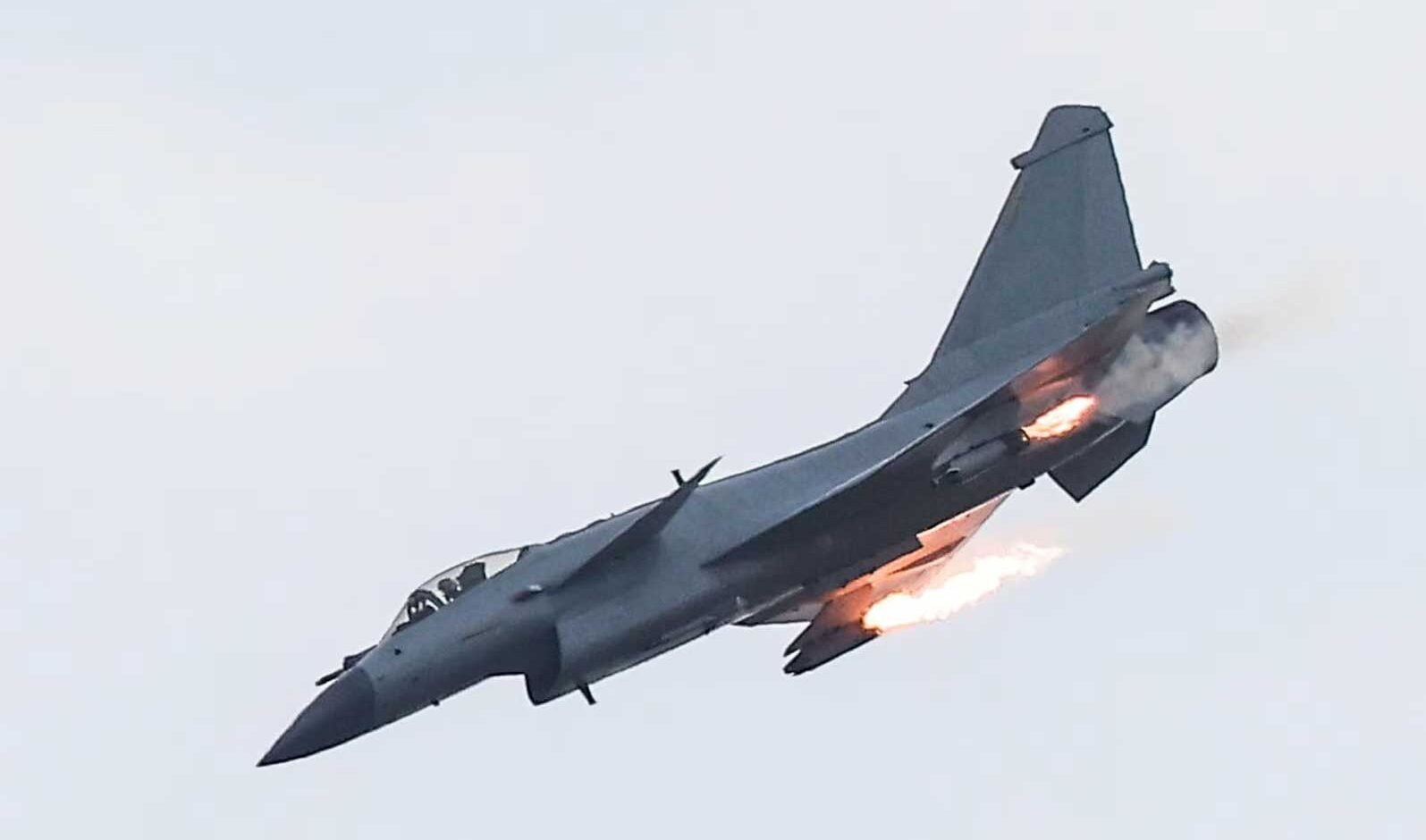
Bangladesh is exploring the acquisition of China’s J-10CE fighter aircraft, following Pakistan’s operational induction of the platform into the Pakistan Air Force, according to reports. The development signals renewed regional interest in affordable, combat-proven fourth-generation fighters as South Asian air forces modernise their fleets.
The J-10CE represents Beijing’s latest export variant of the J-10 family, a single-engine, multi-role combat aircraft that has been in service with the People’s Liberation Army Air Force since 2005. Pakistan formally inducted its first squadron of J-10C fighters in March 2024, making it the first overseas operator of the improved variant.
The J-10CE is optimised for export customers and incorporates refinements over earlier J-10A and J-10B variants. The aircraft features an advanced active electronically scanned array radar, integrated avionics suite, and modern air-to-air and air-to-ground weapon systems. Its combat radius extends to approximately 1,250 kilometres with a combat load, and it can sustain speeds up to Mach 1.8.
Bangladesh’s current fighter inventory comprises ageing Chengdu F-7 aircraft, which entered service in the 1990s. The Bangladesh Air Force has long sought to upgrade its combat capability, and the J-10CE would represent a substantial leap in operational performance and systems integration compared to the F-7 fleet.
For New Delhi, Bangladesh’s potential acquisition underscores the strategic competition for influence in South Asia’s defence procurement landscape. India has offered the Tejas light combat aircraft to Bangladesh, positioning it as an indigenous alternative to imported platforms. The Tejas programme, managed by Hindustan Aeronautics Limited and DRDO, has faced extended development cycles, though the aircraft is now operationally deployed with the Indian Air Force.
China’s willingness to export the J-10CE reflects broader Beijing strategy to deepen defence ties across South Asia, where it has already supplied platforms to Pakistan, Bangladesh, and other regional players. The J-10CE’s price point, reported in the range of $55-70 million per unit, positions it competitively against platforms like the Gripen E and Rafale in the global fighter export market.
India maintains defence partnerships with Bangladesh through arms supplies, training, and maritime cooperation frameworks. However, Beijing’s expanding defence footprint in the region, coupled with economic engagement through Belt and Road Initiative projects, has strengthened China-Bangladesh relations across multiple domains.
Any formal procurement by Bangladesh would require navigating financing, technology transfer agreements, and logistics support frameworks that China typically structures through concessional loans and long-term defence partnerships. Pakistan’s successful integration of the J-10C into its operational doctrine may serve as a reference point for Bangladesh Air Force planners evaluating capability gaps and timeline requirements.
-

-
-
-