India is moving towards a new generation of space-based intelligence technology with Bengaluru-based Astrome Technologies receiving government backing to develop an advanced satellite network for national security. The initiative will bring together electronic signal monitoring, artificial intelligence and communication between satellites, creating an indigenous platform designed to strengthen India’s strategic capabilities in space.
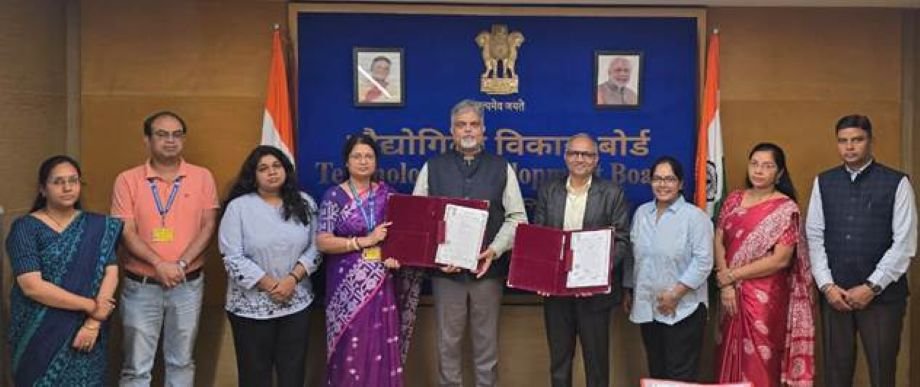
The Technology Development Board (TDB), under the Department of Science and Technology (DST), has signed a financial support agreement with Astrome Technologies Pvt Ltd under the Research, Development and Innovation (RDI) Fund. The government will provide ₹64.05 crore towards the programme, which has a total estimated investment of ₹128.11 crore. The funding will be extended through an Optionally Convertible Debt arrangement.
The proposed programme centres on developing an Artificial Intelligence-enabled Electronic Intelligence (AI-ELINT) constellation. Unlike conventional satellites primarily designed for imaging and observation, the proposed system will focus on identifying and analysing electronic signals from space. Such capabilities can contribute to understanding electronic activity across areas of strategic interest and support national security requirements.
Astrome plans to develop microsatellites weighing approximately 50 kilograms each for deployment in Low Earth Orbit (LEO). Rather than relying on a single spacecraft, the programme envisages a constellation of interconnected satellites that can progressively expand geographical coverage and increase the frequency of observations. This distributed architecture is intended to support more consistent monitoring of identified areas of interest.
The development programme will focus on three major technological areas. The first is an indigenous Electronic Intelligence payload capable of detecting and analysing signals across a broad frequency range. This equipment will form the primary intelligence-gathering component of the proposed satellites. The second is AI-based ground processing software, which will process and analyse the information received from the spacecraft. Artificial intelligence is expected to help improve the efficiency of handling complex signal-related information.
The third component involves inter-satellite communication technology. These communication links will allow individual spacecraft to exchange information and function as part of a coordinated network. Integrating these systems is expected to improve the overall effectiveness of the constellation as additional satellites become available.
An important target of the initiative is to take its core technologies from Technology Readiness Level 4 (TRL-4) to TRL-9. This will require extensive engineering, system integration, technology development, testing and validation before the systems reach the highest stage of operational readiness.
TDB Secretary Rajesh Kumar Pathak highlighted the importance of sustained investment and technological innovation in developing sophisticated space platforms. He noted that the RDI Fund is intended to support Indian enterprises working on advanced technologies that can contribute to the country’s strategic interests.
An authorised representative of Astrome Technologies stated that the financial assistance would accelerate the development and integration of indigenous electronic intelligence payloads, AI-based processing capabilities and inter-satellite communication systems.
The agreement represents a significant opportunity for India’s private space industry, particularly in the development of technologies with strategic and national security applications. By supporting domestic engineering and research, the initiative aims to reduce dependence on external technology providers and encourage innovation within the country’s deep-tech ecosystem.
As the programme progresses through development and validation, it could contribute to India’s broader ambition of establishing independent space-based intelligence capabilities. The initiative also highlights the growing role of private Indian companies in developing advanced technologies for the country’s future defence and security requirements.
-

-

-

-