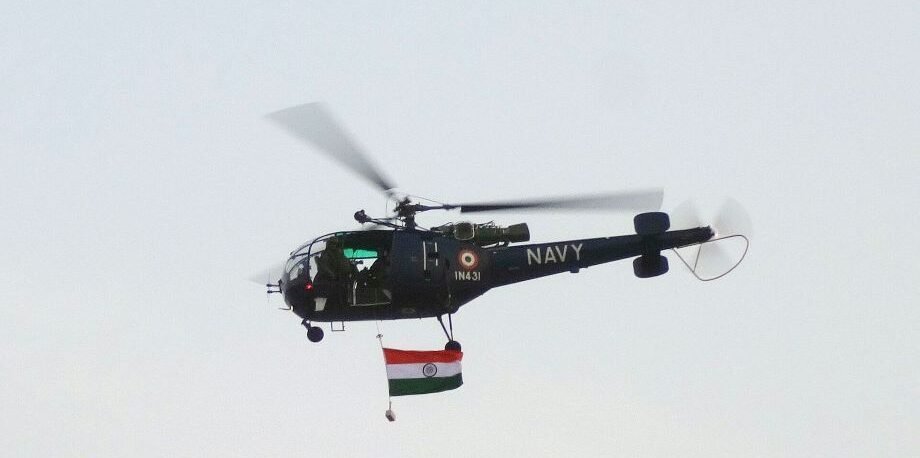
India is exploring an innovative approach to military aviation by considering the conversion of its ageing Chetak helicopters into autonomous, uncrewed aerial platforms. The initiative could give these long-serving aircraft a second operational life while opening new possibilities for the Indian Navy’s future drone capabilities.
Bengaluru-based defence technology company Xinfiniti AeroSpace has reportedly commenced ground-phase trials for the Naval Chetak Autonomous System (NCAS), a programme being undertaken in collaboration with the Indian Navy under the Innovations for Defence Excellence (iDEX) framework. The project focuses on converting conventional, crewed Chetak helicopters into pilotless aircraft through the integration of autonomous flight technologies and ground-control systems.
The development represents an important step towards exploring the military applications of autonomous rotary-wing aircraft in India. Rather than developing an entirely new helicopter platform, the programme aims to utilise existing Chetak airframes and adapt them for uncrewed operations. This approach could potentially reduce development expenses and make better use of proven aviation platforms that have served the armed forces for decades.
According to Xinfiniti AeroSpace CEO Vishal Kumar Verma, the conversion involves removing equipment associated with conventional pilot operations and replacing it with autonomous flight-control systems and supporting ground infrastructure. The modified aircraft would be designed to operate without a pilot onboard, although its actual operational capabilities will depend on the successful completion of testing and evaluation.
The proposed autonomous helicopters could undertake several military assignments, including heavy cargo transportation, aerial reconnaissance, surveillance and selected combat-support operations. Their potential use in difficult weather conditions could also make them valuable for missions where conventional crewed aircraft face operational challenges. However, these capabilities remain programme objectives rather than demonstrated operational achievements.
The Chetak has a long history of service with India’s armed forces. Manufactured by Hindustan Aeronautics Limited (HAL) under licence from the French Sud-Aviation, the helicopter is based on the Alouette III design. Introduced into Indian military service during the 1960s, the seven-seat, multi-role platform has supported the Indian Navy, Army, Air Force and Coast Guard across numerous operational requirements.
Over the years, Chetak helicopters have performed transportation, communication, maritime surveillance, search-and-rescue and casualty evacuation missions. However, as newer aircraft gradually enter service, maintaining and operating older helicopter fleets presents increasing challenges, making alternative uses for existing airframes an interesting proposition.
The autonomous conversion programme also reflects India’s growing interest in developing indigenous defence technologies through partnerships between the armed forces and private-sector innovators. The iDEX initiative has provided opportunities for domestic startups to work on military requirements and introduce new technological solutions.
If the NCAS programme successfully progresses through its testing stages, it could establish a new pathway for converting legacy military helicopters into remotely operated or autonomous platforms. Such technology may eventually offer additional flexibility for logistics, surveillance and other high-risk missions.
For now, the project remains at the ground-trial stage, and further testing will be necessary before any converted Chetak can demonstrate operational readiness. Nevertheless, the initiative highlights an emerging direction in Indian military modernisation, where ageing aircraft may not simply be retired but could potentially be adapted for the next generation of autonomous warfare.
-

-

-
-