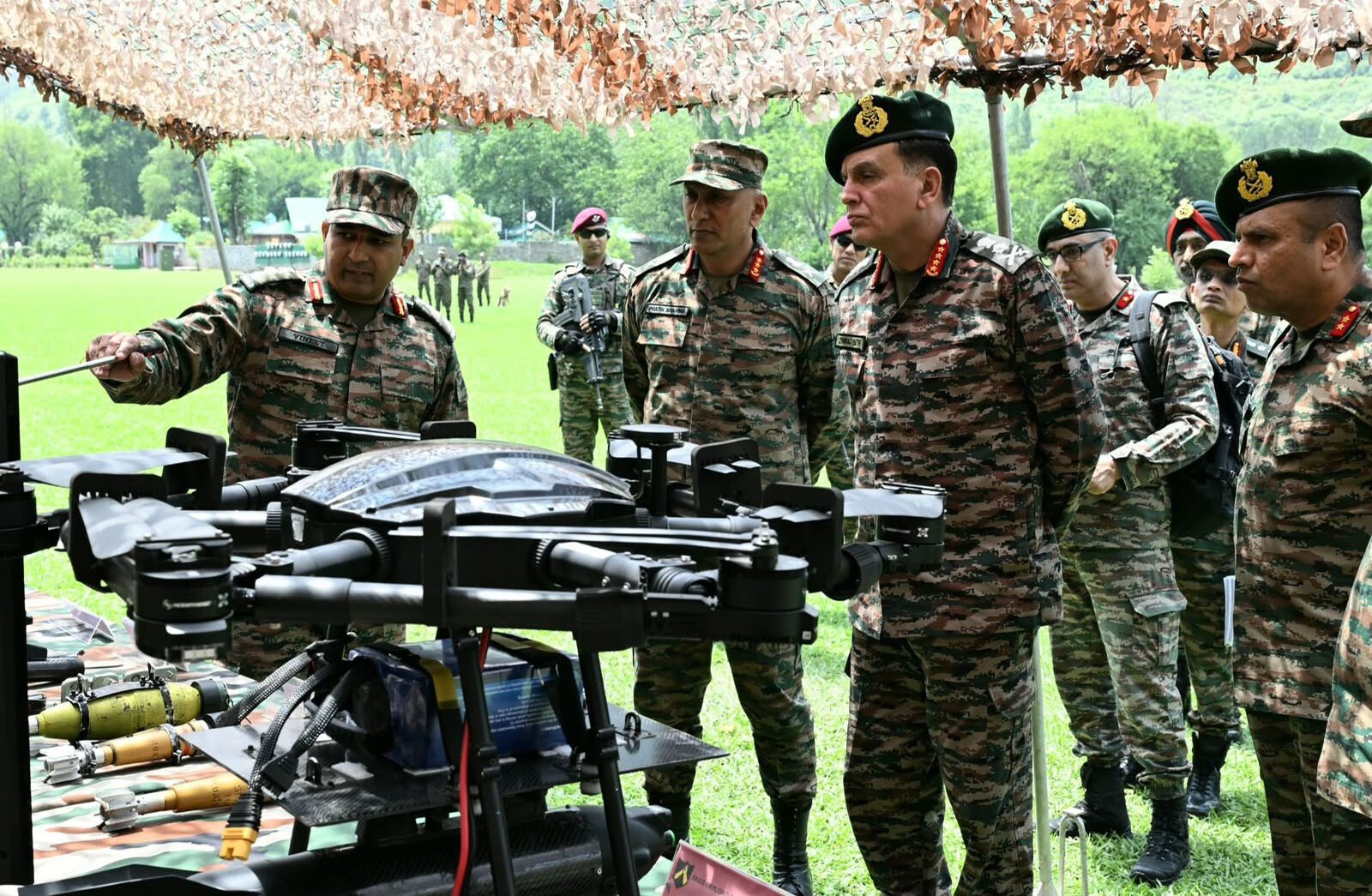
Army Chief General Dhiraj Seth has undertaken his first visit to Northern Command to review operational readiness across India’s China and Pakistan frontiers. The visit underscores the Indian Army’s continued focus on maintaining combat preparedness along both high-altitude and conventional fronts simultaneously.
Northern Command, headquartered in Udhampur, Jammu and Kashmir, oversees one of the world’s most strategically significant and geographically challenging operational areas. The command is responsible for defending India’s borders across the Line of Control with Pakistan in Jammu and Kashmir, and the Line of Actual Control with China spanning Ladakh, Himachal Pradesh, Uttarakhand, Sikkim, and Arunachal Pradesh.
The Army Chief’s inspection of both fronts reflects the dual operational challenge the Indian Army faces. On the Pakistan front, Northern Command manages counter-insurgency and counter-terrorism operations while maintaining conventional deterrence. The command operates mechanised formations, mountain divisions, and specialized counter-insurgency units adapted to operate in dense forests and urban terrain of the Kashmir Valley.
The China front presents distinct challenges requiring high-altitude warfare capabilities. Northern Command maintains mountain divisions equipped and trained for operations at altitudes exceeding 6,000 metres, with specialized cold-weather gear, indigenous rope systems, and altitude acclimatisation protocols. The 2020 Galwan Valley clash and subsequent border stand-offs highlighted the necessity for enhanced surveillance, rapid mobility, and integrated firepower at extreme altitudes.
Recent years have witnessed significant infrastructure development in Northern Command’s area of responsibility. The Indian Army has upgraded forward landing grounds, enhanced logistics corridors, and increased deployment of surveillance systems along both borders. Indigenous systems including UAV platforms and electronic warfare equipment have been progressively inducted to improve border monitoring and situational awareness.
A new Army Chief’s visit to Northern Command typically focuses on assessing unit morale, infrastructure readiness, training standards, and tactical preparedness. Such visits also provide the Chief with direct interaction with commanders at formation and unit levels, critical for understanding operational challenges and implementation of Army Headquarters directives at ground level.
Northern Command has been at the forefront of India’s military modernisation initiatives, serving as a proving ground for new weapon systems, communication networks, and doctrine development. The command’s operational environment, spanning three distinct geographical theatres, makes it invaluable for testing integrated multi-domain operations before wider rollout across the Indian Army.
-

-
-

-