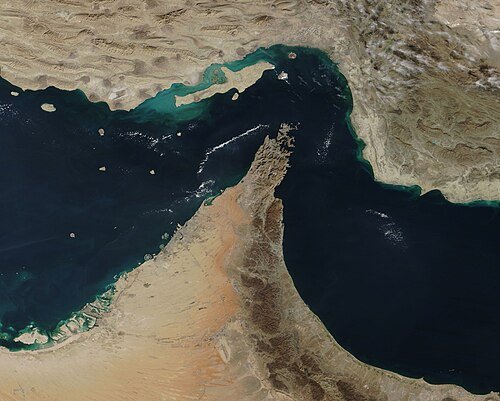
The United States has made clear that any sanctions relief for Iran will be contingent on addressing its nuclear programme, not on reopening the Strait of Hormuz, according to latest statements from Washington.
The positioning represents a hardening of US conditions in any future negotiations with Tehran. Reopening the strategic waterway, through which roughly one-third of global seaborne oil passes, has been mentioned in some diplomatic circles as a potential confidence-building measure, but Washington is signalling that nuclear compliance remains non-negotiable.
For India, the Strait of Hormuz represents a critical chokepoint for energy security. Approximately 85% of India’s crude oil imports transit through the waterway, making any disruption or instability a direct threat to the nation’s economic and strategic interests. The Indian Navy has maintained heightened surveillance and coordination protocols in the region to ensure safe passage of merchant vessels and tankers flying the Indian flag.
India’s strategic posture on the Iran question has historically balanced concerns about nuclear proliferation against energy security imperatives. New Delhi has maintained diplomatic channels with Tehran while adhering to international non-proliferation frameworks and cooperating with US-led security architecture in the Indian Ocean Region.
The Strait of Hormuz has been a focal point of Indian maritime strategy for decades. The Indian Navy conducts regular operations in the Arabian Sea and Persian Gulf approaches, including anti-piracy patrols and port calls that underscore New Delhi’s commitment to freedom of navigation and regional stability. Any prolonged instability in the region would directly impact India’s oil pricing, import timelines, and broader energy strategy.
The US position also carries implications for India’s broader Middle East engagement. As New Delhi deepens ties with the Gulf Cooperation Council states through defence partnerships, technology sharing, and military exercises, ensuring a stable Hormuz corridor remains strategically vital. India’s I2U2 grouping with Israel, the US, and the UAE reflects this commitment to regional security architecture.
Washington’s insistence on nuclear compliance over Hormuz access also signals that any future Iran deal will require far deeper verification mechanisms and longer-term restrictions than the 2015 JCPOA. This stance carries downstream effects for India’s energy procurement strategies and defence partnerships in the Gulf.
-

-
-

-