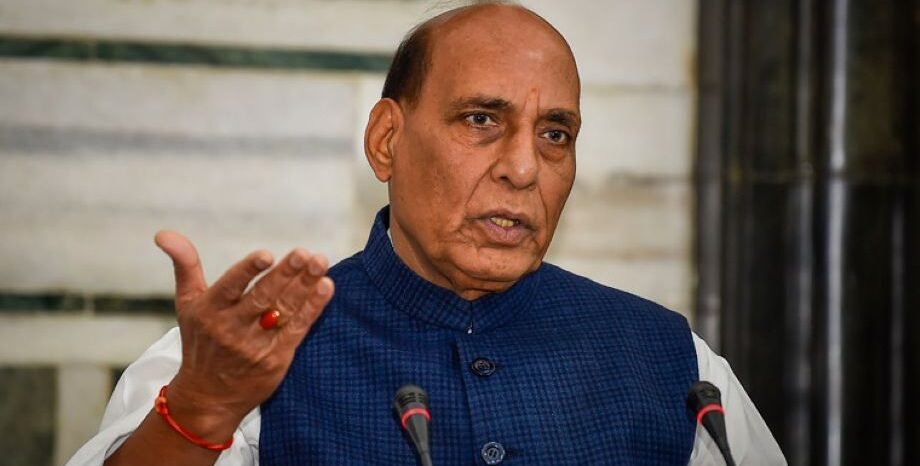
Defence Minister Rajnath Singh has called for stronger international cooperation and more resilient maritime infrastructure amid growing security challenges affecting global shipping and international trade. Addressing the Indo-Pacific Regional Dialogue (IPRD) 2026 in New Delhi on November 4, he stressed that countries must work together to protect critical sea routes and strengthen maritime interdependence against emerging threats.
Singh expressed concern over deliberate disruptions to international trade, restrictions on freedom of navigation and attempts by certain actors to use strategically important maritime passages for unilateral advantages. He warned that increasing instability across the world’s oceans could have wider consequences for international security, economic stability and global connectivity.
Highlighting the importance of maritime routes, the Defence Minister explained that oceans serve as essential links between nations, supporting international commerce, economic development and the exchange of knowledge and resources. He emphasised that global supply chains remain heavily dependent on uninterrupted shipping operations, making the protection of maritime infrastructure a shared international responsibility.
He also drew attention to the importance of undersea communication cables, which carry more than 95 per cent of global digital traffic. According to Singh, the security of these underwater networks is becoming increasingly important as countries depend on digital connectivity for economic activities, communication and critical services.
The Defence Minister pointed out that maritime security challenges are no longer limited to conventional military threats. Piracy, human trafficking, illegal fishing, cyberattacks and natural disasters are also creating significant risks for the maritime domain. He called for security strategies to evolve in response to these changing threats.
Singh further highlighted the growing role of emerging technologies in strengthening maritime awareness and security operations. Artificial intelligence, autonomous systems, advanced sensors and data analytics are creating new opportunities to monitor ocean activities and respond to potential threats more effectively.
However, he cautioned that technological development should not increase inequalities between countries. He advocated greater cooperation in research, innovation, education and capacity building, particularly to support smaller maritime nations and developing economies that may lack advanced technological infrastructure.
Emphasising the need for stronger economic resilience, Singh called for diversified supply chains, reliable maritime infrastructure and improved regional cooperation. He maintained that globalisation should not be abandoned whenever disruptions occur. Instead, countries should focus on making their economic and maritime connections more secure and capable of withstanding unexpected challenges.
The Defence Minister also connected India’s maritime ambitions with its long-term development objectives under the Viksit Bharat 2047 vision. He highlighted government initiatives aimed at strengthening port infrastructure, improving maritime connectivity, expanding coastal economic activities and developing India’s maritime industrial capabilities. The Maritime Amrit Kaal Vision 2047 was identified as an important framework for the country’s maritime transformation.
Environmental protection was another important aspect of his address. Singh stressed that economic growth and ecological responsibility must advance together, calling for the sustainable use of ocean resources and greater protection of marine ecosystems and coastal communities.
Reaffirming India’s commitment to a free, open, inclusive and rules-based maritime order, he highlighted the MAHASAGAR vision and the Indo-Pacific Oceans Initiative (IPOI) as important frameworks for strengthening regional cooperation. He also urged participating countries to translate discussions into practical partnerships, joint research programmes and measurable outcomes.
The three-day Indo-Pacific Regional Dialogue 2026, organised by the Indian Navy in association with the National Maritime Foundation, began on November 3 in New Delhi. The conference brings together maritime experts, policymakers and representatives from different countries to discuss emerging challenges and opportunities across the Indo-Pacific.
India’s position at the dialogue reflects its broader approach towards regional maritime security, focusing on cooperation, technological development, resilient supply chains and the protection of shared maritime interests. As international trade and digital connectivity continue to depend on secure oceans, stronger partnerships among maritime nations will remain essential for maintaining regional stability and global economic prosperity.
-
-
-
-