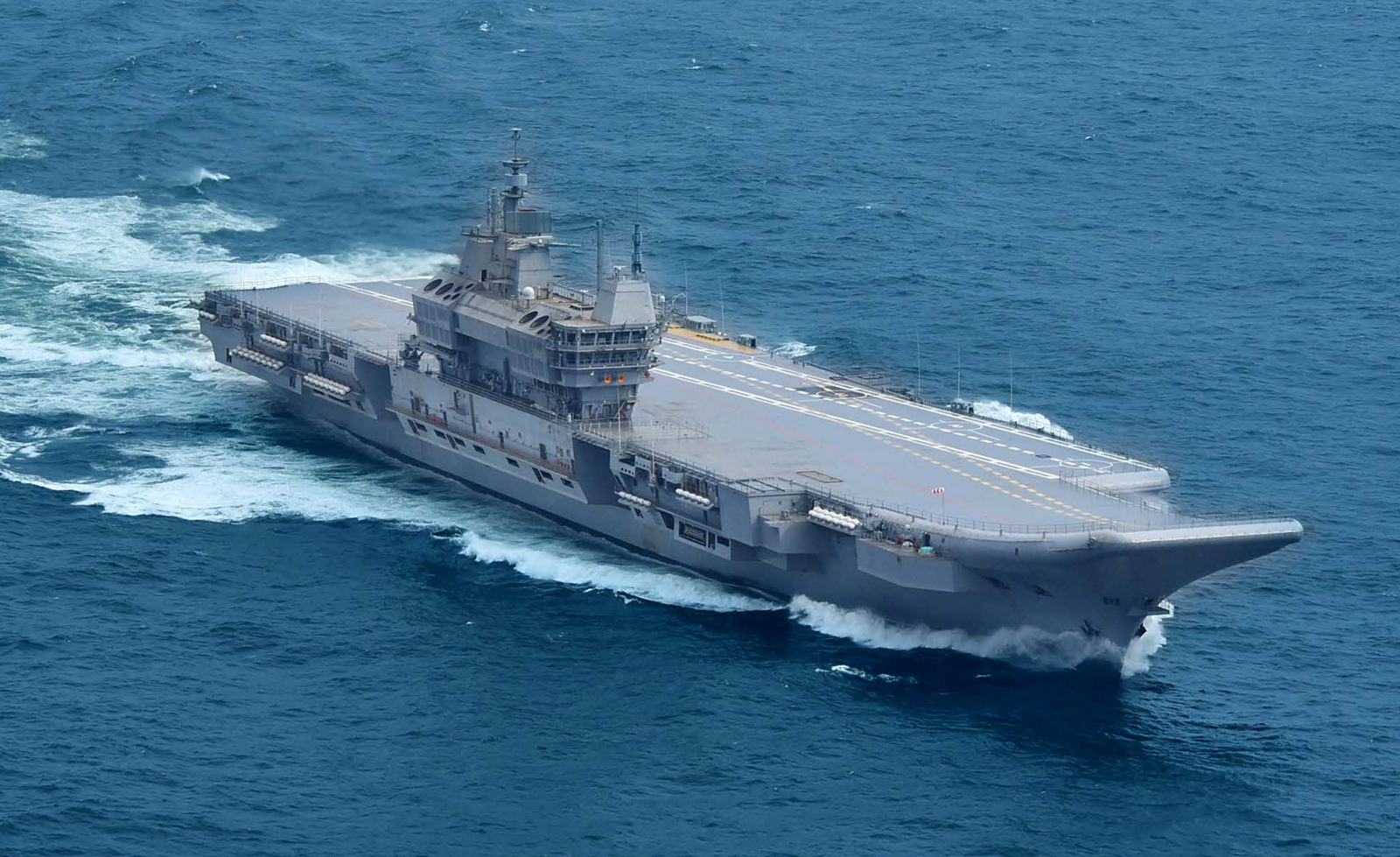
The Indian Navy has commenced deck trials of the Rafale-M fighter aircraft aboard INS Vikrant, India’s first indigenous aircraft carrier, marking a critical milestone toward the type’s operational induction into the naval fleet.
The Rafale-M is the naval variant of the Rafale combat aircraft, which has been in service with the Indian Air Force since 2020. Unlike the air force version, the Rafale-M is purpose-built for carrier operations, featuring a reinforced airframe, enhanced landing gear, and an arresting hook to facilitate recovery on short flight decks.
Deck trials represent one of the most demanding phases of naval aircraft certification. They validate catapult compatibility, arrestor cable engagement, structural stress under repeated carrier landings, and integration with the ship’s aviation control systems. INS Vikrant, commissioned in September 2022, operates a Short Take-Off But Arrested Recovery (STOBAR) system using a ski-jump configuration and arresting wires rather than catapults.
France supplied 36 Rafale-M aircraft to the Indian Navy under a 7.87 billion euro contract signed in 2015. The first squadron is expected to achieve operational readiness within the next 12-18 months, depending on deck trial outcomes. These aircraft will be flown from INS Vikrant and, once commissioned, from INS Vikramaditya, India’s second carrier currently undergoing major refit.
The Rafale-M brings substantial combat capability to India’s carrier aviation wing. The aircraft can operate at supersonic speeds, carry a diverse payload including anti-ship missiles, air-to-air missiles, and precision-guided munitions, and is equipped with a phased-array radar capable of simultaneous air and surface search. Its operational ceiling exceeds 50,000 feet and combat radius extends beyond 1,300 kilometers.
India’s carrier strike capability has historically relied on the MiG-29K, which has served aboard INS Vikramaditya since 2009. The Rafale-M will modernize and augment this fleet, providing superior range, payload capacity, and sensor fusion compared to the aging MiG platform. The transition aligns with the Navy’s broader objective to establish multi-carrier task forces capable of sustained operations across the Indian Ocean Region.
Successful deck trials are essential for validating the compatibility between the aircraft’s airframe, avionics, and INS Vikrant’s flight deck systems. Any modifications required during this phase will inform future carrier operations and pilot training protocols. The trials also provide data on landing distances, brake performance, and emergency procedures specific to the STOBAR environment.
The induction of Rafale-M squadrons strengthens India’s maritime security posture during a period of heightened naval competition in the Indo-Pacific, where sustained carrier aviation capability remains a cornerstone of strategic deterrence.
-
-
-
-