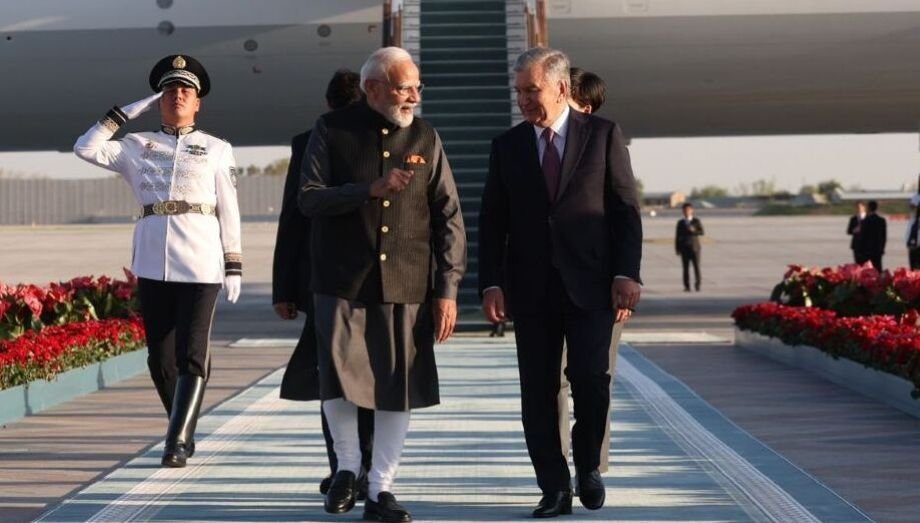
Prime Minister Narendra Modi’s fourth visit to Uzbekistan has resulted in a major upgrade in bilateral relations, with India and Uzbekistan agreeing to elevate their existing strategic partnership to a Comprehensive Strategic Partnership. PM Modi visited Tashkent on August 29–30, 2026, at the invitation of Uzbek President Shavkat Mirziyoyev, holding extensive discussions on defence, security, trade, investment, energy, critical minerals, digital technology, space and connectivity.
The elevation of ties marks a significant step in India’s engagement with Central Asia. During their talks, the two leaders reviewed the full range of bilateral cooperation and identified new areas for practical collaboration. Both sides also reaffirmed their commitment to expanding political, economic, strategic and people-to-people relations.
Defence and security cooperation remained an important part of the discussions. India and Uzbekistan welcomed increasing interaction between their defence establishments and highlighted the importance of institutional mechanisms, military exchanges and joint activities. The two countries have also been strengthening military cooperation through exercises such as Dustlik, creating opportunities for greater operational interaction and defence engagement.
Energy cooperation emerged as another important outcome of the visit. India and Uzbekistan continued discussions on a long-term arrangement for uranium supplies, while also placing greater emphasis on cooperation in critical minerals and related sectors. New collaboration in geology and mineral resources is expected to create additional opportunities for Indian participation in Uzbekistan’s resource and mineral-value chains.
The economic agenda was equally significant. The two countries have set an objective of taking bilateral trade beyond $5 billion by 2030, while promoting greater investment and business cooperation. Areas under discussion include infrastructure, pharmaceuticals, engineering, automobiles, agriculture and emerging technologies. India and Uzbekistan are also looking to expand cooperation in digital public infrastructure and payment systems, including initiatives that can facilitate the use of Indian UPI applications for merchant payments in Uzbekistan.
Technology and innovation are also gaining a larger role in the relationship. Both sides identified areas such as artificial intelligence, digital public infrastructure, innovation and start-ups for deeper cooperation. Collaboration in education, healthcare, traditional medicine, space and tourism is also being expanded through agreements and institutional partnerships.
Connectivity remains another strategic priority as India seeks stronger economic and logistical links with Central Asia. The two sides have expressed support for improving transport and logistics connections and creating more efficient channels for trade and commercial exchanges.
A notable diplomatic moment came on August 30, when Uzbekistan conferred the country’s highest state honour, the Order of Oliy Darajali Dustlik, on Prime Minister Narendra Modi. President Mirziyoyev said the award recognised Modi’s contribution to strengthening the historic friendship and broad-based cooperation between India and Uzbekistan.
The visit also produced a substantial package of bilateral agreements and understandings covering areas including mineral resources, higher education, environmental cooperation, tourism, culture, traditional medicine, economic and financial dialogue, and cooperation between Gujarat and Uzbekistan’s Samarkand region.
PM Modi’s Uzbekistan visit comes as India continues to deepen its strategic engagement across Central Asia. With the relationship now elevated to a Comprehensive Strategic Partnership, New Delhi and Tashkent are expected to place greater focus on defence cooperation, energy security, critical minerals, connectivity, trade and emerging technologies in the years ahead.
-
-

-
-