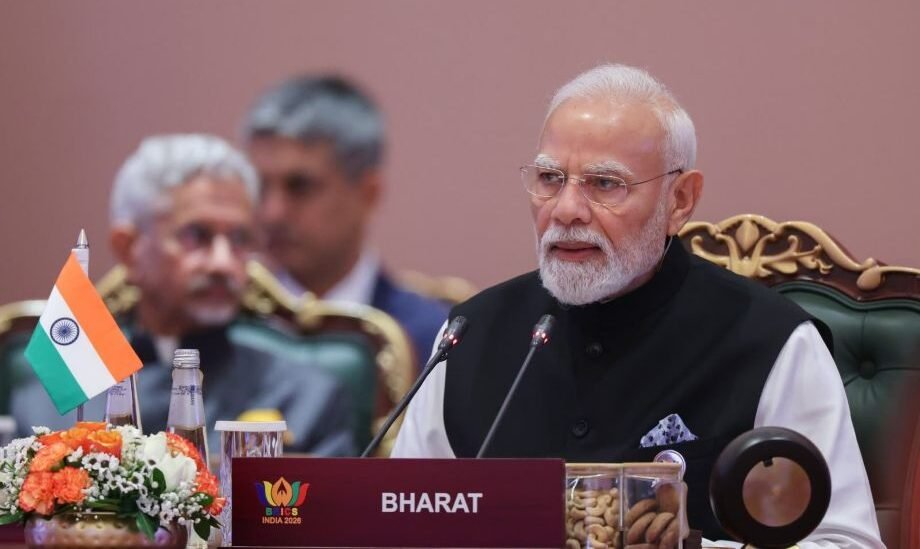
Prime Minister Narendra Modi’s three-day diplomatic schedule during the BRICS Summit in New Delhi brought a wide range of India’s strategic partnerships into focus, with the Prime Minister holding 15 bilateral meetings with visiting leaders. The engagements provided an opportunity for New Delhi to discuss security concerns, economic cooperation, energy, technology, connectivity and regional developments with countries spanning Asia, Africa, Europe and the Middle East.
The meetings came at a time when geopolitical tensions remain high across several regions, making India’s balanced diplomatic approach particularly significant. New Delhi used the BRICS platform not only to strengthen relations with established partners but also to deepen engagement with emerging economies and countries representing the wider Global South.
A key engagement during the schedule was Modi’s meeting with Russian President Vladimir Putin. The two leaders reviewed the India-Russia strategic partnership and discussed cooperation in areas including defence, energy, space, trade and technology. Regional developments were also part of their discussions, particularly issues affecting international stability and maritime movement. Putin’s invitation to Modi for the next India-Russia Annual Summit further underlined the continuing importance of the bilateral relationship.
India-China ties also received attention during the summit. Modi’s interaction with Chinese President Xi Jinping focused on maintaining stability along the India-China border and creating conditions for a constructive relationship. Economic exchanges, trade, supply chains and people-to-people contacts were also discussed as both countries look to manage differences while expanding areas of practical cooperation.
West Asia featured prominently in India’s diplomatic outreach as well. Modi’s meeting with Iranian President Masoud Pezeshkian covered bilateral relations and the rapidly evolving regional situation. India stressed the importance of dialogue and diplomacy in resolving conflicts and highlighted the need to protect commercial routes, freedom of navigation and the safety of seafarers.
The Prime Minister’s discussions with African leaders added another dimension to India’s BRICS engagement. Meetings involving leaders and senior representatives from countries including South Africa, Nigeria, Uganda, Ethiopia and Burundi focused on expanding cooperation in trade, investment, defence and security, energy, agriculture, technology and capacity building. India has increasingly positioned its partnership with African countries as an important element of its broader Global South strategy.
Relations with Southeast Asian and Gulf partners were also part of the diplomatic push. Discussions with leaders from the Philippines, Malaysia and Vietnam covered areas ranging from defence and security to infrastructure, technology, investment and economic cooperation. Engagement with the United Arab Emirates similarly highlighted strategic sectors such as defence, space, energy and emerging technologies.
The wider BRICS agenda provided an additional platform for India to promote cooperation beyond traditional economic issues. Under India’s chairship, discussions included resilience, innovation, sustainable development, healthcare preparedness, disaster management, digital agriculture, logistics and the role of technology in supporting developing economies.
Modi’s meeting with United Nations Secretary-General António Guterres also brought broader international issues into the diplomatic agenda. Their discussions included reforms to multilateral institutions, ongoing conflicts, sustainable development, artificial intelligence, food security and the importance of maintaining an effective rules-based international system.
The intensive schedule demonstrated how India is using its BRICS leadership to pursue multiple diplomatic objectives simultaneously. While maintaining established strategic relationships with countries such as Russia and engaging China on bilateral stability, New Delhi is also expanding cooperation with African, Southeast Asian and Gulf nations.
The 15 bilateral meetings therefore represented more than a series of diplomatic encounters. They reflected India’s wider effort to strengthen strategic autonomy, expand economic and security partnerships and give greater weight to the concerns of developing countries. With defence, maritime security, energy, technology and regional stability increasingly interconnected, the BRICS platform provided New Delhi with an important avenue for advancing these priorities.
-
-

-

-