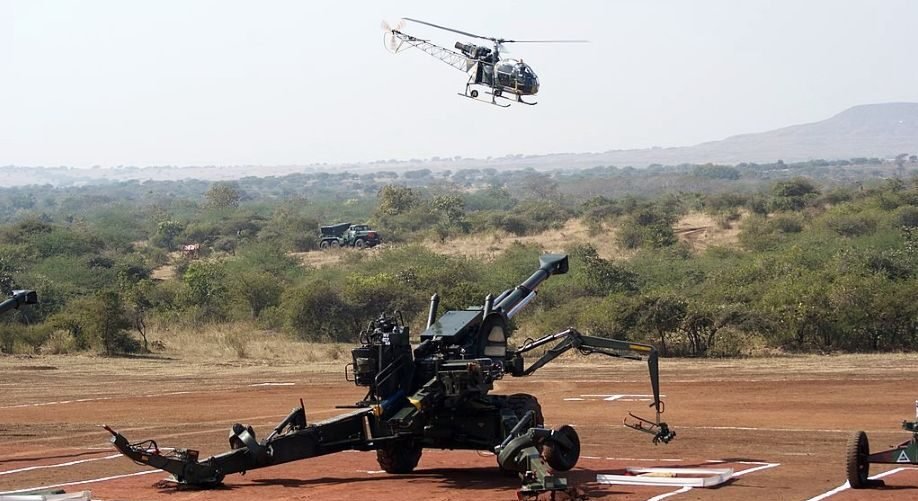
India’s Parliamentary Standing Committee has raised serious concerns over delays in the Dhanush artillery gun programme, calling on the Ministry of Defence (MoD) to speed up procurement and ensure the timely induction of critical military equipment. The panel said that lengthy acquisition procedures continue to slow the modernisation of the armed forces and recommended reforms to make defence procurement more efficient.
In its observations, the committee noted that indigenous defence projects are central to India’s long-term military capability and self-reliance goals. However, delays in production and delivery of the Dhanush 155mm artillery system have affected the pace of artillery modernisation for the Indian Army. It stressed that such programmes require stronger oversight, better coordination between stakeholders and quicker execution to meet operational requirements.
The Dhanush howitzer, developed as an upgraded indigenous artillery platform, is designed to provide improved range, accuracy and firepower for the Army’s field formations. As one of India’s key homegrown artillery projects, its successful induction is considered an important milestone in the country’s defence manufacturing ecosystem.
The committee also highlighted the broader need to simplify defence acquisition procedures by reducing administrative bottlenecks and ensuring faster decision-making. It observed that procurement delays not only increase project costs but can also impact military preparedness, particularly when the armed forces require modern equipment to address evolving security challenges.
Reaffirming support for the government’s indigenous defence manufacturing initiatives, the panel urged authorities to ensure that domestically developed weapon systems are delivered within committed timelines. It said a more responsive procurement framework would help strengthen operational capability while reinforcing India’s goal of achieving greater self-reliance in defence production.
-

-

-

-