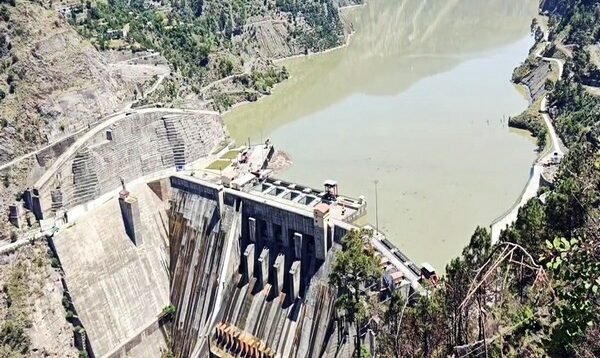
Pakistan’s military media wing, the Inter-Services Public Relations (ISPR), has initiated a multi-front information campaign challenging India’s position on the Indus Waters Treaty, according to leaked internal directives obtained by defence analysts tracking regional military communications.
The ISPR directives, circulated to Pakistani military and civilian media partners, outline a coordinated push to reframe New Delhi’s water management policies as violations of the 1960 bilateral treaty. The campaign targets India’s hydroelectric dam construction on tributaries governed by the treaty framework.
The Indus Waters Treaty remains one of South Asia’s most enduring international agreements, signed by India and Pakistan under World Bank mediation. The treaty allocates the three western rivers, Indus, Chenab, and Sutlej, to Pakistan, while India retains rights to the three eastern rivers, Ravi, Beas, and Sutlej. India has historically maintained that its dam projects on eastern tributaries remain compliant with treaty provisions, particularly on run-of-river hydroelectric schemes.
Pakistan’s recent objections centre on Indian projects including the Pakal Dul hydroelectric project on the Chenab and the Kiru project, which Pakistan argues breach the treaty’s design specifications and environmental safeguards. New Delhi counters that these projects fall within permissible parameters under the treaty’s technical annexures and represent India’s sovereign right to develop its water resources.
The ISPR directive signals an escalation from diplomatic channels to public information warfare. Pakistan has historically used media narratives to build international pressure on water-sharing disputes, leveraging sympathetic coverage in regional and global outlets to position itself as defending its water security against Indian unilateral actions.
India’s Ministry of External Affairs has consistently rejected Pakistan’s claims, stating that all projects undergo technical scrutiny and that the Indus Waters Treaty Secretariat, a bilateral mechanism with representatives from both nations, provides oversight. The treaty includes provisions for dispute resolution, with expert panels and international arbitration as final recourse.
The leaked ISPR directives indicate Pakistan aims to sustain pressure through sustained media messaging ahead of potential treaty review discussions or international forums. The campaign reflects broader regional tensions over transboundary water resources as climate patterns shift and both nations compete for hydroelectric generation capacity to meet rising electricity demand.
India’s Defence Ministry and water resource agencies have not issued formal responses to the ISPR campaign but maintain their position that treaty compliance is demonstrable through technical documentation and that India’s development needs are compatible with the treaty framework.
-

-
-
-