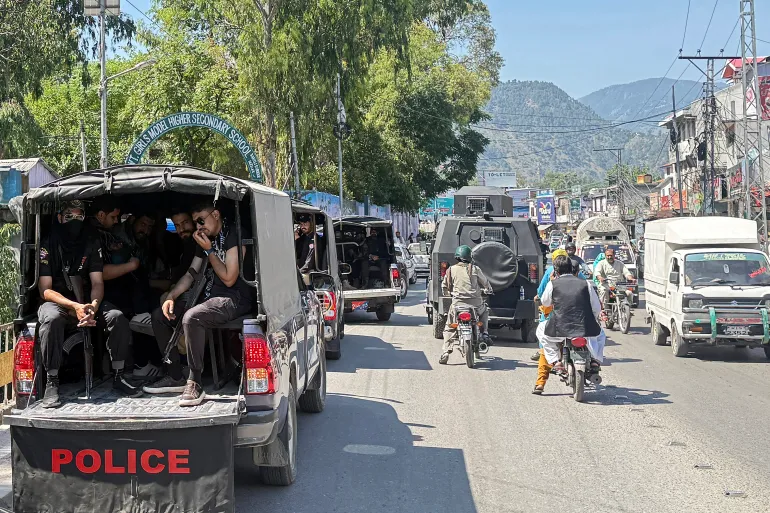
Pakistan faces mounting internal instability in its Kashmir territories, and analysts assess that Islamabad may attempt to redirect internal pressures by escalating proxy operations and cross-border infiltration into Indian Kashmir.
The assessment underscores a pattern of Pakistan externalising domestic crises through strategic pressure on India’s western frontier. This dynamic has long shaped India’s counterinsurgency posture in Jammu and Kashmir, where security forces contend with Pakistan-sponsored militant networks operating across the Line of Control.
India’s multi-layered defence architecture in the Kashmir Valley combines conventional military presence with advanced surveillance and counterterrorism capabilities. The Indian Army operates an extensive grid of forward positions along the LoC, while air defence systems and airborne reconnaissance assets maintain persistent observation of infiltration corridors used by Pakistan-backed militant groups.
The Border Security Force, which maintains primary law enforcement responsibility in Kashmir, coordinates intelligence collection with Army counterintelligence units to disrupt infiltration attempts. Over the past five years, India has significantly upgraded sensor networks and communication infrastructure in forward areas to accelerate threat detection and response times.
Pakistan’s internal Kashmir instability, rooted in political alienation, resource scarcity, and administrative dysfunction in Gilgit-Baltistan and Azad Jammu and Kashmir, creates structural incentives for Rawalpindi to pursue asymmetric strategies against India. Proxy militancy serves as an outlet for state-sponsored aggression without the political cost of direct military confrontation.
India’s strategic response framework emphasises hardening border infrastructure, enhancing human intelligence networks, and maintaining swift kinetic response capacity against infiltration attempts. The 2019 Balakot airstrikes and subsequent border skirmishes demonstrated India’s willingness to escalate operations against Pakistan-based militant sanctuaries when infiltration threats materialise.
Intelligence agencies assess that Pakistan-based groups including Jaish-e-Mohammed, Lashkar-e-Taiba, and their splinter factions continue to maintain recruitment and training networks in forward areas despite Pakistani government restrictions. These groups remain responsive to strategic direction from Pakistan’s military intelligence apparatus.
India’s counterinsurgency doctrine in Kashmir increasingly balances kinetic operations against civilian population engagement. However, renewed Pakistan-sponsored infiltration activity, if it materialises, would likely trigger intensified cordon and search operations and heightened security restrictions in vulnerable districts of South Kashmir and the Poonch-Rajouri belt.
-

-

-

-