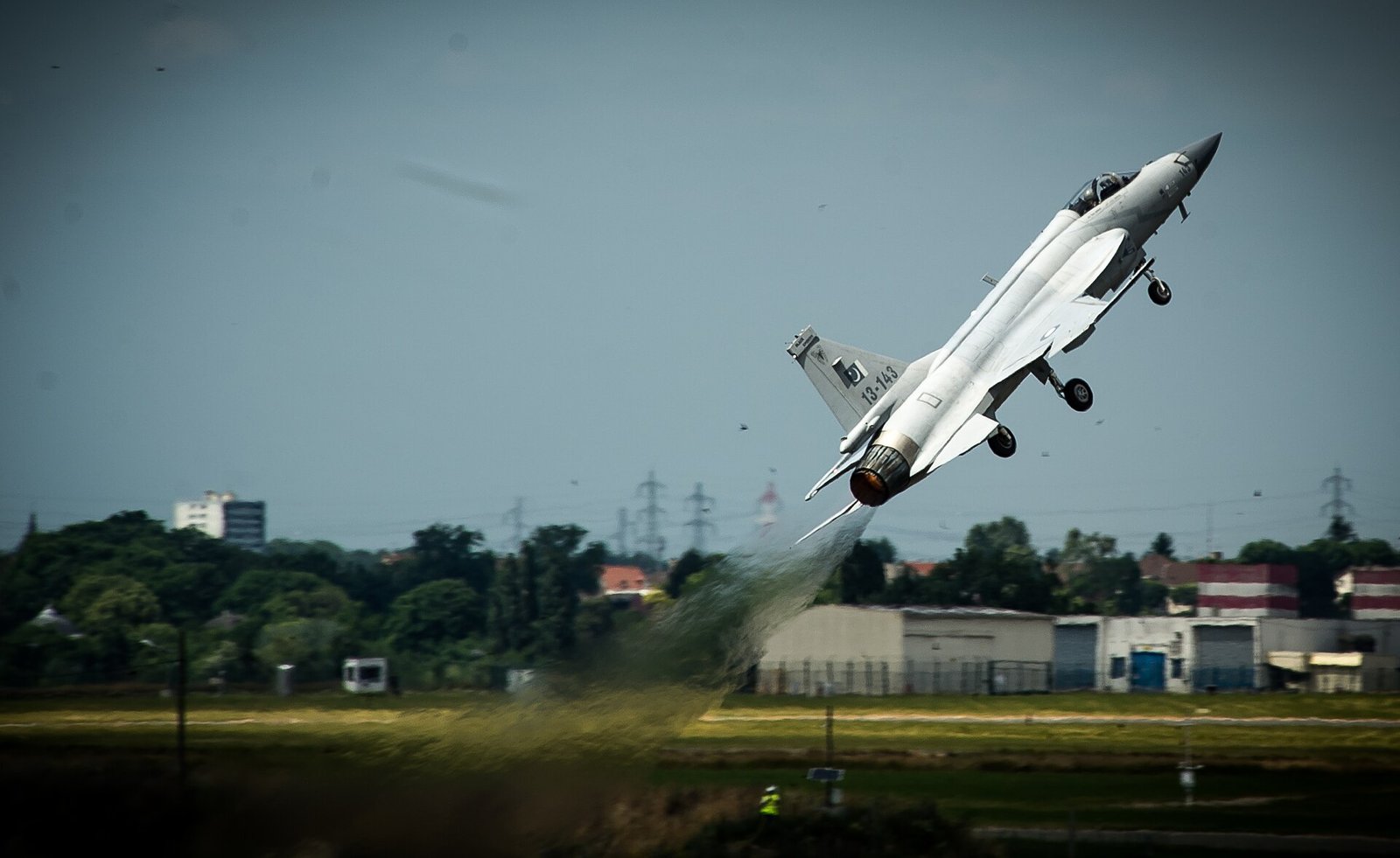
Pakistan has rejected claims that Sri Lanka turned down an offer of JF-17C fighter jets, according to reports emerging from Colombo. The denial comes as Sri Lanka’s air force faces ongoing modernisation pressures and regional defence partnerships shift in South Asia.
The JF-17 Thunder is a lightweight, multi-role combat aircraft jointly developed by Pakistan Aeronautical Complex and Chengdu Aircraft Corporation of China. The aircraft first entered Pakistani service in 2007 and has since become a significant export platform, marketed across the Middle East, Africa, and Southeast Asia.
The JF-17C variant represents the third generation of the platform, introducing enhanced avionics, improved radar capabilities, and expanded weapons integration options. The aircraft is powered by a single Guizhou WS-13 turbofan engine and can carry air-to-air, air-to-ground, and anti-ship munitions across multiple hardpoints.
For Sri Lanka, fighter aircraft procurement has been a longstanding strategic concern. The country’s air force operates a mix of ageing platforms including HAL Tejas derivatives and older rotorcraft, with limited modern fast-jet capacity. Any significant air defence gap poses challenges in an era of increasing maritime competition and regional security dynamics across the Indian Ocean.
India has historically maintained a careful posture on Sri Lanka’s defence acquisitions, particularly regarding platforms that could shift the regional balance. New Delhi’s own defence ties with Colombo have centred on naval cooperation, coast guard training, and maritime domain awareness rather than combat aircraft transfers.
Pakistan’s JF-17 has found stronger traction in Nigeria, Bangladesh, and Myanmar, where cost considerations and operational simplicity have proven attractive. The aircraft’s price point, estimated at USD 35-50 million per unit, positions it competitively against other light combat fighters in developing markets.
Sri Lanka’s air force modernisation programme remains constrained by budgetary limitations and the island nation’s economic recovery trajectory. The rejection claim, if substantiated, would reflect broader challenges in sourcing and financing modern combat aircraft across South Asia’s smaller air forces.
-

-
-

-