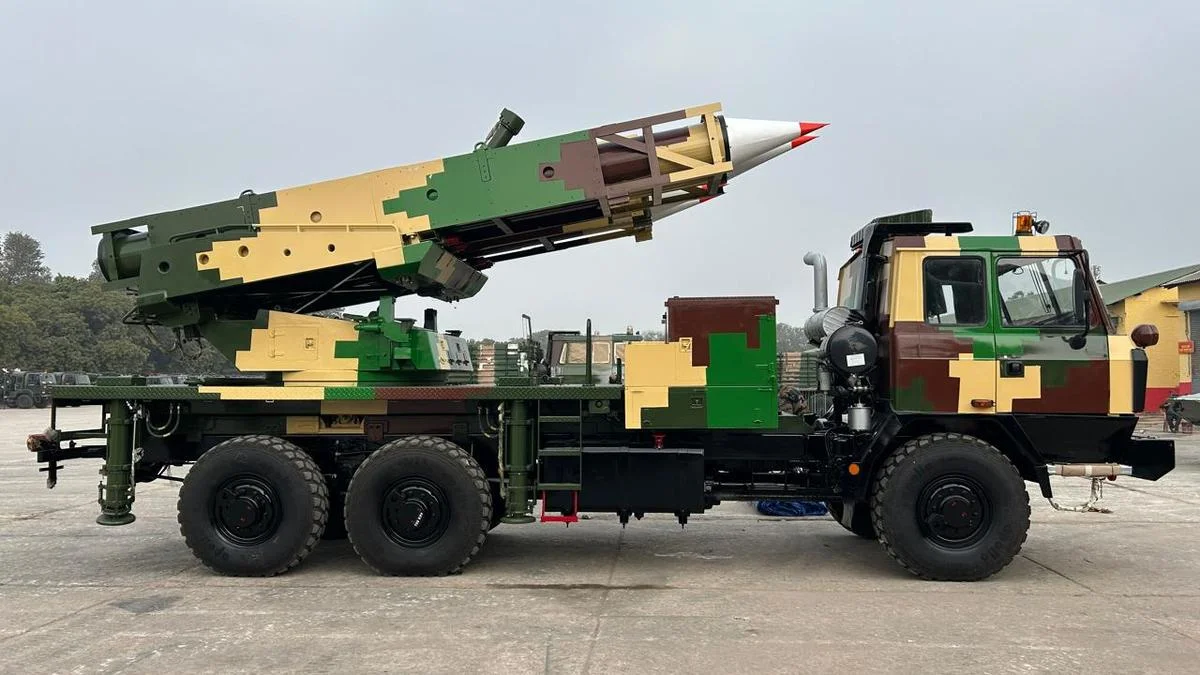
Nibe Limited has refuted allegations levelled against its Suryastra multiple launch rocket system, asserting that the platform meets all Indian Army operational and technical requirements, according to statements reported by The Tribune.
The rebuttal addresses concerns that had been raised regarding the indigenously developed rocket launcher’s performance and suitability for frontline deployment. Nibe’s clarification underscores the company’s confidence in the system’s design and combat readiness.
The Suryastra MLRS is a domestically developed platform designed to replace ageing Soviet-era Grad rocket systems in Indian Army service. The system is configured for rapid deployment and is intended to provide fire support across multiple operational scenarios, from conventional warfare to counter-insurgency environments.
Nibe Limited, a private defence manufacturer, has positioned the Suryastra within India’s broader indigenisation push under the Make in India initiative. The MLRS programme reflects the Army’s strategy to transition away from legacy foreign platforms toward self-reliant capability development for critical firepower assets.
The Suryastra fits into a modernisation cycle that has seen the Indian Army progressively upgrade its artillery and rocket systems. The platform’s development represents one of several indigenous MLRS efforts underway within India’s defence industrial ecosystem, aimed at closing the technology gap and reducing operational dependence on imported systems.
Technical specifications of the Suryastra align with contemporary multi-launch rocket standards adopted by allied and friendly armies. The system’s modular architecture allows for variant configurations suited to different tactical requirements, a feature that enhances its operational versatility across diverse terrain and threat profiles.
The allegations referenced in Nibe’s rebuttal had not been detailed in public reporting, but such challenges are routine in India’s defence procurement cycle. Developers of indigenous weapon systems frequently address performance queries during user evaluation and trials phases, which form part of the formal acceptance protocol before systems enter service.
The Indian Army’s acceptance of the Suryastra would represent a significant milestone for Nibe and would validate the MLRS development as a credible indigenous alternative to imported platforms. Such validation supports India’s strategic objective of reducing defence import dependency while building a robust private-sector defence industrial base capable of sustaining long-term capability development.
-

-

-

-