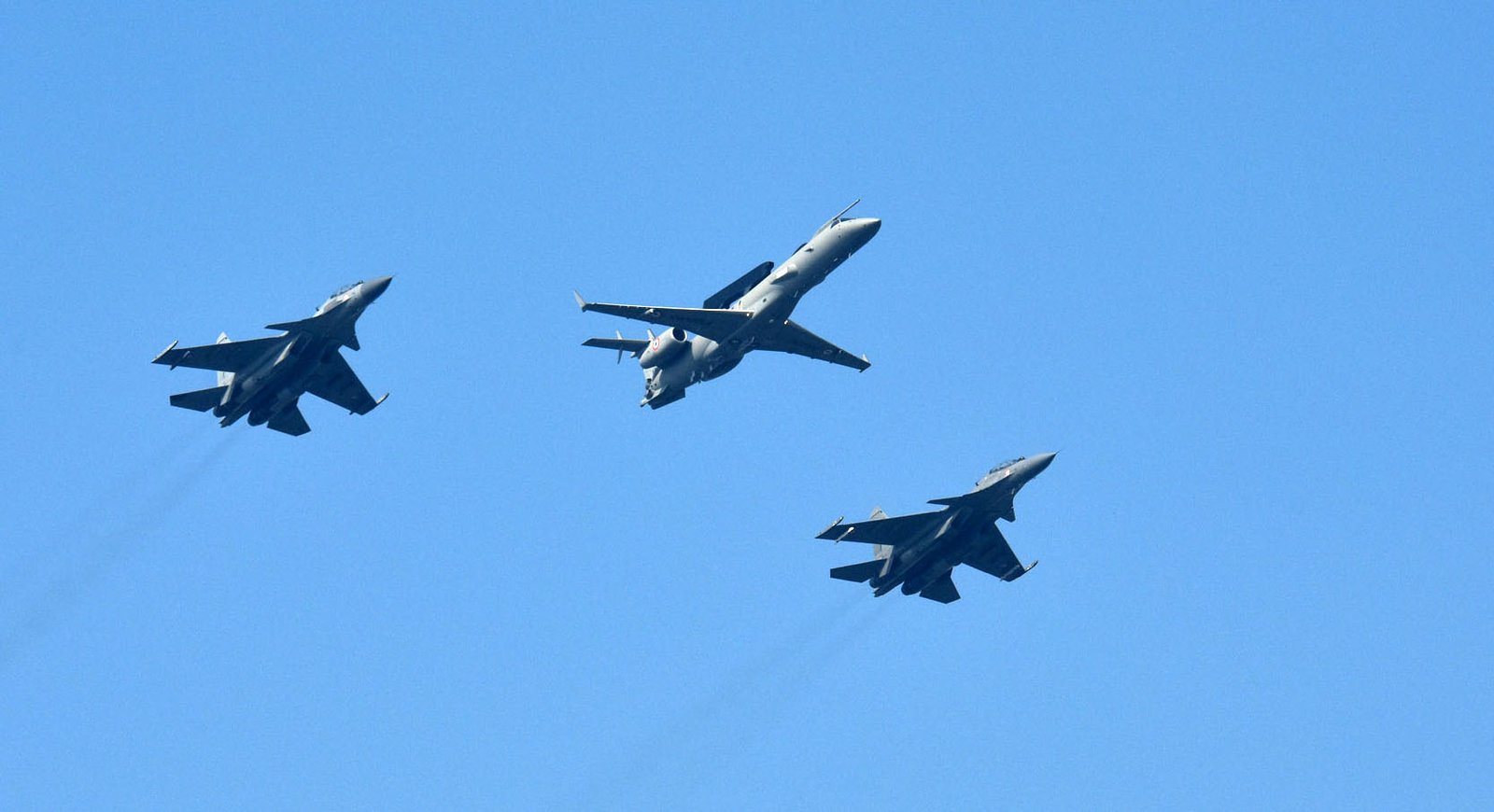
The Netra Airborne Early Warning and Control system has received full combat clearance from the Defence Research and Development Organisation, clearing the way for its operational deployment across Indian Air Force squadrons, according to DRDO.
This certification marks a major milestone in India’s indigenous air defence architecture. The Netra AEW&C, developed entirely within DRDO’s Bangalore-based aeronautical division, is mounted on the Embraer E-190 airframe and serves as the IAF’s primary airborne surveillance platform.
The system is equipped with a phased array radar capable of detecting aircraft, helicopters, and unmanned aerial vehicles at extended ranges across a 240-degree coverage sector. Its three-dimensional surveillance capability extends to tracking maritime targets and ground-based threats, providing integrated situational awareness across multiple operational domains.
Two operational variants have been cleared for service. The first Netra entered limited operational clearance in 2017 after extensive flight trials and validation. This full combat clearance represents the completion of all developmental and operational testing protocols mandated by IAF’s Air Headquarters, validating the system’s reliability, sensor fusion algorithms, and command-and-control interface under operational conditions.
The Netra platform directly addresses India’s long-standing dependency on Russian A-50 Phalcon AEW&C aircraft. While the IAF operates just three Phalcon variants, the Netra programme was conceived to augment airborne early warning capacity and build indigenous technical expertise in radar systems, signal processing, and airborne integration.
Development of the Netra system began in the late 1990s as part of DRDO’s broader push toward self-reliance in airborne surveillance technologies. The programme faced multiple delays and technical challenges common to large airborne radar development, including antenna design validation, thermal management at altitude, and integration with the E-190 platform’s avionics architecture.
The system’s induction represents a significant step in India’s broader defence indigenisation strategy. It reduces operational costs compared to leasing or purchasing foreign AEW&C platforms and establishes a foundation for future variants tailored to specific operational theatres, including maritime surveillance over the Indian Ocean Region.
The full combat clearance enables the IAF to operationalise additional Netra airframes and integrate them into rotational deployment schedules alongside existing Phalcon aircraft, strengthening India’s air defence posture during critical periods and reducing platform maintenance backlogs.
-

-

-

-