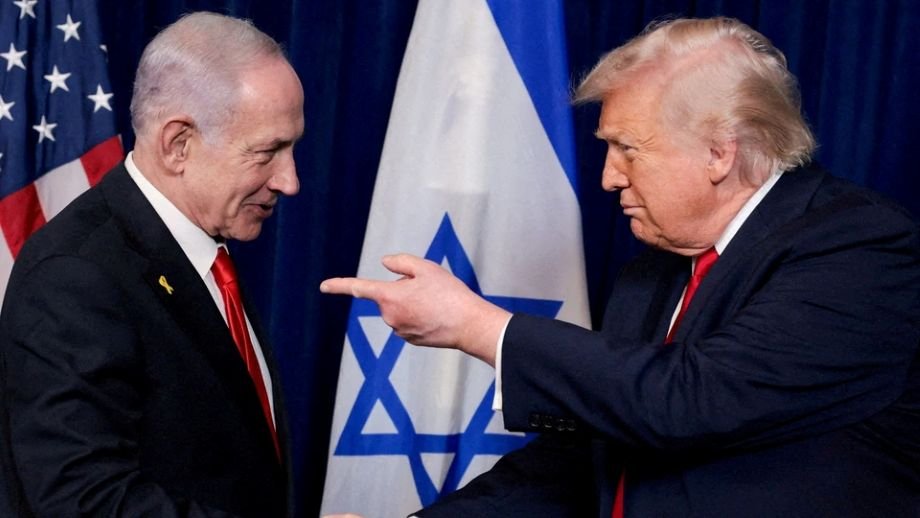
Israeli Prime Minister Benjamin Netanyahu has arrived in Washington for talks with US President Donald Trump, with discussions centred on Iran’s nuclear ambitions and broader Middle Eastern security challenges, according to reports.
The visit underscores the deepening coordination between Israel and the United States on countering Iranian regional influence, a strategic priority that has shaped defence procurement and military posturing across the Middle East for over a decade.
Iran’s ballistic missile and drone programmes have emerged as a central concern for both Washington and regional allies. Israel’s air defence architecture, including the Iron Dome system and the more advanced David’s Sling multi-layered air defence platform, was developed in direct response to the proliferation of Iranian missile capabilities and Hezbollah’s arsenal in Lebanon.
The timing of the talks reflects persistent tensions over Iran’s nuclear programme and its proxy networks across Iraq, Syria, and Yemen. Israel has conducted multiple strikes on Iranian military infrastructure in Syria and has signalled readiness to act unilaterally if diplomatic channels fail to constrain Iran’s nuclear advancement.
The United States maintains a significant military presence in the Gulf region, with naval carrier strike groups regularly transiting the Strait of Hormuz. American air defence systems, including the THAAD and Patriot platforms, are deployed across Gulf Cooperation Council nations. Naval basing agreements with countries including Bahrain provide critical logistical support for US Middle East operations.
Israel’s defence doctrine emphasises technological superiority and preemptive capability. The country operates advanced fighter aircraft including the F-35 Lightning II, purchased from the United States, and has developed indigenous systems including the Spike anti-tank guided missile and the Harop loitering munition designed for air defence suppression.
Regional security considerations extend beyond bilateral Israeli-American coordination. Saudi Arabia, the UAE, and other Gulf states have expanded defence partnerships with Western powers and have invested heavily in air defence and surveillance systems. The Abraham Accords normalisation agreements between Israel and several Arab states have created new frameworks for intelligence sharing and joint security planning, though Iranian threats remain the primary driver of these alliances.
Trump’s previous administration withdrew from the Joint Comprehensive Plan of Action on Iran in 2018, a decision that intensified regional military posturing. The current visit signals continuity in the US position on Iranian containment and suggests renewed focus on coordinating deterrence strategy with Israel and Gulf allies.
-

-

-

-