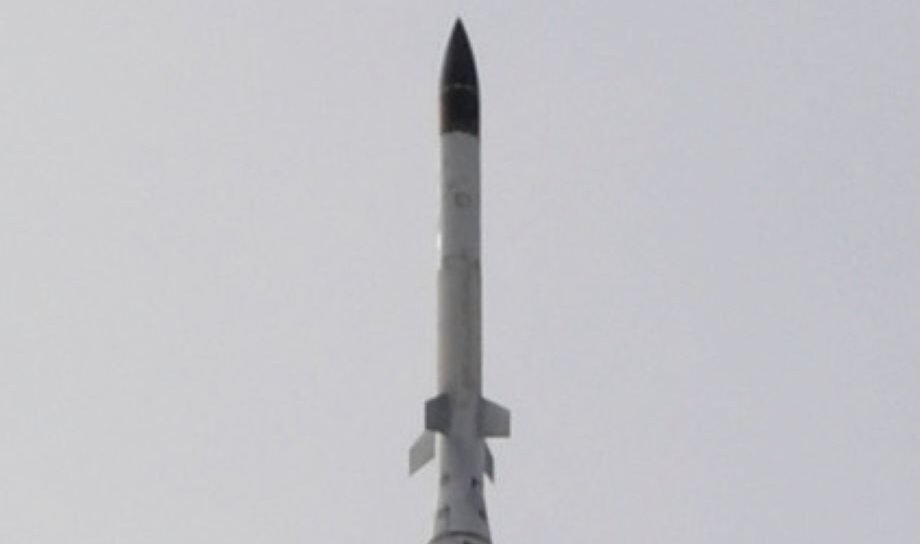
Japan is examining the possibility of using Indian military training facilities for exercises involving long-range anti-ship missiles and small attack drones, opening a new avenue for defence cooperation between New Delhi and Tokyo. The discussions come as Japan seeks suitable training environments for its expanding stand-off strike capabilities, including weapons designed to engage maritime targets at considerable distances.
Japan Ground Self-Defense Force (GSDF) Chief of Staff General Masayoshi Arai confirmed on 27 October that Japanese personnel had been dispatched to India to coordinate discussions on potential training opportunities. Japanese officials have reportedly examined facilities and firing ranges that could accommodate future activities, although the two countries have yet to announce a specific location, schedule or formal agreement.
The proposal reflects a practical challenge facing Japan’s military modernisation programme. As the range of its missile systems increases, finding appropriate areas to conduct realistic training becomes more difficult. Exercises involving long-range weapons require extensive safety arrangements, coordinated airspace and maritime restrictions, and sufficient space to accommodate the weapons’ operational reach.
A major focus of interest is Japan’s Type-25 surface-to-ship guided missile, which has been reported to possess an approximate range of 1,000 kilometres. The system entered service in March 2026 at Camp Kengun in Kumamoto Prefecture. Its extended reach represents a significant development in Japan’s stand-off strike capabilities and increases the need for training environments that allow personnel to practise operating the weapon under realistic conditions.
Japan has also demonstrated the Type-25 system during the Japan-US Keen Sword 27 exercise, held from 19 to 29 October. The demonstration included procedures for deploying a mobile launcher and preparing the missile system for firing. However, the reported demonstration did not involve an actual missile launch. Any future live-fire training in India would therefore represent a separate activity requiring bilateral coordination and the necessary safety clearances.
India could offer a suitable environment for such training because of its established missile-testing infrastructure and access to extensive maritime training areas. Facilities along the Odisha coast, including the Chandipur test range, are associated with India’s missile testing activities. Their suitability for a specific Japanese weapon, however, would depend on technical requirements, range availability, safety considerations and approval by the relevant authorities.
The discussions are not limited to missile training. Japan is also considering options for training with small attack drones, reflecting the growing importance of unmanned systems in modern military operations. Such activities would require additional arrangements covering radio frequencies, operating procedures, training objectives and the selection of appropriate locations. Both countries would need to address these requirements before any exercise could proceed.
The initiative comes amid a broader expansion of India-Japan security relations. The two countries have strengthened defence exchanges and military engagement as both place greater emphasis on stability across the Indo-Pacific. Their cooperation spans multiple areas, including military exercises, maritime security and discussions on defence equipment and technology.
For Japan, access to overseas training facilities could complement domestic arrangements, particularly where the available space does not adequately support the full operational range of newer weapons. India, meanwhile, could gain another opportunity to deepen practical defence engagement with a key regional partner. Any arrangement would nevertheless depend on mutually agreed terms and compliance with national procedures.
Japan has previously participated in overseas missile-related training, including activities in the Philippines, while also conducting exercises with partners such as the United States and Australia. Exploring options in India would broaden the range of potential training partners available to Tokyo as it develops its long-range strike and unmanned capabilities.
Despite the strategic significance of the discussions, the proposal remains at an exploratory stage. Japanese officials have not confirmed that the Type-25 missile will be fired in India, nor have authorities announced that a live-fire exercise has been approved. The timing and scope of any future activity remain undecided.
If the discussions progress, the initiative could add a new operational dimension to India-Japan defence cooperation. For now, the key development is that both sides are exploring whether India’s training infrastructure can meet Japan’s emerging requirements for long-range missile and drone operations, with any final decision dependent on further coordination and safety assessments.
-

-
-
-