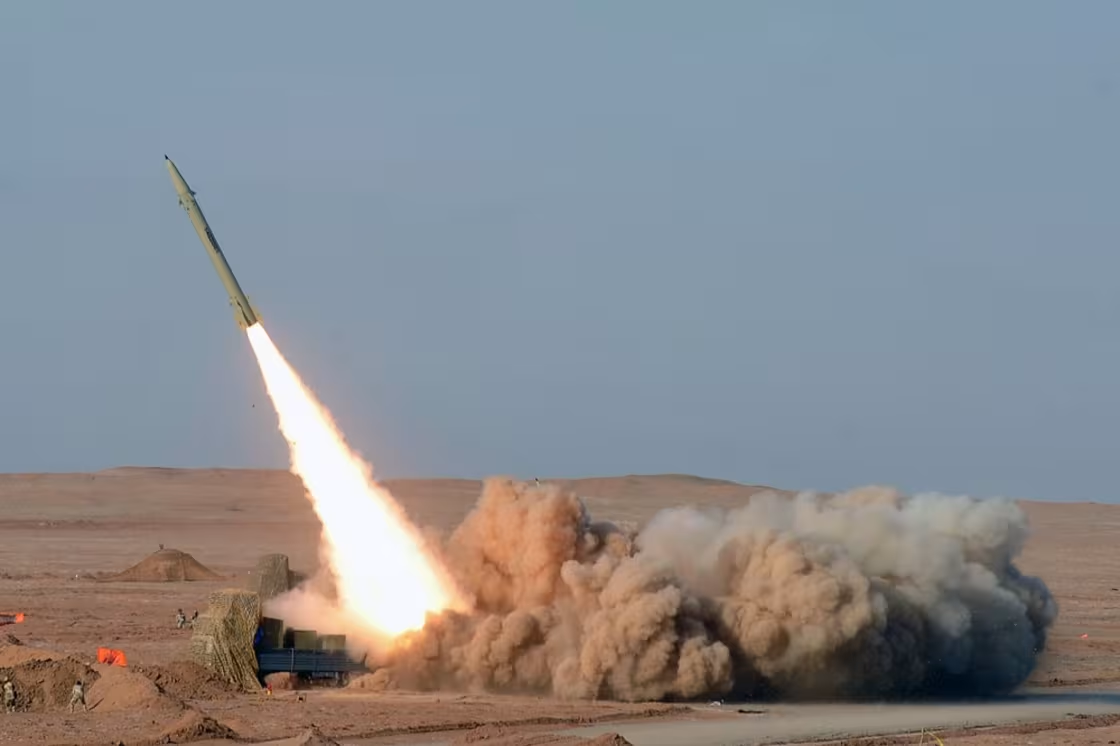
Iran has launched direct missile attacks against US military installations in Kuwait and Bahrain, marking a significant escalation in regional tensions and the first direct Iranian strikes on American forces in the Gulf. According to reports, explosions were also reported in Iraq as Iranian projectiles traversed the airspace.
The Iranian Revolutionary Guard Corps claimed responsibility for the strikes, declaring that the “era of hit and run is over” and signalling a shift toward more assertive military posturing. The attacks appear to represent retaliation for recent US military actions and underscore deepening hostilities in one of the world’s most strategically vital shipping lanes.
For India, developments in the Persian Gulf carry direct strategic weight. Nearly 8 million barrels of crude oil pass daily through the Strait of Hormuz, and India sources approximately 40 percent of its petroleum imports from Iran and other Gulf producers. Any disruption to shipping routes or escalation of military conflict directly impacts India’s energy security and inflation trajectory.
The Indian Navy maintains a sustained presence in the Arabian Sea and the Indian Ocean, with regular anti-piracy patrols and merchant vessel escort operations through these waters. The Navy’s guided-missile destroyers and frigates, including the Delhi-class and Shivalik-class vessels, routinely transit the Gulf to protect Indian shipping interests and maintain maritime domain awareness.
India’s defence establishment has consistently advocated for the principle of freedom of navigation and peaceful resolution of regional disputes through dialogue. New Delhi’s strategic autonomy doctrine emphasizes non-alignment in regional conflicts while safeguarding critical sea lanes that sustain the Indian economy.
The escalation also carries implications for India’s energy diplomacy with Iran. Despite US sanctions, India has maintained selective engagement with Tehran, particularly on civil nuclear cooperation and hydrocarbon procurement. Intensified US-Iran military confrontation complicates New Delhi’s balancing act between energy imperatives and strategic partnerships with Western powers, including the United States.
Historically, India has relied on the stability of Gulf shipping corridors to support its growing energy demands and sustain bilateral trade relationships across the region. The Indian Maritime Security Operations Centre, based in Gurugram, coordinates with regional naval forces to monitor threats to commercial shipping and maintain real-time situational awareness across Indian waters and choke points.
The Ministry of External Affairs is likely to issue a statement calling for restraint and diplomatic resolution, consistent with India’s position on regional conflicts. India’s defence partnerships with Gulf Cooperation Council nations, including defence exercises with the Royal Saudi Navy and Omani naval forces, underscore the strategic importance New Delhi places on regional stability and commercial security.
-

-

-

-