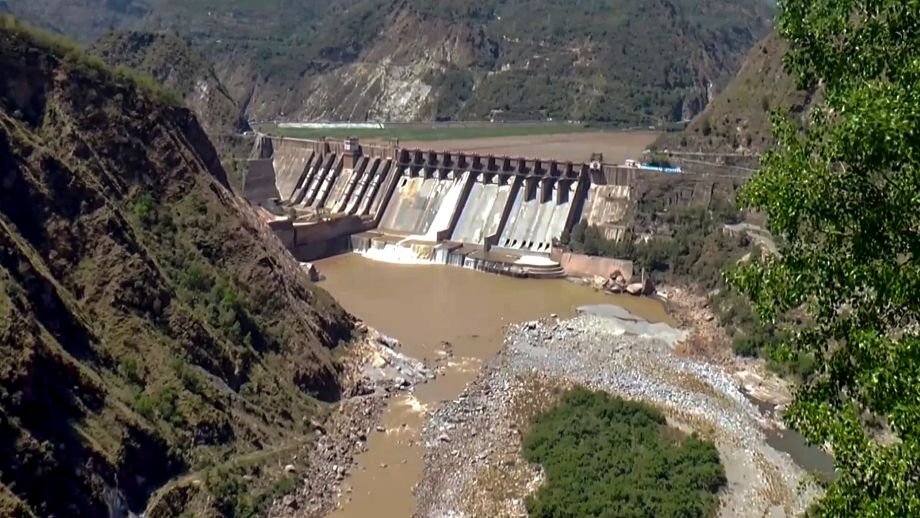
The dispute over the Indus Waters Treaty (IWT) has become a significant point of tension between India and Pakistan, with both countries maintaining sharply different positions over the future of the 1960 water-sharing agreement. India placed the treaty in abeyance in April 2025 following the Pahalgam terror attack, linking the decision to broader national security concerns. Pakistan, meanwhile, has continued to insist that the treaty remains legally binding and should be implemented.
The Indus Waters Treaty, signed in 1960 with World Bank involvement, governs the sharing of the waters of the Indus river system between India and Pakistan. Under the agreement, the eastern rivers – Ravi, Beas and Sutlej – were allocated primarily for India’s use, while the western rivers – Indus, Jhelum and Chenab – were allocated primarily to Pakistan, subject to specified rights and restrictions for both countries.
The treaty has remained one of the longest-standing frameworks governing India-Pakistan relations despite several periods of severe political and military tension. However, disagreements over its implementation, hydropower projects and the use of the western rivers have persisted for years. India’s concerns have increasingly focused on the limitations it believes the treaty places on the development and management of water and hydropower infrastructure.
Following the Pahalgam attack in April 2025, India announced that the Indus Waters Treaty would remain in abeyance until Pakistan credibly and irrevocably ends its support for cross-border terrorism. The move represented a major shift in India’s approach to the treaty and added a water-security dimension to the wider India-Pakistan dispute.
Pakistan has strongly opposed India’s position and has continued to argue that the treaty cannot be unilaterally suspended. Islamabad has also pursued international legal mechanisms in connection with disputes involving India’s Kishanganga and Ratle hydropower projects. A Hague-based Permanent Court of Arbitration has maintained that the treaty remains in force, but India has rejected the arbitration process, arguing that the proceedings do not have its consent and questioning the tribunal’s jurisdiction.
The disagreement has also renewed discussion about whether the six-decade-old treaty requires changes to reflect present-day realities. India has previously sought modification of the treaty, citing demographic changes, environmental concerns, technological developments and the need for greater utilisation of its water resources. At the same time, Pakistan remains heavily dependent on the Indus river system for agriculture, irrigation and its wider economy, making the treaty a critical national-security and economic issue for Islamabad.
The latest developments indicate that the dispute is unlikely to be resolved quickly. While calls for dialogue and renewed engagement have emerged, the fundamental differences between New Delhi and Islamabad remain unresolved. India continues to link the future of the treaty with its broader security concerns, while Pakistan is seeking to preserve the existing water-sharing framework.
The Indus Waters Treaty dispute therefore remains closely connected to the wider state of India-Pakistan relations. Any future negotiations would have to address not only water sharing and hydropower development but also the legal mechanisms of the treaty and the broader security concerns that have shaped India’s current position.
-

-

-

-