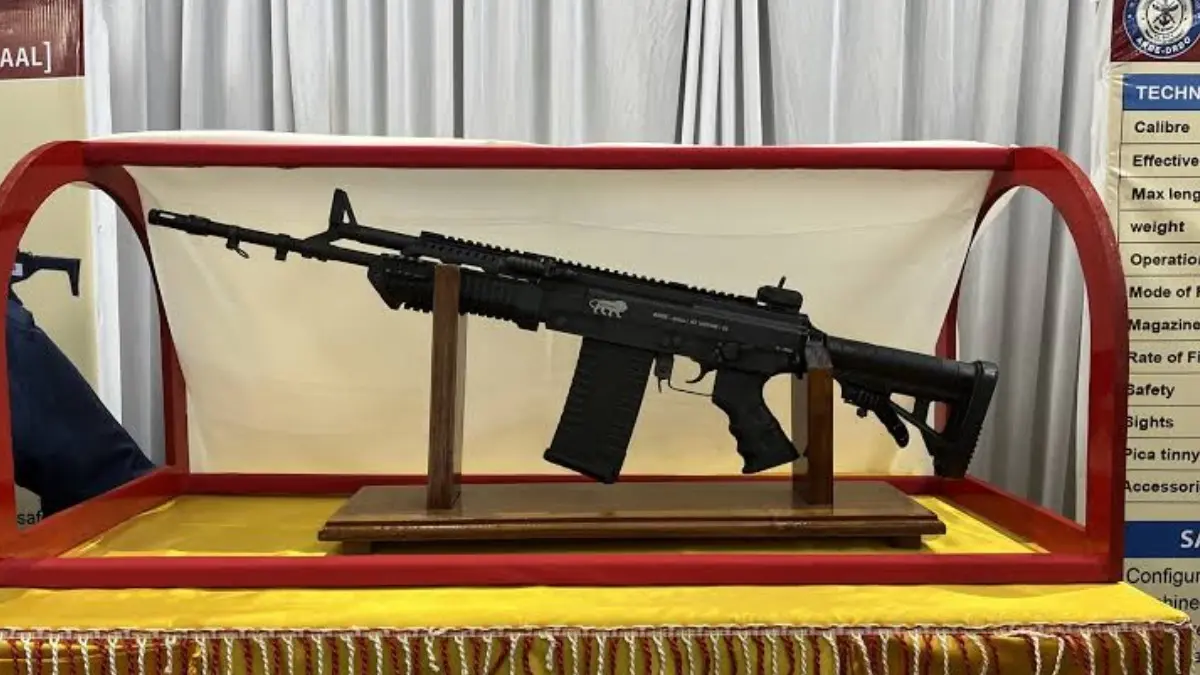
India’s Defence Research and Development Organisation (DRDO) has successfully completed key trials of the UGRAM battle rifle, an indigenous weapon system developed in just 100 days, paving the way for procurement by Central Armed Police Forces.
The accelerated development timeline underscores DRDO’s push to compress indigenisation cycles for small arms without compromising validation standards. The UGRAM represents a significant step in India’s broader strategy to reduce dependence on imported rifles and strengthen domestic defence manufacturing capabilities.
India’s CAPFs, including the Central Reserve Police Force, Border Security Force, and Sashastra Seema Bal, currently operate a mix of platforms including the INSAS rifle and SLRs for certain roles. The UGRAM’s induction would modernise operational capabilities across these forces, which collectively deploy over 800,000 personnel across internal security and border management operations.
The rapid development cycle reflects DRDO’s evolving approach to meeting urgent operational requirements without lengthy procurement delays. This methodology has gained traction following feedback from field formations about the need for quicker indigenisation of critical platforms, particularly in small arms where technological maturation curves have flattened relative to complex systems.
DRDO’s Small Arms System divisions have progressively refined design and manufacturing processes for rifle platforms over the past decade. The compressed timeline for UGRAM likely leveraged existing metallurgical databases, modular assembly protocols, and validated firing mechanisms from the department’s earlier rifle development programmes.
Trial validation across environmental stress, accuracy benchmarks, reliability under sustained fire, and ergonomic performance across diverse body types typically forms the baseline assessment for new service rifles. Completion of these protocols signals the platform is ready for limited operational evaluation within CAPF units before broader procurement decisions.
The induction would align with India’s broader Make in India defence agenda, which prioritises domestic manufacturing chains for platforms where foreign dependence remains structurally high. Small arms procurement historically consumed significant foreign exchange and supply-chain vulnerability in earlier decades, making indigenisation a core strategic objective across defence ministries globally.
CAPF modernisation remains a policy priority given expanding border security challenges and internal security operations. The UGRAM’s integration would complement ongoing upgrades to communications equipment, body armour, and vehicle platforms across paramilitary formations.
-

-
-

-