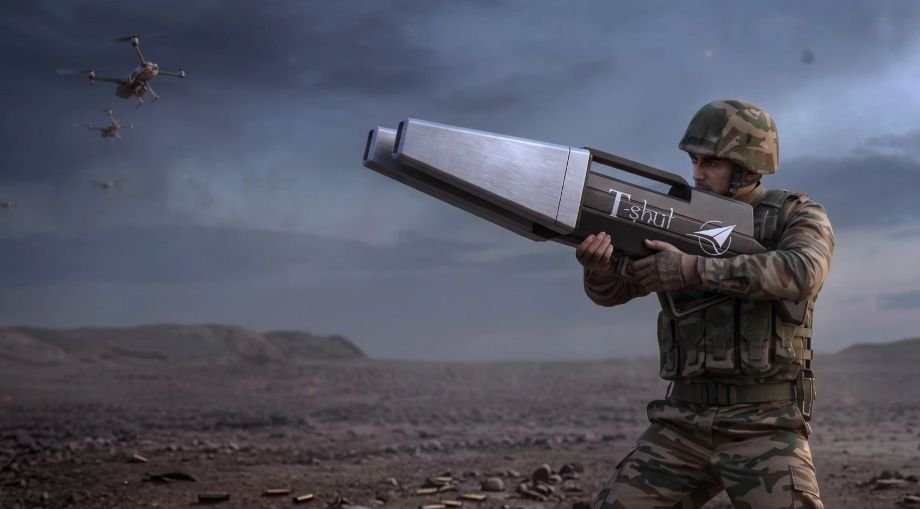
India’s growing focus on countering unmanned aerial threats received another boost with the demonstration of the indigenous T-SHUL BEAM Counter-UAS system at the Indian Air Force’s Dronathon 2026 exercise in Pokhran, Rajasthan. Developed by Indian defence technology company IG Defence, the system is designed to provide a portable electronic countermeasure capability against small drones and other unmanned aerial platforms.
The T-SHUL BEAM was showcased during Dronathon 2026, held at Pokhran from September 14 to 16, where Indian companies and technology developers demonstrated systems related to unmanned aerial systems and counter-unmanned aerial systems. The event provided an operational environment for demonstrating technologies intended to address emerging requirements in drone warfare and electronic warfare.
Unlike kinetic anti-drone solutions that physically destroy an aerial target, T-SHUL BEAM follows a soft-kill approach. The system uses radio-frequency electronic countermeasures to interfere with communication and navigation functions that are essential to the operation of an unmanned aircraft.
The system has been designed with a directional, multi-band RF architecture, enabling electronic countermeasures to be directed towards a targeted drone. Its reported coverage of command-and-control, telemetry, video transmission and GNSS-related signals is intended to disrupt several of the links that allow an unmanned platform to communicate with its operator and maintain navigation.
Its man-portable configuration is another important feature. A mobile system can potentially be deployed closer to troops, temporary operating locations or assets requiring protection, providing an additional layer of defence against low-altitude unmanned threats. The approach is particularly relevant as small drones and FPV platforms have become increasingly common in modern battlefields.
IG Defence has also linked the T-SHUL BEAM with its GRID battle management system, an indigenous AI-enabled platform designed for C5ISRT applications. The integration is intended to connect information from sensors, unmanned platforms, intelligence and command elements, creating a broader operational picture for decision-making and counter-drone operations.
The demonstration comes at a time when armed forces are placing greater emphasis on technologies capable of detecting, tracking and neutralising small unmanned aircraft. Low-cost drones can perform surveillance, carry payloads and support tactical operations, creating a requirement for countermeasures that can be deployed quickly and operate alongside other air-defence and electronic-warfare capabilities.
Dronathon 2026 was aimed at bringing Indian industry and technology developers closer to the operational requirements of the Indian Air Force. The exercise included demonstrations related to unmanned systems, counter-UAS technologies, autonomous operations, swarm capabilities, surveillance and reconnaissance and electronic warfare.
The T-SHUL BEAM demonstration at Pokhran therefore highlights the expanding role of Indian private-sector defence technology companies in developing indigenous solutions for emerging aerial threats. Its combination of portability, directional electronic countermeasures and integration with a wider battle-management architecture reflects the continuing development of India’s domestic Counter-UAS technology ecosystem.
-

-

-

-