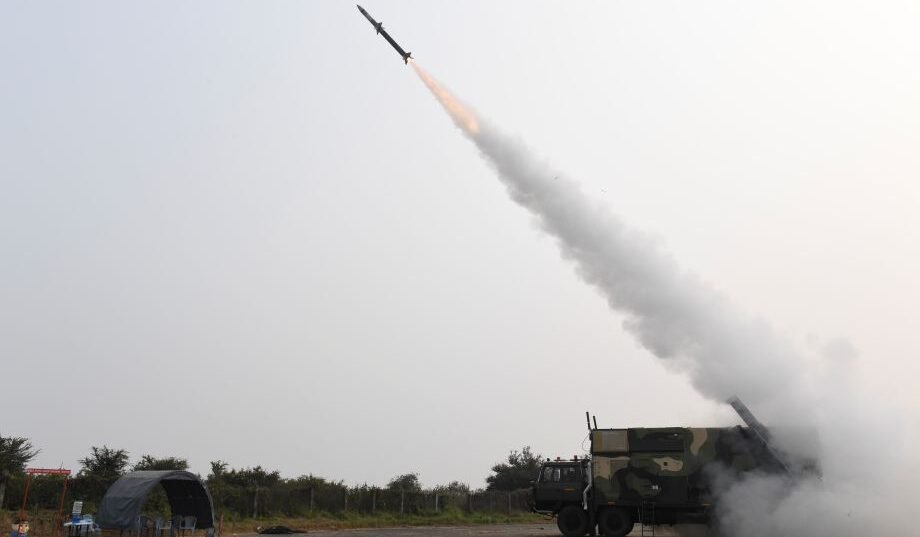
An Indian private defence company has reportedly completed the second successful flight trial of its indigenously developed short-range surface-to-surface missile at the Integrated Test Range (ITR) off the Odisha coast. The latest achievement represents another important step in the development and evaluation of the missile system, highlighting the expanding contribution of private-sector companies to India’s defence technology capabilities.
The second flight trial follows the missile’s initial experimental launch conducted on November 3, 2026. Both tests are part of an ongoing developmental programme intended to assess the missile’s performance, reliability and flight characteristics. According to the available report, the latest trial successfully achieved its planned objectives, providing additional information for engineers to evaluate the weapon system.
The Defence Research and Development Organisation (DRDO) supported the latest testing activity by providing essential technical and logistical assistance. Its specialised tracking and monitoring equipment was deployed to observe the missile throughout its flight. The instruments collected important performance data, which will help engineers conduct detailed post-flight assessments and examine the system’s overall behaviour during testing.
The involvement of DRDO highlights the importance of collaboration between government defence organisations and private manufacturers in developing indigenous military technologies. While the missile has been developed by a private Indian company, DRDO’s testing infrastructure and technical resources have played a supporting role in facilitating the trials.
Safety arrangements were also implemented ahead of the missile launch. Aviation authorities issued a Notice to Airmen (NOTAM), establishing a restricted safety zone extending up to 80 kilometres around the designated test corridor. The notification was intended to ensure that civilian aircraft remained clear of the affected airspace during the scheduled testing period. Such precautionary measures are essential for conducting missile trials while maintaining the safety of civilian aviation operations.
The successful completion of two developmental flight trials provides the programme with additional test data for assessing important technical parameters. These include guidance, navigation and control performance, as well as the missile’s overall flight characteristics. Further evaluation will be necessary to establish the system’s reliability and determine its readiness for subsequent development stages.
India has increasingly encouraged private companies to participate in defence research, manufacturing and advanced weapons development. This approach aims to strengthen domestic industrial capabilities, reduce dependence on foreign suppliers and create a broader ecosystem for indigenous military technology. Private-sector participation also allows government research organisations and domestic manufacturers to contribute their respective expertise towards national defence objectives.
The latest missile trials reflect this changing landscape in India’s defence manufacturing sector. The use of DRDO’s established testing infrastructure alongside privately developed technology demonstrates the potential of industry-government cooperation in advancing indigenous weapon systems.
With two successful flight trials reportedly completed, the missile development programme has reached another important milestone. However, further technical evaluation and testing will be required before its overall capabilities and operational readiness can be established. The latest achievement nevertheless highlights the growing role of Indian private industry in the country’s long-term defence self-reliance ambitions.
-
-
-

-