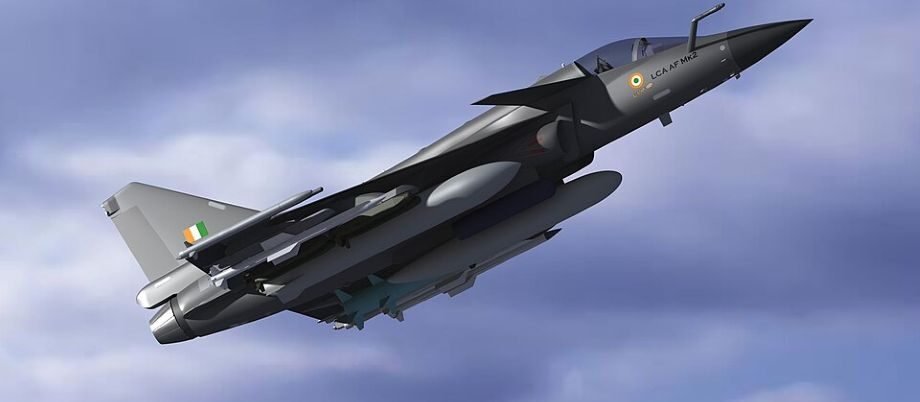
India’s ambitions to strengthen its indigenous fighter aircraft capabilities are facing an important challenge, with the availability of General Electric’s F414 fighter engine emerging as a key factor in the future of the Tejas Mk2 and Advanced Medium Combat Aircraft (AMCA) programmes. Although India has been pursuing domestic production of the American-origin engine through a partnership between Hindustan Aeronautics Limited (HAL) and GE Aerospace, unresolved commercial and technology-related issues continue to attract attention.
The F414-GE-INS6 engine, which belongs to the approximately 98-kilonewton thrust category, has been selected to power the Tejas Mk2. It is also planned for the initial AMCA Mk1 configuration, making its timely availability particularly important for India’s future combat aviation roadmap. Since both aircraft have been designed around this powerplant, changing engines at an advanced stage could require substantial modifications to their airframes, systems and testing programmes.
The proposed India-US engine manufacturing arrangement dates back to June 2023, when GE Aerospace and HAL signed a memorandum of understanding during Prime Minister Narendra Modi’s visit to the United States. The agreement established a framework for potential F414 engine production in India, supported by technology transfer and domestic industrial participation. However, reaching a final commercial agreement has proved more complicated than initially anticipated.
Technical discussions between the two companies have progressed, but commercial negotiations remain a significant part of the process. Pricing, the extent of technology transfer, manufacturing responsibilities and investment requirements are among the issues that will determine the final structure of the partnership. Reports published in October 2026 have highlighted continuing uncertainty surrounding the agreement, particularly over the terms under which India would gain access to critical engine manufacturing capabilities.
One of the major concerns involves the reported increase in the proposed engine price. Earlier estimates placed the cost at approximately ₹70-80 crore per unit, while more recent reports have suggested figures exceeding ₹200 crore. These reported estimates have raised questions about the overall affordability of the programme and the financial implications for future aircraft procurement. The final commercial terms, however, have not been publicly established.
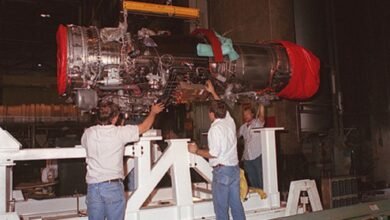
For HAL, the F414 arrangement is not simply another procurement contract. Establishing a domestic production capability would require specialised manufacturing infrastructure, skilled personnel, quality-control systems and a reliable supply chain for advanced engine components. The success of the programme could also strengthen India’s aerospace manufacturing ecosystem by creating opportunities for domestic industrial partners.
The consequences of a prolonged delay could extend beyond the Tejas Mk2. India’s AMCA programme, which aims to develop a fifth-generation stealth fighter, is also expected to use the F414 engine in its initial Mk1 configuration. This makes the American powerplant an important element of two major combat aircraft development programmes.
The AMCA is intended to strengthen the Indian Air Force’s future operational capabilities through advanced stealth characteristics, modern avionics and improved combat performance. However, its development and production schedules will depend on several interconnected factors, including engine availability, aircraft integration, testing and certification. Any uncertainty surrounding the F414 arrangement could therefore complicate planning for the initial aircraft batches.
At the same time, India is exploring longer-term alternatives to reduce its dependence on foreign fighter-engine technology. French aerospace manufacturer Safran and British company Rolls-Royce have emerged as important potential partners in India’s efforts to develop a more advanced indigenous propulsion system. Discussions surrounding engines in the 110–130 kN thrust category reflect India’s interest in securing greater technological independence for future combat aircraft.
Unlike the F414 arrangement, which focuses on manufacturing an existing American engine in India, these longer-term proposals involve the development of new propulsion technologies and deeper industrial cooperation. Such capabilities could eventually support more advanced versions of the AMCA. Nevertheless, developing a completely new fighter engine requires extensive research, engineering, testing and certification, meaning these alternatives cannot provide an immediate replacement for the F414.
The debate also highlights a broader issue in India’s defence modernisation strategy: the difference between manufacturing foreign-designed equipment domestically and developing independent control over critical technologies. Domestic assembly can improve production capacity, but access to specialised engineering knowledge, intellectual property and advanced manufacturing processes is equally important for long-term self-reliance.
For now, the F414 remains central to India’s plans for the Tejas Mk2 and the initial AMCA Mk1 aircraft. The priority will be to establish workable commercial terms with GE Aerospace while ensuring that the proposed technology transfer delivers meaningful benefits to India’s aerospace industry.
The coming stages of negotiations will be important in determining whether the partnership can move from an agreement in principle towards a functioning domestic manufacturing programme. For India’s military aviation sector, the outcome will have implications extending well beyond a single engine contract, influencing the country’s ability to develop, manufacture and sustain advanced fighter aircraft with greater technological independence.
-

-
-

-