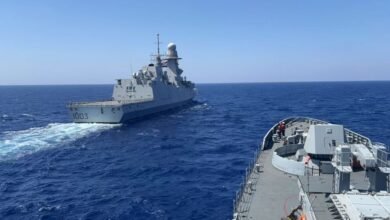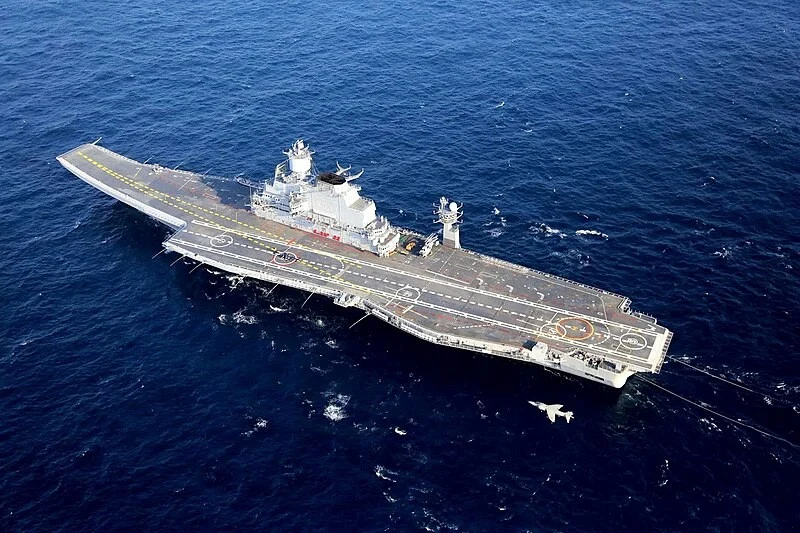
The Indian Navy is actively seeking technology partnerships to develop an advanced, next-generation Weapons Management System (WMS) for its surface combatants and future warship classes, according to official outreach efforts.
This initiative underscores the Navy’s push toward indigenisation of critical combat systems, aligning with India’s broader Defence Acquisition Procedure and the Make in India framework that prioritises domestic design and manufacture of strategic military platforms.
A Weapons Management System serves as the nerve centre of modern naval combat. It integrates sensor data from radars, electro-optical systems, and communications networks, processes targeting information, and orchestrates the firing sequence for ship-mounted guns, missile systems, and torpedo launchers. On Indian Navy vessels, the WMS must coordinate diverse platforms including BrahMos cruise missiles, medium-range surface-to-air missiles (MR-SAM), and close-in weapon systems (CIWS) such as the 30mm Goalkeeper or indigenous variants.
The Navy’s current WMS suite, installed on Kolkata-class and Visakhapatnam-class guided-missile destroyers, was developed with foreign collaboration. By developing an indigenous next-generation system, India would reduce dependence on foreign sources for critical upgrades, accelerate response timelines, and tailor the architecture to Indian Navy operational doctrine and evolving threat scenarios in the Indian Ocean Region.
India’s track record on combat management systems reflects this journey. The earlier generation WMS on Delhi-class destroyers was foreign-origin; subsequent classes incorporated greater indigenous content through DRDO laboratories and private sector partners including Bharat Electronics Limited (BEL) and Larsen and Toubro (L&T). The next-generation WMS represents a significant step toward full indigenous development and production.
The move also reflects India’s strategic shipbuilding ambitions. With the Guided Missile Frigate (P17A) programme, P17A(A) frigate variant programme, and future corvettes and offshore patrol vessels in various stages of development, a proven indigenous WMS becomes critical to reducing dependency windows and ensuring operational continuity across the fleet.
Technology partnerships in such programmes typically involve DRDO laboratories, particularly the Combat Vehicles Research and Development Establishment (CVRDE) for land systems or the relevant naval research cell, working alongside industry to develop hardware architecture, fire control algorithms, real-time sensor fusion protocols, and cybersecurity hardening. International partnerships have historically accelerated development timelines while maintaining security oversight and IP retention.
The Navy’s pursuit of this capability also reflects lessons from peer navies. The U.S. Navy’s Integrated Combat Management System (ICMS) and advanced variants, and comparable European systems, demonstrate the operational advantage of native integration and rapid upgrade cycles-capabilities only possible when a nation controls the entire development and production chain.
-

-

-
-