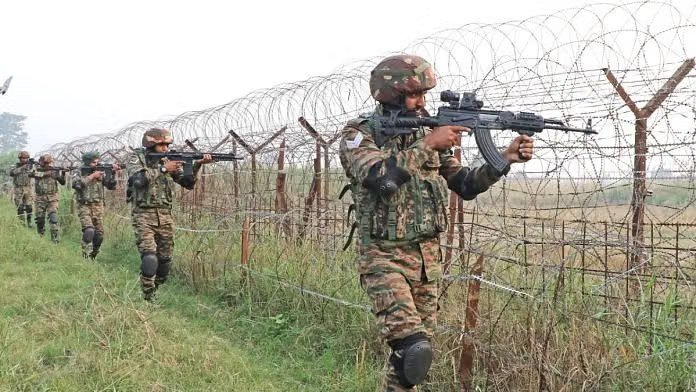
The Indian Army has begun raising its first Integrated Battle Groups (IBGs) as part of a major force restructuring programme designed to create faster, more agile, and self-sufficient combat formations. The move represents one of the most significant organisational reforms in recent decades, aimed at improving operational responsiveness across India’s varied security environments.
An Integrated Battle Group is a combined-arms formation built around an infantry or armoured brigade and reinforced with artillery, air defence, engineers, intelligence, signals, logistics, and other combat support elements under a unified command. Unlike the conventional divisional structure, an IBG is designed to function as an independent force capable of executing missions without relying extensively on higher headquarters for operational support.
The concept was developed to enhance the Army’s ability to respond swiftly to evolving security challenges along India’s western and northern borders. Lessons drawn from recent military experiences, including the 2019 Balakot operation and the 2020 Galwan Valley confrontation, highlighted the need for formations that can mobilise rapidly, integrate multiple combat capabilities, and make faster battlefield decisions.
IBGs are intended to shorten deployment timelines while giving field commanders greater operational flexibility. By integrating combat, combat support, and logistics units into a single formation, these battle groups can be deployed quickly for conventional operations, counter-insurgency missions, border contingencies, and high-altitude warfare without waiting for additional reinforcements.
The restructuring aligns with India’s broader defence modernisation efforts, which increasingly focus on network-centric warfare, artificial intelligence, advanced surveillance systems, and autonomous technologies. As the armed forces expand investments in AI-enabled command systems, Intelligence, Surveillance and Reconnaissance (ISR) platforms, and precision-guided weapons, IBGs are expected to serve as agile formations capable of fully utilising these technologies on the battlefield.
Each Integrated Battle Group can be customised depending on operational requirements. A typical IBG combines infantry or armoured units with dedicated artillery batteries, air defence assets, engineer regiments, electronic warfare capabilities, communications networks, intelligence teams, and logistical support. This modular structure enables commanders to tailor force composition for specific missions and geographic conditions.
The flexibility offered by IBGs makes them particularly suitable for operations in regions such as Jammu and Kashmir, the Northeast, and the Line of Actual Control (LAC), where difficult terrain and rapidly changing tactical situations demand smaller, highly mobile formations capable of operating independently.
The introduction of IBGs does not replace the Army’s traditional divisional system. Conventional divisions will continue to perform critical roles in large-scale conventional warfare and strategic sectors. Instead, the new battle groups are being developed alongside existing formations to provide additional operational options across different conflict scenarios.
Military planners view the initiative as preparation for future conflicts that may involve limited, high-intensity engagements requiring rapid mobilisation and precise application of combat power rather than prolonged large-scale campaigns. The modular design of IBGs is intended to improve responsiveness while reducing decision-making time during fast-moving operations.
Training, doctrinal refinement, and operational validation of the new formations will continue over the coming years as the Army evaluates their performance in exercises and field deployments. The first Integrated Battle Groups are expected to achieve full operational capability after extensive testing, potentially paving the way for broader implementation across multiple operational commands.
-


-
-

-