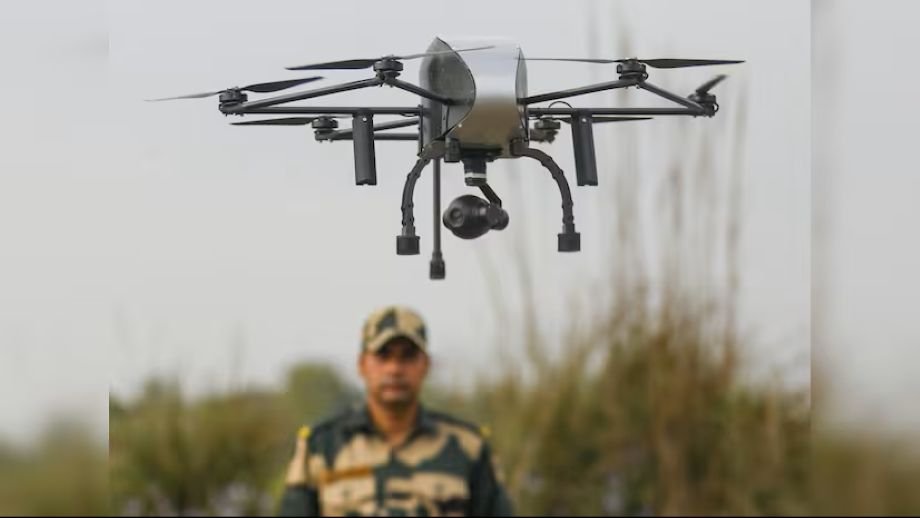
The Indian Army is looking to strengthen its tactical drone capabilities, with the Northern Command seeking 2,405 anti-armour payloads designed for use with FPV drones and other multi-rotor unmanned platforms. The requirement highlights the increasing role of small unmanned systems in precision strike operations and the Army’s efforts to adapt to changing battlefield requirements.
The proposed payload is intended to be compact and lightweight so that it can be integrated with FPV and similar drone platforms. Such systems can provide frontline units with an additional option for engaging selected armoured targets and fortified positions, particularly in areas where conventional weapon systems may face mobility or accessibility challenges.
According to the reported requirement, each payload is expected to weigh around 400 grams, with a diameter of approximately 54 mm and a length of about 220 mm. The specified net explosive quantity is around 189 grams, indicating the emphasis on maintaining a compact form factor while providing the required battlefield effect.
The Army has also specified a minimum penetration capability of 100 mm of Rolled Homogeneous Armour (RHA). This requirement is intended to give the payload an anti-armour capability while allowing it to remain compatible with relatively small unmanned platforms.
Another important specification is the ability to operate at elevations of up to 4,500 metres above mean sea level. This requirement is particularly relevant to the Northern Command, which operates across challenging mountainous and high-altitude areas. Reliable performance at such elevations can be important for maintaining drone-based capabilities in demanding terrain and environmental conditions.
The scale of the requirement is also significant. Rather than focusing on a small number of specialised systems, the demand for 2,405 payloads indicates an effort to expand the availability of drone-enabled strike capabilities across operational formations.
FPV drones have become increasingly important in modern military operations because of their ability to provide relatively low-cost and flexible precision effects. Their small size and manoeuvrability can allow them to operate in environments where larger unmanned platforms may not always be practical.
For the Indian Army, the Northern Command requirement is another indication of the growing integration of unmanned systems into frontline operations. The combination of FPV drones with specialised anti-armour payloads could provide commanders with an additional tool for engaging targets while keeping personnel at greater stand-off distances.
The requirement also fits into India’s broader effort to expand indigenous defence manufacturing and develop domestic capabilities in drones, ammunition and precision systems. If the programme moves forward, Indian defence manufacturers could have an opportunity to contribute to the production and integration of these specialised payloads.
The Northern Command’s requirement therefore represents more than a procurement of individual drone payloads. It points towards a broader shift in battlefield technology, where compact unmanned platforms are increasingly being considered an integral part of tactical strike and combat-support capabilities.
-

-

-

-