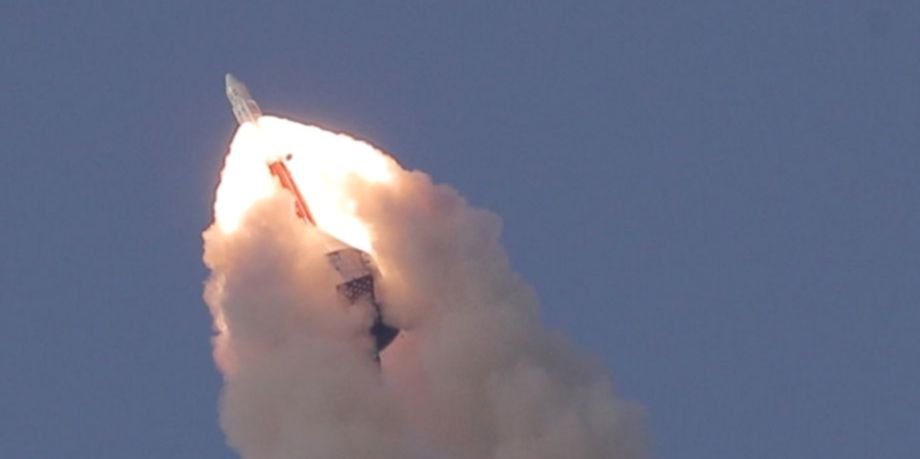
India has set an ambitious timeline to achieve a crewed lunar landing by 2040, with the maiden human spaceflight mission under the Gaganyaan programme scheduled for 2027, according to official targets announced for the country’s civil space agenda.
The 2027 Gaganyaan launch will mark India’s entry into the select group of nations capable of independent human spaceflight operations. The three-person crewed mission will demonstrate India’s ability to launch, sustain, and recover astronauts in low Earth orbit before advancing toward deeper space exploration objectives.
Gaganyaan has been under development by the Indian Space Research Organisation (ISRO) since its formal approval in 2018. The programme encompasses design of a dedicated crew module, an abort system capable of extracting astronauts during launch emergencies, life support systems, and recovery operations in the Indian Ocean. India has conducted unmanned test flights of the abort system and is advancing toward the uncrewed orbital test mission that will precede the crewed flight.
The 2040 lunar landing target represents the next phase of India’s deep space strategy following successful robotic missions. ISRO’s Chandrayaan series has delivered high-resolution lunar science, including the 2023 soft landing near the south polar region. The crewed lunar programme builds on this operational experience and the technical foundation established through Gaganyaan.
India’s timeline places the crewed moon landing roughly a decade after NASA’s targeted Artemis mission, positioning India among major spacefaring nations pursuing human lunar exploration. The Indian space programme has historically relied on indigenous development and international partnerships for critical technologies, balancing cost efficiency with technical capability building.
The Gaganyaan schedule assumes continuity in funding, resolution of technical challenges in crew life support and thermal protection systems, and successful completion of ground and orbital test phases. ISRO’s track record with the Chandrayaan and Mangalyaan programmes demonstrates the technical depth required, though human spaceflight introduces new operational and safety complexities absent in robotic missions.
India’s crewed space objectives align with the broader Make in India vision for the space sector, emphasizing indigenous development while leveraging international cooperation where critical expertise gaps exist. The programme will establish institutional knowledge across ISRO, Indian industry partners, and participating research organisations for sustained human space operations beyond the initial crewed flights.
-

-

-

-