
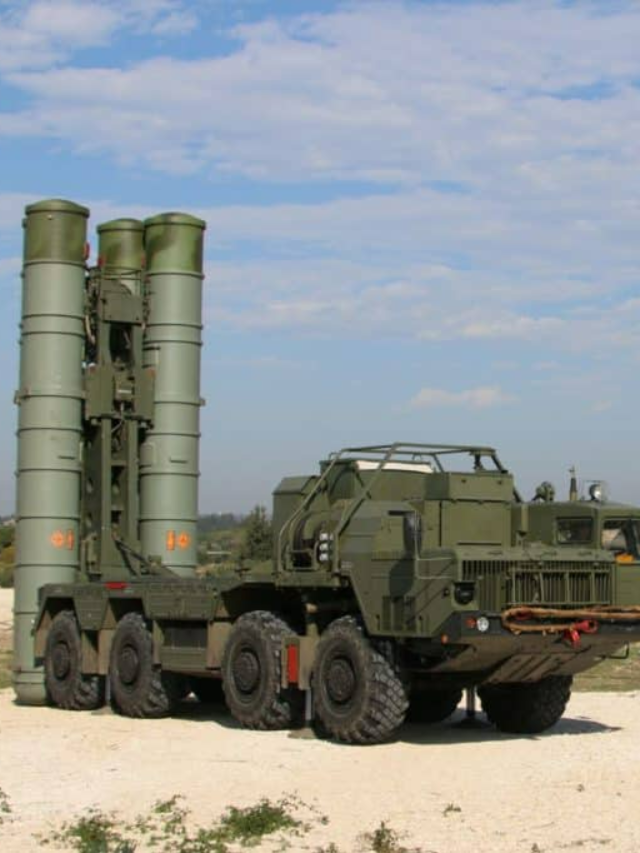
India has received the fourth squadron of the S-400 Triumf air defence system from Russia, expanding the nation’s long-range air defence capabilities amid ongoing military modernisation, according to reports.
The arrival of the fourth squadron marks a significant step in equipping the Indian Air Force with one of the world’s most advanced integrated air defence systems. Each S-400 squadron comprises multiple radar and launcher units capable of engaging multiple targets simultaneously across vast operational areas.
The S-400 Triumf is a mobile, surface-to-air guided missile system developed by Russia’s Almaz-Antey and entered service with the Russian military in 1997. India signed a USD 5.43 billion contract with Russia in 2015 for five squadrons of the system. The first squadron became operational with the Indian Air Force in 2019, followed by subsequent deliveries in 2020 and 2022.
Each S-400 squadron consists of a command post, six launcher units, and associated radars. The system can simultaneously track and engage up to 36 targets at ranges extending to 400 kilometres against aircraft and cruise missiles, and up to 35 kilometres against ballistic missiles. The sensor suite includes a 91N6E phased array radar capable of detecting low-radar-cross-section aircraft and cruise missiles at extreme distances.
India’s induction of the S-400 addresses a critical gap in air defence coverage against threats from both Pakistan and China. The system has proven its operational effectiveness in Middle Eastern conflicts and provides India with strategic depth in protecting airspace around major metropolitan centres, defence installations, and critical infrastructure.
The fourth squadron’s arrival occurs against the backdrop of India’s broader defence modernisation programme and evolving security dynamics in South Asia. Integration of the S-400 with India’s existing air defence architecture, including the indigenous Akash missile system and Russian Barak 8 systems, creates a layered defence network capable of engaging threats at multiple altitude bands.
The remaining fifth squadron, contracted under the original agreement, is expected to be delivered in the coming months. Deployment of these additional squadrons will enhance air defence coverage over northern and eastern regions facing potential threats. The system’s artificial intelligence-enabled targeting capabilities enable operators to conduct automated threat assessment and engagement with minimal human intervention.
-
-
-

-

