India is looking to significantly expand its defence manufacturing capabilities over the next three years, with Defence Minister Rajnath Singh setting a target of Rs 3 lakh crore in annual defence production and Rs 50,000 crore in exports by 2029. The government is focusing on strengthening indigenous technologies, accelerating military modernisation and improving coordination among the three services to achieve these objectives.
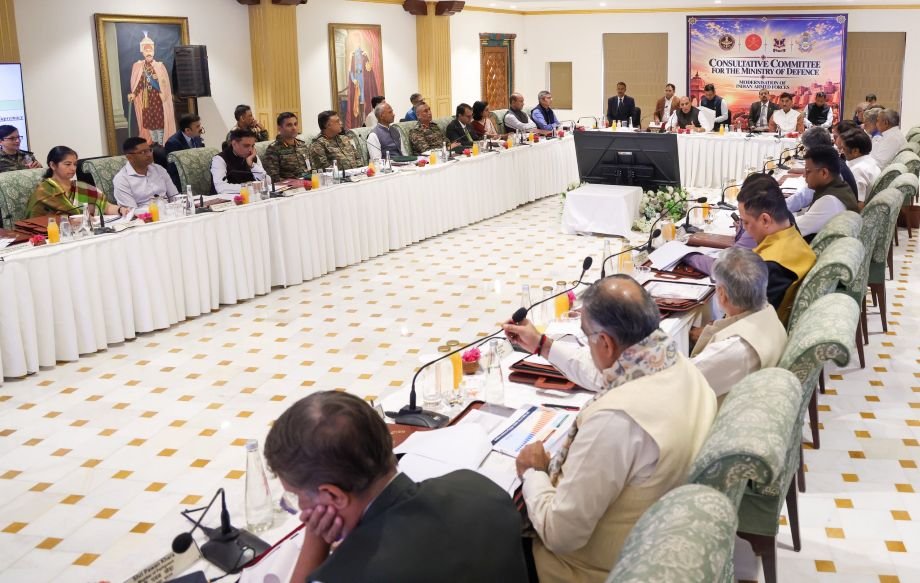
Singh outlined the priorities during a meeting of the Ministry of Defence’s Consultative Committee on the Modernisation of Indian Defence Forces in Jaisalmer, Rajasthan, on November 3, 2026. He stressed that India’s armed forces must develop advanced technological capabilities and remain prepared to address changing security challenges across multiple operational domains.
The Defence Minister highlighted the expansion of India’s domestic defence industry, noting that production had increased from Rs 46,429 crore in the financial year 2014-15 to a record Rs 1.78 lakh crore in FY2025-26. Defence exports have also registered substantial growth, rising from less than Rs 2,000 crore in 2014 to approximately Rs 40,000 crore. The government intends to maintain this momentum and strengthen India’s position as an international supplier of military equipment and technologies.
India’s defence budget for 2026-27 has reached Rs 7.85 lakh crore, including a capital allocation of Rs 2.19 lakh crore for modernisation and procurement. Singh emphasised that available financial resources must be utilised effectively, with priority given to critical operational requirements and the induction of advanced military platforms and weapon systems.
A major focus of the discussions was the growing importance of technology in modern warfare. Artificial intelligence, autonomous systems, unmanned platforms, cyber capabilities, space-based technologies and electronic warfare are becoming increasingly important for military operations. Singh called for stronger collaboration between the armed forces, the Defence Research and Development Organisation (DRDO), defence public sector undertakings, private manufacturers, start-ups and academic institutions to convert research into practical military capabilities.
The Defence Minister also stressed the importance of closer coordination between the Indian Army, Indian Navy and Indian Air Force. Improved joint planning and integration among the three services will be essential for responding to conventional, sub-conventional and multi-domain security threats. He highlighted organisational developments within the Indian Army, including the formation of Asani, Bhairav and Shaktiban platoons, as examples of efforts to adapt military structures to changing battlefield requirements.
Private-sector participation is another important part of India’s defence expansion strategy. The government is encouraging both major companies and micro, small and medium enterprises (MSMEs) to contribute to domestic manufacturing, research and innovation. A broader industrial ecosystem is expected to strengthen supply chains, support indigenous development and reduce dependence on foreign defence suppliers.
Members of Parliament from the Lok Sabha and Rajya Sabha also participated in the meeting and offered suggestions on improving military preparedness. Discussions included streamlining defence acquisition and development procedures, identifying critical capability requirements and establishing regular assessments of modernisation progress.
India’s 2029 production and export ambitions reflect a wider effort to combine military preparedness with industrial growth. Achieving these targets will depend on sustained investment, faster procurement, technological innovation and stronger cooperation between public and private industries. The government aims to build a defence ecosystem capable of meeting domestic military requirements while increasing India’s competitiveness in the international arms market.
-

-
-
-