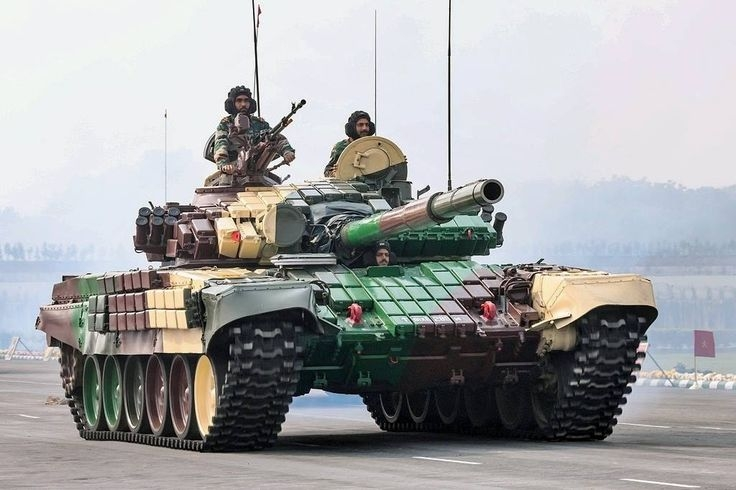
The Indian Army is pursuing a comprehensive modernisation programme for its ageing T-72 main battle tank fleet, officials said, as New Delhi moves to enhance battlefield capabilities against potential threats from China and Pakistan.
The upgrade initiative represents a significant shift in the Army’s armoured warfare strategy. Rather than accelerating procurement of next-generation platforms, the service is extending the operational life and combat effectiveness of its existing T-72 inventory through targeted technological improvements.
India operates over 2,000 T-72 tanks across multiple variants, making it one of the largest operators of the Soviet-origin platform globally. The T-72 has formed the backbone of Indian armoured formations since the 1980s and remains the primary main battle tank in service alongside the more modern Arjun tank produced by the Defence Research and Development Organisation.
The modernisation effort will focus on enhancing firepower, mobility, and battlefield survivability. Improvements are expected to include upgraded fire control systems, advanced sighting equipment, improved transmission and engine components, and enhanced armour protection. These enhancements aim to bring the T-72 closer to contemporary standards while maintaining operational continuity.
The programme aligns with India’s broader defence modernisation strategy, which balances indigenous development of new platforms with strategic upgrades to existing systems. The Arjun tank programme, despite decades of development, has faced production constraints and cost challenges, reinforcing the need to maximise the operational utility of the T-72 fleet.
India’s armoured formations face significant operational demands across multiple theatres. Along the Himalayan frontier with China, tanks operate in high-altitude, challenging terrain. The western border with Pakistan requires mobile, well-equipped armoured units capable of rapid deployment and sustained operations in varied topography.
The T-72 upgrade programme reflects pragmatic defence procurement logic. Modernising existing platforms is considerably more cost-effective than wholesale replacement, while technological improvements can substantially narrow capability gaps with newer adversary systems. The upgrade approach enables the Army to maintain numerical strength while progressively enhancing combat effectiveness.
DRDO and ordnance factories under the Ministry of Defence have been tasked with various components of the modernisation. The programme is expected to progress through phased implementation across multiple tank squadrons and regiments stationed across India’s defence commands.
-
-
-

-