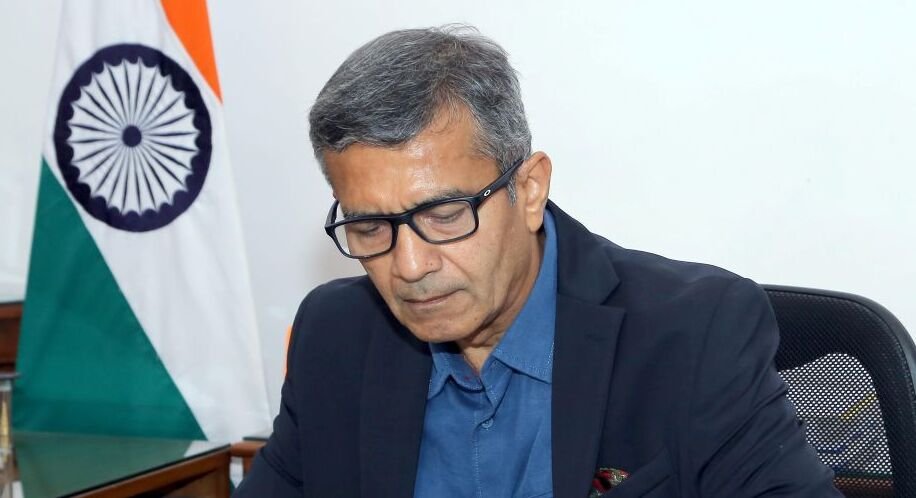
India’s Defence Secretary Rajesh Kumar has underscored the critical importance of designing, developing, and producing indigenous weapons systems, signalling a renewed push toward self-reliance in defence manufacturing and reducing dependence on foreign imports.
The statement reflects the government’s commitment to the Make in India initiative within the defence sector, a policy thrust that has gained momentum over the past decade. India’s defence budget, while substantial, has traditionally been weighted toward procurement of foreign systems rather than domestic development.
India’s defence industry landscape has undergone significant transformation since the liberalisation of the defence sector. Ordnance Factory Board (OFB) units, Defence Research and Development Organisation (DRDO) laboratories, and emerging private sector players like Bharat Dynamics Limited, HAL, and Mazagon Dock Shipbuilders form the backbone of indigenous production capacity.
DRDO’s portfolio spans missiles, artillery systems, armoured vehicles, radar platforms, and electronic warfare suites. Systems like the Brahmos cruise missile, developed jointly with Russia, and the indigenous Akash air defence system demonstrate the agency’s capability to deliver complex platforms. However, India’s reliance on foreign weapons platforms remains substantial across aviation, naval, and ground domains.
The indigenisation challenge cuts across multiple domains. The Indian Air Force operates Russian and French aircraft; the Navy operates Scorpene-class submarines built under licence; the Army relies heavily on imported tank engines, fire control systems, and precision munitions. Each represents a gap where domestic design and production capability lags international standards.
Private sector participation has expanded under the Defence Acquisition Procedure and the Strategic Partnership Model, which reserves major defence contracts for select Indian firms paired with technology partners. Companies such as Larsen & Toubro, Tata Advanced Systems, and Kalyani Group have begun indigenous development of weapon systems and sub-assemblies.
The push for indigenous design also addresses strategic autonomy. Weapons dependence creates supply chain vulnerability, as demonstrated by global logistics disruptions during conflicts. Indigenous production ensures sustained capability and reduces exposure to geopolitical pressure through sanctions or export controls.
However, scaling indigenous development requires sustained investment in research infrastructure, skilled workforce development, and long-term procurement commitments from the military. DRDO’s budget, while growing, remains constrained relative to the breadth of systems under development. Private industry entry depends on guaranteed order volumes and technology transfer agreements with foreign partners.
The Defence Secretary’s emphasis on domestic design and production aligns with broader strategic objectives to reduce India’s defence import bill, strengthen industrial capacity, and build a credible, self-reliant defence posture in the Indian Ocean Region and beyond.
-

-

-

-