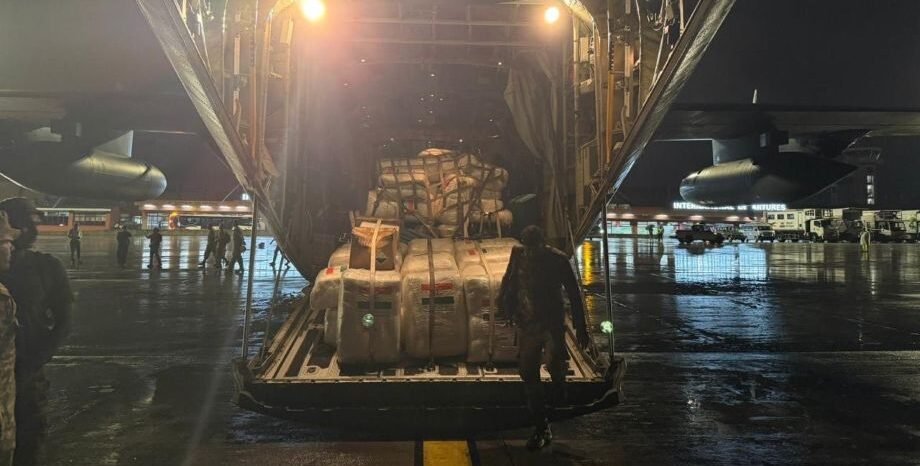
India has widened its emergency assistance to Nepal as authorities continue intensive search-and-rescue operations following a catastrophic flood disaster that caused widespread destruction across the Himalayan country.
The Indian response has moved beyond the delivery of basic relief supplies, with New Delhi deploying specialised personnel and equipment to areas where conventional rescue efforts face major obstacles. A fourth Indian relief flight arrived in Nepal carrying 11 tonnes of assistance, raising the total relief material airlifted by India to around 68.5 tonnes. The latest shipment contains blankets, sleeping bags, tarpaulins, plastic sheets and hygiene supplies for people affected by the disaster.
One of the most challenging elements of the ongoing operation involves workers believed to be trapped inside hydropower tunnels. India has sent a technical contingent that includes doctors, paramedics and tunnel engineers to assist Nepalese authorities in dealing with underground rescue operations. The team has inspected tunnel locations in the Trishuli region and conducted aerial reconnaissance of the Chilime and Langtang areas to assess access and rescue requirements.
The tunnel operations have been complicated by enormous quantities of mud and rock deposited at the entrances. Nepali security personnel have been working to clear the debris and create access routes, while Indian and Chinese specialists are providing technical assistance. Nepal’s disaster authorities have reported hundreds of workers missing from hydropower facilities in the affected region, making the tunnel searches one of the most urgent parts of the response.
India is also contributing forensic capabilities to the disaster response. A team equipped to support DNA analysis has been sent to Nepal to help authorities identify victims, an especially important requirement as recovery teams continue to retrieve bodies from severely affected areas.
Rebuilding damaged transportation links is another major priority. Sixteen trucks carrying components for a 230-foot single-lane modular steel bridge have already reached Nepal. India is preparing additional equipment for seven more Bailey bridges and technical personnel are expected to support their installation. The bridges are intended to help reconnect areas where floods and landslides have destroyed or severely damaged road infrastructure.
The disaster has also created a major humanitarian emergency across the affected river corridors. Roads, settlements, bridges and hydropower facilities have suffered extensive damage, while difficult terrain and continuing bad weather are making rescue operations more difficult. Reuters reported on August 31 that Nepal was seeking to reach hundreds of people believed to be inside blocked hydropower tunnels, with nearly 21,000 security personnel involved in the wider rescue effort.
Nepal’s latest figures underline the severity of the crisis. Authorities reported 903 deaths and 4,247 people missing on August 31, while the number of people affected by the disaster is estimated to be substantially higher. Rescue teams are still working across remote areas, and the threat of further landslides and unstable conditions continues to complicate operations.
For India, the operation represents a broad disaster-response mission involving airlifted humanitarian supplies, specialist engineering support, medical and forensic capabilities, and infrastructure assistance. The deployment demonstrates how military and technical resources can be mobilised rapidly for humanitarian operations in a neighbouring country facing a large-scale natural disaster.
With Nepal still focused on locating missing people and reopening critical transport routes, India’s assistance is expected to remain an important component of the continuing rescue and recovery effort.
-
-

-

-