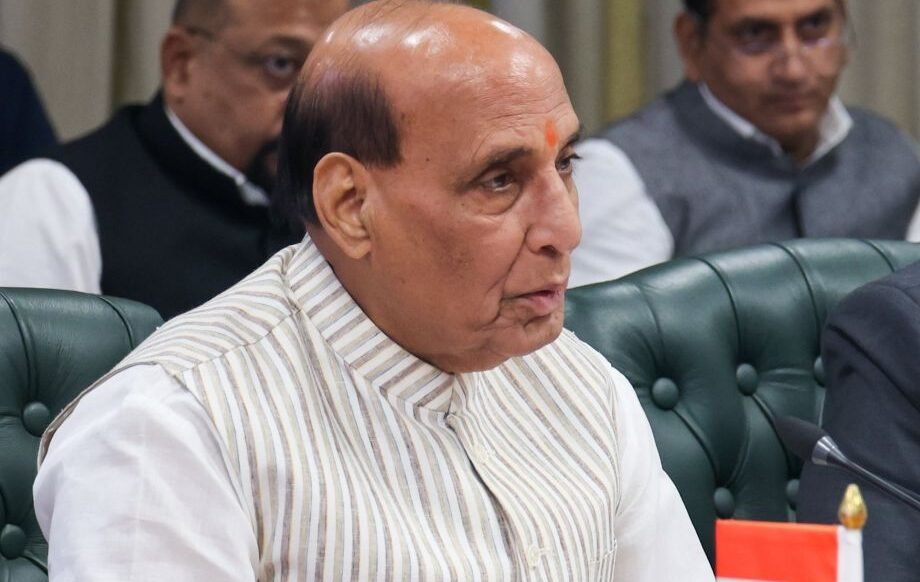
India has taken another major step towards strengthening its military capabilities, with the Defence Acquisition Council (DAC) approving defence acquisition proposals worth approximately ₹1.10 lakh crore for the armed forces.
The approvals were granted on September 7 under the chairmanship of Defence Minister Rajnath Singh. The DAC accorded Acceptance of Necessity (AoN), which represents in-principle administrative approval for the proposed capital acquisitions. The latest decision covers requirements of the Indian Army, Indian Navy and Indian Air Force and is aimed at improving operational preparedness and modernising military capabilities.
A key feature of the latest procurement package is its strong indigenous component. According to the Ministry of Defence, around 98% of the procurements covered by the approved AoNs will be sourced from Indian industry. The move is expected to provide further momentum to domestic defence manufacturing while supporting the government’s broader objective of increasing self-reliance in military equipment and reducing dependence on imports.
For the Indian Army, the approved proposals include Chemical, Biological, Radiological and Nuclear (CBRN) reconnaissance vehicles, High Mobility Vehicles, self-propelled mechanical mine layers, Advanced Light Helicopters, trawl tanks and the Sarvatra Bridge System.
The CBRN reconnaissance vehicles are intended to help the Army detect, identify, monitor and mark areas affected by hazardous CBRN agents. High Mobility Vehicles are expected to support logistics, mobility and operations in difficult terrain, while the other equipment will strengthen battlefield mobility, engineering support and operational flexibility.
The Indian Navy is also set to receive important capability enhancements under the latest approvals. Among the major requirements are Arudhra radar systems and marine gas turbines. The radar systems are expected to enhance surveillance and situational awareness, while the marine gas turbines will support propulsion requirements for naval platforms.
For the Indian Air Force, the acquisition proposals include systems intended to strengthen electronic warfare and secure operational communications. The package includes airborne electronic warfare capabilities and secure access systems, alongside other requirements aimed at improving the service’s operational effectiveness.
The latest approval also includes Advanced Light Helicopters, which will provide additional aerial mobility and support capabilities for the armed forces. The helicopter requirement is part of the broader effort to expand India’s indigenous aerospace manufacturing base and provide the military with domestically produced platforms.
The ₹1.10 lakh crore figure represents the estimated value of proposals receiving AoN, rather than completed defence contracts. Individual programmes will still have to progress through the subsequent procurement and contracting stages before final orders are placed.
The large domestic sourcing component is particularly significant for India’s defence industry. With nearly 98% of the approved procurement expected to come from Indian companies, the decision could create opportunities across the country’s defence manufacturing and aerospace supply chains, including for manufacturers involved in vehicles, helicopters, radars, propulsion systems, electronic warfare and military infrastructure.
The latest DAC decision comes as India continues to pursue a combination of military modernisation and greater domestic production. By directing a substantial share of new procurement towards Indian industry, the government is seeking to strengthen the country’s defence industrial base while ensuring that the armed forces receive modern equipment for evolving operational requirements.
The approval therefore represents more than a major procurement milestone. It also underlines India’s continued push to connect military modernisation with indigenous defence manufacturing, potentially strengthening both the operational capabilities of the armed forces and the long-term capacity of the domestic defence sector.
-

-

-

-